Perspectives on science and innovation in the face of global environmental change.
March 15, 2012
Are technologies political? Facebook and more
February 6, 2012
Science and state power
Guess what, this is my 50th blog post! Many, many thanks to those of you who read, follow, and share my blog. According to Blogger, I've had over 5000 pageviews.
Works cited:
Samer Alatout, “'States of Scarcity': Water, Space, and Identity Politics in Israel, 1948-1959,” Environment and Planning D: Society and Space 26:959-982. 2008.
January 30, 2012
STS perspectives on the Green Revolution
The Green Revolution is an era of rapid agricultural innovation and diffusion that is critical to my own research, and I would argue, to the future of agricultural research. Narratives of the Green Revolution are invoked by different actors for different purposes; Robert Zeigler might invoke the Green Revolution as a reason to support public agricultural research. Activists like Vandana Shiva might invoke it to warn of the dangers of monocropped agriculture and top-down international development projects. I prefer to take the middle road, but the aim of my research is not to make a normative judgment about the Green Revolution. Instead, I aim to interpret how different visions of agricultural change and innovation drive organizations and technological development.
I have created a public folder of my essential Green Revolution articles, and I would also highly recommend these books by Kloppenburg, Perkins, and Cullather for an even richer perspective. There are so many things written about this topic, but I've attempted to cull it down to my favorites. I've also included my paper on the Green Revolution and the Population Bomb in Asia from 1960-1970, which I wrote for a class last year and hope to turn into a dissertation chapter. Please ask for permission if you'd like to cite or circulate my paper.
I'm going to highlight 3 papers for this post. They are articles I picked because they cover the basics of the Green Revolution, biotechnology, globalization, and some of the core STS concepts I want to explore in my research. The common theme between these 3 articles is agricultural innovation systems, and the dynamic between technologies and institutions/organizations.
January 22, 2012
States of Knowledge: Autism, bird flu, and co-production
December 29, 2011
Environmental science and politics: Book reviews
Having a bit of time off this week, I've read two books that both take a political ecology approach to environmental problems. Political ecology emerged from a certain tradition of social scientists, and really seeks to intertwine the social and natural aspects of the environment. Since both books are relevant to the themes of this blog and my own research, I thought I would do a quick review!
The first book was Critical Political Ecology by Tim Forsyth. I had the pleasure of meeting Dr. Forsyth over the summer, so I was really excited to read this book. Forsyth combines critical social theory with STS, philosophy of science, and his on-the-ground experience in international development work in South and Southeast Asia. The central theme of his book is that environmental science has been used to reinforce "environmental orthodoxies," which are similar to myths or narratives. Some of these key environmental orthodoxies are that population growth causes soil erosion, and deforestation causes loss of biodiversity. Forsyth shows that these arguments are used for specific political/normative agendas, but that alternative scientific approaches have actually revealed contrary data in some contexts. Each chapter reviews different case studies that touch on themes of democratic science, science-policy boundaries, global risk and uncertainty, and scientific expertise vs. indigenous knowledge. Overall, his book shows the tension between top-down environmental orthodoxies and local adaptations to the environment, and the limits of using scientific facts to make policy decisions.
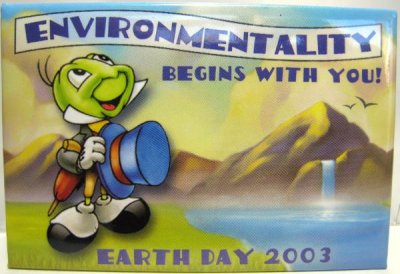
The second book I read was Arun Agrawal's Environmentality (no connection to the photo above, but still funny). "Environmentality" is a form of Foucault's "governmentality," which roughly means rendering subjects governable. So environmentality is the making of environmental "subjects" through technologies of governance. The primary technology that Agrawal examines is the use of statistics in Indian forestry, starting in the mid-eighteenth century under British colonial rule. Agrawal takes both a historical and anthropological approach to the region of Kumaon, in northern India (looks like a horrible place for fieldwork). He uses historical sources as well as surveys and interviews to show how Kumaon villagers have a dialectical relationship with state-driven forest policy, which protects forests but limits local access. The villagers use some of the environmental rhetoric of protecting forests, while simultaneously using it to their advantage and resisting state control. This is a great analysis, because it confronts the shortcomings of a one-sided approach to development politics (i.e. either ignoring or too relient on indigenous knowledge and local adaptations).
The themes of local adaptations vs. global development/top-down power/technological interventions is seen throughout Forsyth and Agrawal's recent work, especially with regards to climate change, and is something I hope to explore in my own research on agriculture in India (once I figure out what I'm doing...).
Finally, I also recently enjoyed Paolo Bacigalupi's The Wind Up Girl, which is a science fiction novel about a dystopian, post-sea-level-rise, post-fossil-fuel world. Bacigalupi's dislike of agri-chemical companies is obvious, as they are the main antagonists in the hunt for the last remaining seed bank in Bangkok, Thailand. Intriguingly, the government in Thailand is dominated by the Environment Ministry, which usurped power because of the impacts of climate change and global pandemics. Perhaps my favorite aspect of the book is that in the absence of fossil fuels, energy is measured in calories since the only remaining energy sources are biological. This relates back to Agrawal's Environmentality-- making things into government subjects by classifying them-- whether it's carbon emissions or calorie intake.
[UPDATE] I also wanted to say THANK YOU to everyone who's reading and commenting! According to Blogger stats, I've had over 4000 pageviews this year. Not sure how accurate that is, but thanks even if you're not getting counted through GoogReadz or something. Happy New Year!
November 10, 2011
Conferences and sociotechnical systems
Flying is a constant, necessary (in)convenience in my life. While it’s great being only a 4-hour flight away from Michigan when I’m in Arizona, the endeavor requires careful planning, packing, arranging, and management of every little detail from my laptop’s battery life to remembering to drink water. I’m doing a lot of flying this month, and just got back from the joint conference of the History of Science Society, Society for the History of Technology, and the Society for Social Studies of Science. As a consequence of all this talk of science and technology, I can’t help but begin to see everything as “socio-technical system.”
If you’ve seen the movie “The Matrix,” you have an idea what graduate school is like for me. There’s a Facebook page for one of my advisors, Dan Sarewitz, that jokingly asks,
- Are you unable to sit through a traditional biology/chemistry/physics/engineering/economics course without constantly contemplating how your professor managed to "drink the kool-aid?"
- Do you constantly remind yourself that your science professors are but tiny cogs in a global innovation machine?
- Are you unable to look at a tomato without thinking about science, politics, labor economics, sociology, anthropology, Michael Crow, agriculture, geopolitics, innovation systems, the University of California, and climate change?
- Does the mere mention of the "linear model" make you shudder?
- Are you unable to synthesize your views on climate change in less than 5,000 words?
If so, you are probably a former student of Dan Sarewitz. You will never hold a mainstream academic position, and your peers (and the public) will never quite be sure what your "deal" is. That's what you get for taking the red pill.
Back to airplanes, since I’m actually writing this on the plane! Airplanes, and the process of air transportation, are a more visible form of sociotechnical systems. We stare in awe at the massive planes used for transcontinental flights. But from the second you walk into the airport, you become immediately aware that you are part of a finely tuned system of both humans and technologies. We are enrolled, inspected, standardized, and shuffled into our seats. Usually everything goes well, but today after our flight landed, the electricity went out as we were leaving the plane. This was also an example of “uncanny,” even though it is a more visible system. We can see the nuts and bolts of the plane (and don’t get me started on rivets… we read a painstaking paper last semester about the technological innovation behind airplane rivets), but we still expect everything work.
Think about the complex and heavily embedded system behind energy extraction and production, and the technological disaster that this has caused. These aren’t just technological disasters though, they are most definitely sociotechnical disasters. It’s crucially important to realize that humans design, maintain, and run these systems (to the extent that we have control). But inevitably, tightly coupled systems, such as energy, increase the severity of human error and technological failures. The take home message is that we often don’t notice sociotechnical systems until they fail.
UPDATE: Here's a great link via Arijit on the nation's water infrastructure being ignored.
August 22, 2011
"How science works": A jaded pursuit of knowledge?
As I get back into the swing of graduate school classes, I'll likely be blogging less frequently. But if you all keep sending me interesting articles, the more fodder I have for new posts!
A staple of STS theory, and other post-modern theories, is that "science" (defined roughly as an organized pursuit of/production of knowledge) is less objective than we'd hope. After all, scientists are human, and all human artefacts are shaped by our own experiences, biases, and institutional environments. So although not all STS scholars adhere to the full-blown post-modern relativism that there is no objective truth, I see the STS perspective as simply more critical of taken-for-granted assumptions about science.
There are plenty of examples from the History of Science about how science, at the time, was taken as the paragon of truth, only to later be totally de-bunked. The regime change from one scientific theory to another is what's known as "paradigm shift." But perhaps science isn't just about finding out what's right and wrong in the universe. What matters is even what we decide to study. For example, STS scholar Scott Frickel writes about science and activism. In his 2004 book, Chemical Consequences: Environmental Mutagens, Scientist Activism, and the Rise of Genetic Toxicology, he describes how a group of scientists, influenced by the 1970s environmental movement, started a new, interdisciplinary field of "genetic toxicology." While building the scientific legitimacy of their field (which Frickel points out, is an act of advocacy itself), the scientists also strategically distanced themselves from the more "activist" arm of their academic society. I have a more detailed analysis on science and activism linked at the end of this previous post.
The recent controversy of science and activism centers around, of course, climate change scientists. The question is whether scientists can be pro-climate policy activists while still maintaining scientific integrity? However, the scientists themselves don't see themselves as activists. Here's a recent excerpt from an NPR article:
Science advances through a self-correcting system in which research results are shared and critically evaluated by peers and experiments are repeated when necessary. Disagreements about the interpretation of data, the methodology, and findings are part of daily scientific discourse. Scientists should not be subjected to fraud investigations or harassment simply for providing scientific results that are controversial. Most scientific disagreements are unrelated to any kind of fraud and are considered a legitimate and normal part of the scientific process.... (AAAS, 2011)
Climate research works precisely in the same way. To politicize it, to persecute and scrutinize individual scientists as if they were corrupt politicians, is not only misguided but useless. Not all scientists are virtuous (and not all doctors, lawyers, bankers, or teachers either), but the whole point of the scientific process is to free itself from such personal flaws: sooner or later, fraudulent or wrong data is uncovered and the path toward certitude is restored. Errors may persist for a while, but not for a very long while.The author is speaking of traditional paradigm shifts, and the self-correcting view of science described by Michael Polanyi. The problem is that this view of science ignores what we know about scientists: they too, are human. A "free market" pursuit of science is not necessarily best for society as a whole. This might be partly because scientists have long been a homogenous social group, although this is changing.
A round-up of recent news articles adds some interesting perspectives to the mix:
"Biased by Brilliant" (bonus points for referencing philosopher of science Heather Douglas)
Doesn’t the ideal of scientific reasoning call for pure, dispassionate curiosity? Doesn’t it positively shun the ego-driven desire to prevail over our critics and the prejudicial urge to support our social values (like opposition to the death penalty)?"It’s Science, but Not Necessarily Right"
Perhaps not. Some academics have recently suggested that a scientist’s pigheadedness and social prejudices can peacefully coexist with — and may even facilitate — the pursuit of scientific knowledge.
Scientists can certainly point with pride to many self-corrections, but science is not like an iPhone; it does not instantly auto-correct. As a series of controversies over the past few months have demonstrated, science fixes its mistakes more slowly, more fitfully and with more difficulty than Sagan’s words would suggest. Science runs forward better than it does backward."The objectivity thing (or, why science is a team sport)."
In both the ideal of reproducibility and the practice of peer review, we can see that the scientist’s commitment to producing knowledge that is as objective as possible is closely tied to an awareness that we can be wrong and a desire not to be deceived — even by ourselves.
Science is a team sport because we need other people in order to build something approaching objective knowledge.
However, teamwork is hard."Toni Scarpa: Reviewing peer review"
The goal was to ask people to focus more on impact and significance. Peer review is simple — I think it should ask only two questions. First: Is it worth doing? That is impact and significance. If the answer is yes, then you ask the second question: Can they do it? In the past we were asking those questions in reverse.So I'm not sure if I'm ready to come to any conclusions about what this means for climate science, but it certainly highlights science as a human pursuit, subject to the same biases and ethical dilemmas as any other.
July 26, 2011
Seeds and sociotechnical imaginaries
1) Agricultural technologies and practices have radically changed over the past 50 years, and will continue to do so (thus projecting a predicable, stable yield output is somewhat futile).
2) We cannot ignore the social and economic context of global agriculture and the scope of challenges that farmers face every day (reducing the complexity of climate change adaptation).
July 8, 2011
Experts, Expertise, and Impure Science

If you'd like to read more about experts and activism in environmental controversies, I wrote a paper about it last semester. It's more or less a literature review of STS things, but hopefully you can find some nuggets of sapience.
July 6, 2011
5) Science communication and climate change

So I thought I'd put together a resource list of blogs and papers on the subject of science communication, from an STS perspective (and particularly about climate change). First, Alice Rose Bell has a great blog on science communication, and even already has a helpful resource list! My other favorite climate change communication blogs are Dot Earth by Andy Revkin, Age of Engagement by Matthew Nisbet, Open the Echo Chamber by Edward Carr, and The Intersection by Chris Mooney. While I don't always agree with the partisan positions of many of these bloggers, I find myself enraptured by their interesting reflections on the latest research and controversies in climate change science and communication.
June 9, 2011
2) Science-practice and science-policy boundaries

- In 2001, the journal Science, Technology, & Human Values ran a special issue on so-called “boundary organizations” (see end of this blog for full references). Dave Guston is renowned scholar of political science and science policy theory. His idea of boundary organizations is that the realms of science and policy are not entirely separate; there are actors who span and negotiate between the two. This report contains a summary of all of the articles published in that journal. Many of the examples of “boundary spanners” deal with issues related to agriculture and climate change. David Cash shows extension’s role in negotiating water use in the U.S. High Plains states. He discusses the history of extension and multiple scales of the science/policy interface in this case. Clark Miller studies the politics of climate science. In this paper he argues that the international “climate regime” doesn’t fit neatly into the boundary organization model, and instead he proposes the term “hybrid management” for the function of organizations like the IPCC.
Cash, D.W. et al. (2003). “Knowledge systems for sustainable development.” Proceedings of the National Academy of Sciences. http://www.pnas.org/content/100/14/8086.full.pdf+html
- This article ties together some of the theoretical concepts on boundary organizations presented by Guston and others with a set of case studies of global environmental development. The authors represent both STS and “sustainability science” scholars, led by W.C. Clark. It also discusses science policy communication, in which they identify salience, legitimacy, and credibility as the main themes in providing useful information.
Cash, D.W., Borck, J.C., & Pratt, A.G. (2006). “Countering the Loading-Dock Approach to Linking Science and Decision Making.” Science, Technology, & Human Values, 31, p. 465-494. http://sciencepolicy.colorado.edu/students/envs_5100/Cashetal2006.pdf
- David Cash has another great example of boundary organizations and how they work. He proposes four mechanisms for them to work: convening (bringing people together), translation (communicating between different audiences, for example, science and the public), collaboration (working on a project with multiple interests represented), and mediation (finding mutual ground in conflicts). The “loading-dock approach” is a poor model of communication: it involves just getting the data out there, but not doing any follow up or getting any feedback. Cash et al. use the case study of communicating climate forecasts to show how participation from stakeholders is crucial to the 2-way communication between science and decision-makers. This is sometimes referred to as the “co-production” of knowledge (although other STS scholars use to work co-production in a different way, meaning the co-evolution of scientific knowledge and social systems/order).
Breuer, Norman, Clyde Fraisse, and Peter Hildebrand (2009). “Molding the pipeline into loop.” Journal of Service Climatology.
http://www.journalofserviceclimatology.org/articles/2009/Breuer-2009-JSC.pdf
- Our friends down south are blazing the path for extension’s role in helping farmers adapt to the impacts of climate change. This particular article describes how they used participatory dialogue with farmers and extension educators to create a website to provide information about regional crop outlooks based on climate forecasts. They call this a decision support system. For more information, see their 2010 report here. And for more comments on why agricultural extension needs to move beyond the linear model, read John Gerber's 1994 article here.
[Full articles from the STHV 2001 issue that have free access:]
Guston, David (2001). “Boundary Organizations in Environmental Policy and Science: An Introduction.” Science, Technology, & Human Values 26. http://www.cspo.org/_old_ourlibrary/documents/boundaryorgs.pdf
Cash, David W. (2001). “‘In Order to Aid in Diffusing Useful and Practical Information’: Agricultural Extension and Boundary Organizations.” Science, Technology, & Human Values 26. http://belfercenter.ksg.harvard.edu/files/In%20order%20to%20aid%20in%20diffusing%20useful%20and%20practical%20information%202000-10.pdfMay 27, 2011
The linear model: science to policy

"The resulting picture is complex and yields no single, straightforward model for how knowledge and application interact; yet one feature that invariably characterizes successful innovation is ongoing communication between the producers and users of knowledge." (Sarewitz & Pielke, 2007, p. 7)
May 26, 2011
1) A new science for decision-making

"Science" means many different things to many people. Science is an action, a set of methods for hypothesis testing; science is a result, a way of illuminating the world around us. By "science," I mean the combination of the practice and use of organized, institutional science. We typically think of science as something that happens in the laboratory. Maybe a spark of discovery leads to a new cancer-fighting drug. But we now know that science happens all around us. Citizens can collect air samples from their neighborhood and test the level of toxins. "Basic" research discoveries don't always lead to cures for devastating diseases. That's why I'm calling this post "A new science for decision-making."
This summer I'm working with Michigan State University Extension on a project about climate change and agriculture. Our guiding idea is of communicating climate change science and policy as not just a top-down, one-way street, but as a participatory process for scientists, policymakers, and stakeholders (farmers and anyone involved and affected by climate change). During my first year of graduate school at Arizona State University, I discovered that other people actually write about this! Thus, I am collecting resources that I hope you will find interesting and helpful. I have started from the perspective of Science and Technology Studies (STS, also related to the broader “social studies of science”). STS tends to take a critical look at the scientific processes of research and development and science and technology policy. The intended audience of my resource is interdisciplinary academics and science policy practitioners who are interested in the broader theoretical and practical relevance of their work. Special note: the articles are not in order of author, but rather the order in which I think they should be read for each set. Also, I've included a glossary of words that are critical concepts but may be unfamiliar to most people. Work in progress, May 2011. Comments appreciated!
Pielke, Roger, Jr. (2007). The Honest Broker: Making Sense of Science in Policy and Politics. Cambridge: Cambridge University Press. Available at Amazon.com
This short book is an excellent guide to some of the principles of science policy, and particularly the role of scientists in political debates. If you’re looking to get started in learning about science policy and why things like the climate change debate have gotten so complex and confusing, this is the place to start. Also check out Roger's blog!

Kunseler, Eva (2007). “Towards a new paradigm of science in scientific policy advising.” http://www.nusap.net/downloads/KunselerEssay2007.pdf
- This short essay gives a good overview of the distinction between “normal” and “post-normal” science. Kunseler uses the framework of a “paradigm shift” which is the change from one set of widely accepted views about science to another. As referenced, Funtowicz and Ravetz (1993) are best known for introducing “post-normal” science, where they provide a framework for a new type of science needed for today’s uncertain and complex environmental problems. Like Jasanoff (next article), they call for more dialogue with non-scientific stakeholder communities.
Jasanoff, Sheila (2003). “Technologies of Humility: Citizen Participation in Governing Science.” Miverva 41. http://sciencepolicy.colorado.edu/students/envs_5100/jasanoff2003.pdf
- This article is a great starting point for some of the main issues that confront contemporary science policy and public participation in these political decisions. Jasanoff is a leading STS scholar and often focuses how science is used in federal regulatory decisions. Her proposed “technologies of humility” turn traditional scientific norms on their head.
Sarewitz, Daniel (2000). “Science and Environmental Policy: An Excess of Objectivity.” http://www.cspo.org/products/articles/excess.objectivity.html
- Sarewitz is another well-known science policy scholar. This book chapter is an insightful commentary on how science can actually impede the political process. Political debates focus on disputable and uncertain facts while ignoring underlying value conflicts in highly politicized environmental issues. The “excess of objectivity” refers to the incompatibility of multiple fields of science, and how while each field claims objectivity, they drive controversy and muddy the political waters.
- See also “How science makes environmental controversies worse.” By Daniel Sarewitz, 2004. http://www.cspo.org/_old_ourlibrary/documents/environ_controv.pdf
McNie, Elizabeth. (2007). “Reconciling the supply of scientific information with user demands: An analysis of the problem and review of the literature.” Environmental Science & Policy 10. http://sciencepolicy.colorado.edu/admin/publication_files/resource-2486-2007.03.pdf
- This final paper is a great tie-in between this section and the next (coming soon!). McNie takes a case-based, fairly non-theoretical approach to the “problem of linking science to decision-making” (p. 18). She outlines models of public participation in shaping science for decision-making.
Extended peer community/review: the proposal that scientific practice should be reviewed by not just scientists, but stakeholders. For example, breast cancer patients and activists would be involved in selecting what research projects to fund.
Linear model: the idea that “basic research” leads to fundamental breakthroughs that can be applied for economic growth. Basic research=lab/bench research, supposedly removed from society. Applied research=scientific discoveries applied to societal problems or for technology. Many science policy scholars now question this model, since many “discoveries” come from non-science, and science and technology are involved in a complex and iterative relationship. See Donald Stokes' Pastuer's Quadrant.
Mertonian ideal: science characterized by “universalism, communism, disinterestedness, and organized skepticism (Merton, 1973)” (McNie, 2007, p. 23)
Post-normal/"Mode 2" science: the evolution of scientific practice (or knowledge production) in a world of highly complex, uncertain, and interdisciplinary problems.
Social contract of science: the implicit agreement between scientists and the government/public that science should be funded based on peer review/merit, and without intervention. Based upon the “linear model” promoted by Vannevar Bush.
Well-ordered science: a proposal for aligning scientific research goals with societal goals. Based on Philip Kitcher’s argument in Science, Truth, and Democracy.