Showing posts with label science policy. Show all posts

May 6, 2015

Getting started with online historical research

First off, it's official that I'm a PhD and I have a two year fellowship at the USDA's Climate Change Program Office! I'm moving from Arizona to Virginia and I couldn't be happier.

In the course of my dissertation research I utilized many online databases and archives. Some of these were through my library, so they required a university login and password, but many are freely available to anyone. I thought I'd list some of these resources.

Universally helpful:
  • Google n-gram viewer. When I'm learning about a new historical topic, this is one of the first places I turn to, especially when I want to know about the etymology of a specific phrase or word. I can then click on the link to Google books from specific time frames and check out how the word is used, in what contexts, etc. 
  • WorldCat.org. WorldCat is a database of virtually all published (and some unpublished) materials. While no website has a universally perfect search function, typing keywords or authors into WorldCat's search usually turns up a relevant list of publications. WorldCat is helpful because it lists the complete biographical information and what libraries hold a specific item. If it is available online, it will often link to it.
  • Hathi Trust and Archive.org. These sites contain thousands of open-access digitized texts. You may have to refine your search terms to find relevant texts. (FYI "hathi" is Hindi/Urdu/Bengali for elephant, so it's pronounced with a hard aspirated "t". Listen here!)
  • Google.com and Google Scholar. I'm not an expert at database querying so I spend a lot of time trying out different keywords and strings of words in Google and G-Scholar. Google often leads me to documents that I wouldn't have been able to find even within an institution's website. For example I find a lot of documents scanned and uploaded on USAID's website (because USAID funded many of the projects I studied), but there was not a good way to access these through USAID and there is no hierarchy or organization of the information, so it's just random.
International agricultural research history:
  • CIMMYT Repository and University of Florida Digital Collections. CIMMYT's repository has been organized by topic, the link provided is for "wheat" but there is a sidebar on the left titled "Collections." In this case I sorted the repository by year. This repository contains published materials as well as a large amount of published and unpublished CIMMYT reports and conferences. UF's Digital Collections has a repository called "International Farming Systems" that is a collection of materials donated by Peter Hildebrand, an agricultural economist. I'm not sure what his professional affiliations were, but this repository has over 2000 international agricultural reports, some in English and some in Spanish, from roughly the 1950s onwards.
  • University of Minnesota Library's digital collections. There is a large amount of scanned materials deposited here. The green revolution collection (no link, just cntl-F it on the homepage) hosts correspondences, diary notes, and biographical details of Norman Borlaug, John Gibler, and Elvin Stakman among others. It takes a while to load each scanned page, but if you're interested in finding the "raw" archival data, this is it. Borlaug's oral history is included here, so if you can't make it to the Rockefeller Archive Center but still want to read it, find it here!
Foreign policy history, Cold War era-specific:
  • US State Department Historical Documents. This repository spans from 1945 to 1980 and the archivists here have helpfully separated various documents (memo's, correspondence, etc.) by date, topic, and region. All materials are transcribed so it is easy to read and to copy-paste exact quotes.
  • Harry S. Truman Library & Museum. I haven't browsed this fully, but it has a collection of digital material from Truman and his cabinet, advisors, and other policy-related people. It has a large collection of oral histories.

October 29, 2012

Scientists on trial

Last week my newsfeed blew up with reactions to the conviction of seven scientists for manslaughter. As I wrote about last summer, these scientists failed to predict an earthquake in Italy. Many people, especially my scientist friends, see this as an attack on science and scientists who, it seems from this perspective, should be let alone to do their work without political interference or, worse yet, fear of conviction. But as you might expect, I argue that we need to look at the social side of science. Scientists don't operate in a political vacuum  and as we see here, there are very real consequences from the muddled interaction between scientists and policy-makers. To re-paraphrase Sheila Jasanoff, "Scientists have become arrogant, and have not explained to the people why they deserve support... The Enlightenment was not a historical event. It is a process, a mission, a continuous duty to explain yourself.”

For another interesting perspective, check out Dan Sarewitz writing for CSPO's new blog, "As We Now Think."

April 4, 2012

Innovation in America: Debate between Kakaes and Sarewitz


As I mentioned earlier this week, Slate is hosting a conversation between Konstantin Kakaes and Dan Sarewitz on science and innovation. While I should be doing about 10 other things for school right now, I couldn't pass up the opportunity to commentate.

Kakaes, who is a journalist and a fellow at the New America Foundation, begins by questioning the pace of current innovation; claims that innovation is happening faster than ever and that the need for innovation is greater than ever. Second, he deconstructs the idea of measuring innovation, through patents and publications, as both of these metrics can't actually tell us the usefulness of their affiliated innovations. Finally, he ties this into an argument that because we can't measure innovation, we can't guide scientists to work towards positive societal outcomes. Kakaes refers to some of Sarewitz's previous popular publications, calling him out on perceived inconsistencies on his call for innovation for social goods.

Sarewitz, a professor of science and society at Arizona State University and co-director of the Consortium for Science, Policy, and Outcomes [full disclosure: he is also on my PhD committee], responds to Kakaes by summarizing his argument and pointing out that Kakaes is following the "serendipitous discovery" rhetoric. A closer examination of the history of technology shows that this narrative only plays well in political advocacy, as the strength of industry innovation during the 19th and 20th centuries show. Sarewitz argues that while allowing scientists a space for intellectual curiosity is important, the institutional structure of innovation can help shape the outcomes. Just giving money to brilliant scientists isn't enough. His favorite comparison is the Department of Defense, which invests in high-risk high-payout projects but also procures from multiple contractors and is ultimately the end-user of the technologies, and the NIH (or Department of Energy), which  invests in incremental basic research in biomedicine and has largely disappointed the advocates of diseases such as cancer.

Kakaes next responds stating that, "Talking about the 'pace of technological change' is only the tip of the spear of MBA-speak that is stabbing the academy." He argues that the attempt to quantify technological outcomes buries deeper truths about their social context. He argues that the constant need to justify science to politicians actually causes the rat-race of incremental advances. Kakaes dwells on the gap between scientific research and social prescriptions for this research, from biomedicine to cigarettes to climate change, citing that Francis Collins' "Translational Medicine" concept for the NIH also falls short of reconciling this gap. He ultimately argues that politics, rather than science is the "limiting factor" in delivering public goods.

Sarewitz carefully takes down every point Kakaes brought up, both turning the examples of the DoD, earthquake research, the NIH, and mouse models against each other. He again argues that the institutional context of research matters; that scientists aren't pursuing mouse models because of political pressure, but because that is the way field of biomedicine has institutionalized.

I'm looking forward to subsequent posts, and it's difficult for me to take an unbiased view on this, but I mostly agree with Sarewitz. Kakaes is championing a "Republic of Science" vision of unfettered scientific research; i.e. the golden age of physics. In response, Sarewitz writes, "the lessons of real-world, everyday science are quite clear: scientific creativity and real-world problem-solving are both at their best when they can feed off of each other." This is a statement I thoroughly support.

March 7, 2012

Science in Democracy review


Mark Brown’s Science in Democracy: Expertise, Institutions, and Representation is a political philosopher’s take on science policy. Brown begins with two assertions: 1) that involving lay people in science policy debates doesn't make it any less politicized, and 2) when science is used as a proxy battle for politics, this brings up the question of representation. Exploring the history of how scientific and political thinkers, such as Machievelli, Locke, Boyle, Newton, and Latour, Brown draws connections between the arguments of political philosophers and their applications to modern science. Mainly, the question of representation in science.

By now a familiar argument to me, Brown starts off writing about the politicization of science and the scientization of politics; how science is a proxy battle for politics, or values. He writes, “Both modern science and modern liberalism connect elite reason with popular consent, while ensuring that the former retains power over the latter. The tension between the rationalism and voluntarism of liberal representative government thus parallels the tension between the exclusivity and publicity between democracy and political representation” (Brown, p. 91). Thus, Brown argues that science policy debates cannot be opened up to the entire population, for the same reasons that we do not have a direct democracy.

Brown’s arguments sharply counter Steve Hilgartner’s Science on Stage, which I discussed a few weeks ago. Let’s take two examples: birth control and food politics. Brown begins and closes his book with a discussion of the scientization of the debate over Plan B birth control around 2005-2006, and whether Plan B should be allowed without a prescription. Again, not a new argument to me, conservatives argued that more evidence was needed to prove the safety of Plan B. Just recently, the Obama administration was challenged by feminist groups because they denied approval to sell Plan B over-the-counter to minors. Obama made a similar argument, that there is not enough information on Plan B’s effect on minors to authorize it.

Another example of Brown’s case against science policy free-for-alls is in setting nutritional standards. For example, how do children’s cereals get away with advertising their products as healthy? The answer is a convergence of a scientized definition of nutrition combined with the strong influence of food lobby groups. To Brown, this is an example of the failure of representation (companies are represented, consumers are not), but also a closer examination of the values that go into science policy processes. He writes, “public deliberation and representation is required, not only in cases of obvious technical failure or public controversy, but also at the front end of technical development… political representation not only requires technical expertise but also occurs within technical expertise” (Brown, p. 89).


An interesting aspect of Brown’s argument is that “scientific representations that ‘stand for’ nature–especially when institutionalized as expert advice–play a key role in political representation” (Brown, p. 4). He compares this with Hobbes’s analysis that “the authority to represent nature’s interests, from this [Hobbes’s] perspective, does not directly rest on knowledge about nature, but rather on the formal authorization by those with legal control over it” (Brown, p. 130). Obviously we might find this problematic when dealing with environmental issues like climate change and ecosystem services.

February 18, 2012

Science on stage: experts and diversity (or lack thereof)


The National Academy of Sciences (NAS) is considered one of the most (if not the) prestigious groups of scientists in the US. The National Research Council, their research arm, produces reports that are ostensibly the pinnacle of objectivity and scientific rigor. But Steve Hilgartner, in his book Science on Stage, aims to show that even the pinnacle of scientific objectivity is still dependent on social processes. While the NAS are considered knowledge experts, you don’t see behind the curtain. Hilgartner uses the metaphor of stage management, where the NAS staff, scientists, and report contributors carefully manage the end products. Deciding something like what nutritional standards to recommend is obviously not only value-laden, but is also under pressure from politically motivated food lobby groups, as Marion Nestle shows in her book, Food Politics.

The NAS doesn’t use overt political rhetoric. Like most scientists, they strive to be as objective as possible. But Hilgartner shows that making knowledge claims is political. The NAS uses certain rhetoric to reify their role as sanctioned experts, and to eliminate sources of controversy. In an anthropology class I once took, we referred to this as impression management. Like Hilgartner’s “stage management,” we often consciously and unconsciously say and do things to create a certain impression of ourselves in different situations. Scientists engage in the same social process.

So is the NAS’s stage management technique problematic? Among STS scholars, the answer is “yes.” In fact, James Wilsdon and Rebecca Willis produced a booklet called “See-Through Science,” which calls of “upstream engagement” in science policy. As we discussed in class, this call for more transparent scientific processes and more space for public deliberation. Two topics we’ve discussed in class: community-based participatory research and Hispanic girls’ engagement in science and engineering, both seek to make science more open and transparent to diverse populations. And already, it’s obvious that the academy is slowly reacting to pressures to become more open.

In the recent past, most decisions about science policy have been made by a small group of people: mostly white, mostly male scientists. In 1975 at the recommendation of the NAS, eminent biochemist Paul Berg organized the well-known Asilomar conference to discuss the ethical implications of biotechnology. The conference was attended by almost entirely white male scientists. Wilsdon and Willis quote Sheila Jasanoff, writing, “Thirty years and several social upheavals later, the Berg committeeʼs composition looks astonishingly narrow: eleven male scientists of stellar credentials, all already active in rDNA experimentation” (p. 10). In other words, today we expect decisions about science policy to be made by not only experts, but also issue stakeholders of diverse interests and backgrounds.

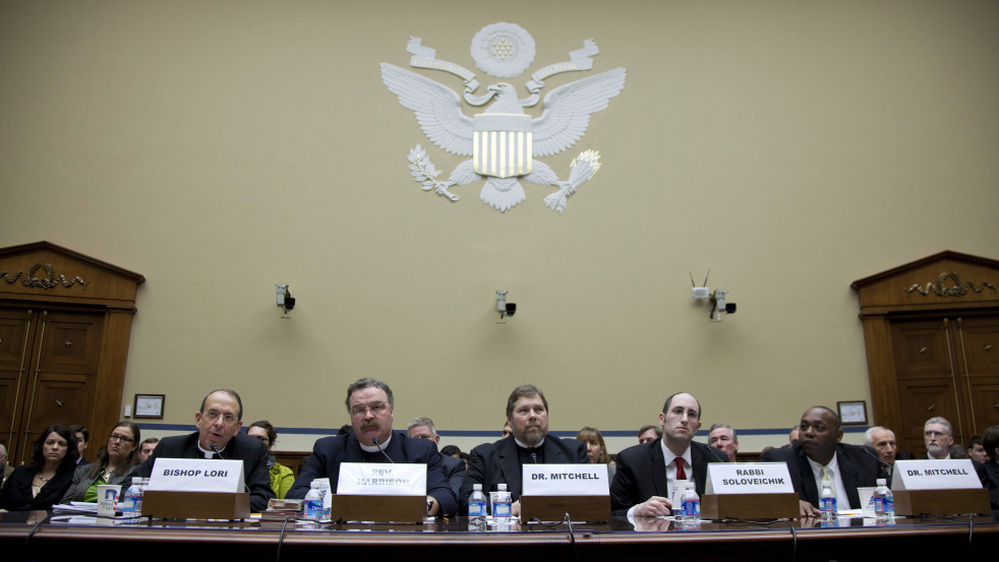
Jasanoff’s words resonate with a current issue: the debate over insurance coverage of contraceptives. Many of my Facebook friends have posted responses to this photo, citing the injustice that not a single woman was able to testify to Congressional committee on this issue of contraceptive coverage and religion. The online commentary is very much along the lines of “what is this, 1950?” At a time where women do have expertise in areas such as law, science, and religion, they are still not allowed in front of the curtain.

Works referenced:
Stephen Hilgartner, Scienceon Stage: Expert Advice as Public Drama (Stanford, 2000).

Kathy Wilson Peacock, GlobalIssues in Biotechnology and Genetic Engineering. (New York: Infobase Publishing, 2010).

January 12, 2012

Science in the 20th Century: An abbreviated tour


This week for a class we read several chapters from the book, Science in the Twentieth Century, edited by John Krige and Dominique Pestre. The 20th Century is, of course, my favorite century because of the developments in technology and agriculture. World War I and II are significant milestones for innovation in the 20th Century, as many of the authors noted. And much of the science policy that we operate by today is driven by our conceptions of innovation from the post-war era, and the famous science policy manifesto, Science, the Endless Frontier by Vannevar Bush.

Chapter 6 by Theordore Porter, “The Management of Society by Numbers,” dealt with the emergence of accounting and managerial science. Porter asserts that concepts such as statistics and cost-benefit analysis didn’t just emerge as a tool of capitalism, but rather the tools themselves co-evolved with ways to shape political order. Writing about nation-based economic planning, accounting, and growth, Porter writes, “Clearly such statistics have to do with regulating social and economic life, not merely with describing it” (p. 101). Turning often-nebulous concepts such as “cause of death,” race, and cost-benefit analyses into concrete numbers and statistics is a classic project of the Enlightenment, but Ported shows how exactly these tools had an impact on society. The extreme case of imposing technological order on society is demonstrated by eugenics, which Daniel Kevles explores in Chapter 16. Eugenics was the promotion of “good breeding” and sometimes coerced sterilization, but was eventually shunned after its central role in Nazi science. But IQ tests, initially developed to test soldiers in WWI for their leadership capacity, clearly played and continue to play a role in how we categorize and govern out citizens, and especially how we educate them.

What I found most profound about Porter’s chapter was how the rationalization of government projects and citizens is at once technocratic, but also transparent. Anyone with a bit of training can challenge scientific or economic results, imposing their own values on the intepretation. Porter writes, “such tools are not unambiguously friendly to elite experts. Expertise means not simply the ability to apply difficult technical methods, but also, or mainly, the capacity to exercise judgment with wisdom and discrimination” (106). To me, this is where the system breaks down. There is an expectation that scientists should be politically uninvolved and devoid of values. From the scientists’ perspective this is the “loading dock” model: you do your research, then drop it off at the dock and just hope someone picks it up and uses it. The problem, as we see with climate change, is that anyone can contest the results. We shouldn’t ask scientists to be advocates, but there should be more “Honest Brokering” of science and how we can use it as a tool for democracy, rather than stalemating policy.

I also enjoyed Chapter 12 by W. Bernard Calson, titled “Innovation and the Modern Corporation.” Carlson traces some of the major inventors and innovators back into the 1800s, showing the differences between the lone-inventor of Thomas Edison to today’s research laboratory style of corporate innovation. The most interesting thing was the co-evolution of technologies and organizational structure in major firms like GE and Bell Laboratories. There is a delicate balance between letting inventors and scientists have enough creative mobility, but also channeling their work into a commercial product. This is one of the key tensions of science policy, and the supposed divide between “basic” and “applied” research. In Deborah Fitzgerald’s chapter on the history of agricultural science, she reveals similar themes. During the 20th Century, agricultural science went from not being a science at all (farmers didn’t use scientific management or breeding), to an informal network of public and private scientists in the 1920s, to now the highly technological system of agriculture and the dominance of private corporations. The organizational structure of agricultural science, as in most technological industries, is both dependent on and determining of the type of technologies that emerge from these enterprises.

January 7, 2012

Energy Innovation and the Department of Defense


Last spring I spent a lot of time learning about military history. Not really by choice, but rather in an effort to better understand technological innovation. In my classes with Dan Sarewitz and ASU's president Michael Crow, we constantly discussed how many of the core innovations of the 20th century had military origins. In other words, "Steve Jobs didn't just invent the computer in his garage" (paraphrasing my professors). Both computers and the internet have a distinct military heritage. 

The military often plays a role in technological innovation because most technologies need an "incubation" stage before they are commercialized. Since private firms are sometimes unwilling to take on this risk, the federal government often plays a role in incubating technologies (many of which will turn out to be failures) through research and development contracts (called procurement). Because of this connection between military spending and technological innovation, Sarewitz describes the possible backlash if defense budgets get cut in a NYT article yesterday. The article states, 
As the Pentagon confronts the prospect of cutting its budget by about 10 percent over the next decade, even some people who do not count themselves among its traditional allies warn that the potential impact on scientific innovation is being overlooked. Spending less on military research, they say, could reduce the economy’s long-term growth.
This is not good news, but Sarewitz and others are not calling for more weaponry, but rather more public-good oriented investments, such as in renewable energy. Because the military is a key user of technology, it has a stake in developing commercial technologies from airplanes to computers to renewable energy, which we reap the benefits of. And this shows the difference between the military’s capacity to promote technological innovation and, say, the Department of Energy’s (DoE). The DoE is ultimately not the end user, and is driven by different scientific and public policy motivations. This, plus relatively declining investments in renewable energy through the DoE, result in a stagnant pool of innovation. Yet soldiers’ lives depend on fuel efficiency, sources, and transportation for military aircraft and vehicles, prompting the Department of Defense to pay very close attention to energy issues and even climate change. 

There is an ongoing question throughout the history of science policy on the relationships between the military, industry, and universities. Eisenhower famously warned about the “military-industrial complex” in 1961. Yet regardless of the military applications of alternative energy technologies, this presents an interesting strategy for commercializing technologies on a national, if not global, scale. Many environmental advocates envision the government supporting an Apollo of Manhattan Project for clean energy. The Department of Defense can take on projects with a high risk of failure that other agencies and companies can't, because of their access to research and development funding.

We can relate energy systems back to Freeman and Louca’s work on Kondratian waves and core inputs in our sociotechnical system. They discuss how coal and iron became integral to England’s national industrial infrastructure only after railways brought down prices. Even so, there was political and cultural resistance to steam engines in some places (just like now, there's resistance to windmills, and other NIMBY issues with alternative energy). Energy is one of the most essential core inputs, and a change in this could fundamentally alter our society in ways that we cannot imagine (like how two-hundred years ago, it would seem preposterous that we could get fertilizer from the air). The military could play a role in incubating new alternative energy technologies that are not yet technologically possible or commercially viable. I agree with Sarewitz that I don't necessarily want to see more guns, but I also don't want to see energy security fall by the wayside.

Further reading: 

Chris Freeman and Francisco Louca,
As Time Goes By: From the Industrial Revolutions to the Information Revolution.

David Mowrey, Paths of Innovation: Technological Change in 20th-Century America.

Vernon Ruttan,
Is War Necessary for Economic Growth?: Military Procurement and Technology Development.

December 29, 2011

Environmental science and politics: Book reviews


Having a bit of time off this week, I've read two books that both take a political ecology approach to environmental problems. Political ecology emerged from a certain tradition of social scientists, and really seeks to intertwine the social and natural aspects of the environment. Since both books are relevant to the themes of this blog and my own research, I thought I would do a quick review!

The first book was Critical Political Ecology by Tim Forsyth. I had the pleasure of meeting Dr. Forsyth over the summer, so I was really excited to read this book. Forsyth combines critical social theory with STS, philosophy of science, and his on-the-ground experience in international development work in South and Southeast Asia. The central theme of his book is that environmental science has been used to reinforce "environmental orthodoxies," which are similar to myths or narratives. Some of these key environmental orthodoxies are that population growth causes soil erosion, and deforestation causes loss of biodiversity. Forsyth shows that these arguments are used for specific political/normative agendas, but that alternative scientific approaches have actually revealed contrary data in some contexts. Each chapter reviews different case studies that touch on themes of democratic science, science-policy boundaries, global risk and uncertainty, and scientific expertise vs. indigenous knowledge. Overall, his book shows the tension between top-down environmental orthodoxies and local adaptations to the environment, and the limits of using scientific facts to make policy decisions.

The second book I read was Arun Agrawal's Environmentality (no connection to the photo above, but still funny). "Environmentality" is a form of Foucault's "governmentality," which roughly means rendering subjects governable. So environmentality is the making of environmental "subjects" through technologies of governance. The primary technology that Agrawal examines is the use of statistics in Indian forestry, starting in the mid-eighteenth century under British colonial rule. Agrawal takes both a historical and anthropological approach to the region of Kumaon, in northern India (looks like a horrible place for fieldwork). He uses historical sources as well as surveys and interviews to show how Kumaon villagers have a dialectical relationship with state-driven forest policy, which protects forests but limits local access. The villagers use some of the environmental rhetoric of protecting forests, while simultaneously using it to their advantage and resisting state control. This is a great analysis, because it confronts the shortcomings of a one-sided approach to development politics (i.e. either ignoring or too relient on indigenous knowledge and local adaptations).

The themes of local adaptations vs. global development/top-down power/technological interventions is seen throughout Forsyth and Agrawal's recent work, especially with regards to climate change, and is something I hope to explore in my own research on agriculture in India (once I figure out what I'm doing...).

Finally, I also recently enjoyed Paolo Bacigalupi's The Wind Up Girl, which is a science fiction novel about a dystopian, post-sea-level-rise, post-fossil-fuel world. Bacigalupi's dislike of agri-chemical companies is obvious, as they are the main antagonists in the hunt for the last remaining seed bank in Bangkok, Thailand. Intriguingly, the government in Thailand is dominated by the Environment Ministry, which usurped power because of the impacts of climate change and global pandemics. Perhaps my favorite aspect of the book is that in the absence of fossil fuels, energy is measured in calories since the only remaining energy sources are biological. This relates back to Agrawal's Environmentality-- making things into government subjects by classifying them-- whether it's carbon emissions or calorie intake.

[UPDATE] I also wanted to say THANK YOU to everyone who's reading and commenting! According to Blogger stats, I've had over 4000 pageviews this year. Not sure how accurate that is, but thanks even if you're not getting counted through GoogReadz or something. Happy New Year!

November 21, 2011

Ethics and Science: Climate Adaptation, Bird Flu, and Vaccines


Next week I'm giving my first lecture to undergraduates on "Sustainable Development: Climate Change and the Ethics of Adaptation." I'm trying to narrow down the three main themes I want to get across, while teaching the students something about the nuances of adaptation, resilience, and vulnerability. I'm going to focus on Bangladesh, gender, and agriculture, since I have a background in these things and they make a great case studies. While I'm working on that, take a look at these three science policy blog posts that I really enjoyed this week:

Adaptation or Development? (via the CGIAR's CCAFS blog). This post surprised me at first, because typically this blog promotes straight-up climate-proofing development and technological fixes. It looks like the guest author is a policy researcher. This reminds me of some of the work of Jessica Ayers, a young scholar who I've been reading a lot of lately.
When we think of climate change adaptation in agriculture the first thing that comes to mind is improved crop varieties. Water harvesting and irrigation schemes may also be high on our list. Perhaps too is crop diversification. But on a recent trip to western Kenya, one agricultural community reminded us that sometimes the interventions that can most improve the adaptive capacities of small-scale farmers may not occur on or even near the farm.
Publish or Perish (by my friend Jessie, a Lyman Briggs graduate and medical researcher). Jessie writes about the ethical conundrum in publishing a scientific report about a more virulent strain of bird flu, and the implications for scientific governance.
One result of a global biomedical research field is that there exists no single regulatory body to dictate publication ethics in cases like these. Instead, there is an amalgam of various institutional, professional, local, state, national and international governmental and regulatory bodies which come together to dictate first ethical laboratory practices, allocation of research monies, and finally what happens with research-driven revelations.
The Vaccine Controversy (by Michael, an ASU colleague/my favorite person). This week we brought my former professor, Mark Largent, to ASU's campus where he met with the graduate students and gave a talk on the vaccine debate. Michael's write up hits the key points of his talk, which is about how the vaccine controversy is a case of scientized politics: a very Pielke/Sarewitz-esque argument.
But parents, looking for absolute safety and certainty for their children, aren’t convinced by scientific studies, simply because it is effectively impossible to prove a negative to their standards. A variety of pro-vaccine advocates, Seth Mnookin and Paul Offit among them, have cast this narrative as the standard science denialism story, with deluded and dangerous parents threatening to return us to the bad old days of polio. This “all-or-nothing” demonization is unhelpful, and serves merely to alienate the parents doctors are trying to reach.
Enjoy and have a Happy Thanksgiving!

November 10, 2011

Conferences and sociotechnical systems


Flying is a constant, necessary (in)convenience in my life. While it’s great being only a 4-hour flight away from Michigan when I’m in Arizona, the endeavor requires careful planning, packing, arranging, and management of every little detail from my laptop’s battery life to remembering to drink water. I’m doing a lot of flying this month, and just got back from the joint conference of the History of Science Society, Society for the History of Technology, and the Society for Social Studies of Science. As a consequence of all this talk of science and technology, I can’t help but begin to see everything as “socio-technical system.”

If you’ve seen the movie “The Matrix,” you have an idea what graduate school is like for me. There’s a Facebook page for one of my advisors, Dan Sarewitz, that jokingly asks,
- Are you unable to sit through a traditional biology/chemistry/physics/engineering/economics course without constantly contemplating how your professor managed to "drink the kool-aid?"
- Do you constantly remind yourself that your science professors are but tiny cogs in a global innovation machine?
- Are you unable to look at a tomato without thinking about science, politics, labor economics, sociology, anthropology, Michael Crow, agriculture, geopolitics, innovation systems, the University of California, and climate change?
- Does the mere mention of the "linear model" make you shudder?
- Are you unable to synthesize your views on climate change in less than 5,000 words? 
If so, you are probably a former student of Dan Sarewitz. You will never hold a mainstream academic position, and your peers (and the public) will never quite be sure what your "deal" is. That's what you get for taking the red pill.
Yep, that sounds about right.

A major project of the science studies is to give social, historical, and political context to the technologies we use in our everyday lives. For example, I’m reading a book by Maria Kaika about urban water infrastructures. We don’t really think about where our water comes from every day. We turn on the tap and expect water to be there (in the Western, developed world, at least). What we don’t think about is what it takes for that water to get there and for an assured, constant, and instant supply of water at our faucets. During the rare times when the tap might go out, we get a profound sense of “uncanny” because our expectations are suddenly jolted as we realize water doesn’t just appear form the walls. The author writes about the hidden infrastructure of urban water. For example, let’s say you visit a dam someplace out west. We don’t really connect this with out water supply, and also the enormous amount of energy needed to move water from the source to tap. All of this is hidden from view and out of mind. Kaika argues that this is because of the artificial divide between “wild” nature and the sanitized urban home. So here we have not only a sociotechnical system, but a socio-technical-environmental system.

Back to airplanes, since I’m actually writing this on the plane! Airplanes, and the process of air transportation, are a more visible form of sociotechnical systems. We stare in awe at the massive planes used for transcontinental flights. But from the second you walk into the airport, you become immediately aware that you are part of a finely tuned system of both humans and technologies. We are enrolled, inspected, standardized, and shuffled into our seats. Usually everything goes well, but today after our flight landed, the electricity went out as we were leaving the plane. This was also an example of “uncanny,” even though it is a more visible system. We can see the nuts and bolts of the plane (and don’t get me started on rivets… we read a painstaking paper last semester about the technological innovation behind airplane rivets), but we still expect everything work.

Think about the complex and heavily embedded system behind energy extraction and production, and the technological disaster that this has caused. These aren’t just technological disasters though, they are most definitely sociotechnical disasters. It’s crucially important to realize that humans design, maintain, and run these systems (to the extent that we have control). But inevitably, tightly coupled systems, such as energy, increase the severity of human error and technological failures. The take home message is that we often don’t notice sociotechnical systems until they fail.

UPDATE: Here's a great link via Arijit on the nation's water infrastructure being ignored.

October 8, 2011

Genetically modified foods and public engagement


A great blog you should check out this weekend is Jack Stilgoe's "Responsible Innovation." My grad colleagues and I recently enjoyed discussing his "'How' technologies and 'Why' technologies." An excerpt:
Some emerging technologies are defined by how they do things. So called ‘platform-technologies’ or ‘enabling technologies’ like synthetic biology provide new ways of doing a whole lot of different stuff.... Geoengineering, on the other hand, is defined by its intentions (I wrote about this here). Its target is a future in which we are able to influence the climate. This doesn’t mean that geoengineering researchers desire this future. Many of them would despise such a prospect. But they are interested in it. So while nano and syn bio are defined by the how, geo is defined by its why. This invites different sorts of governance and difference sorts of public engagement.
But his recent post that really intrigued me was an interview with Stilgoe on engaging the public in dialogues about genetically modified (GM) foods. Stilgoe discusses how going into a public dialogue about GM foods is different than with a more politically-neutral, or less entrenched, topic (see my previous post on GM and risk; also see my post on public dialogues). He also talks about "upstream engagement," which means involving the public in science throughout the research process, rather than just dealing with the possible consequences of the results. On engaging with stakeholders:
[Q:] The report speaks of engagement with both stakeholders and the public. In the case of GM, what do you perceive to be the difference, and do we need a different approach for each? 
[Stilgoe:] Absolutely we need a different approach for each. When you are engaging upstream, everyone is a potential stakeholder; yet at the same time there are no obvious direct stakeholders because there isn’t anything yet for people to have a stake in, except researchers and the people who govern that research. In a downstream discussion like GM, there are clearly established stakeholders: farmers, regulators, politicians, interest groups, supermarkets, and animal feed companies who all need to find a way to thrash things out in a fairly old fashioned way. I think that confusing this activity with public engagement is unhelpful and puts far too large a burden on public engagement. 
I think there’s another important set of lessons that need to be learnt which we didn’t cover in the report, particularly about how to engage with stakeholders. These more controversial issues involve direct action, lobbying and engagement in ‘uninvited spaces’ that government is not controlling and is less comfortable with. With an issue such as GM, working out mechanisms for this form of engagement may be more important than convening a formal public dialogue.
Really interesting stuff to think about! Have a good weekend!

July 20, 2011

Global science policy for innovation and adaptation in agriculture


All summer I've been working on a paper, long overdue, for my Innovation Studies class. My main focus is how technological innovation in agriculture promotes or constrains adaptive capacity to climate change. Here is a review and my response to some recent global reports. (If you're wondering why I choose Google's Mendel-themed logo today, scroll to the bottom!)

Due to the importance of agriculture to international development efforts, international consortiums such as the World Bank have examined the prospects for future agricultural research and innovation, increasingly in the context of climate change adaptation. Especially in Africa, agriculture-based technology transfer has been a main focus of organizations like the United Nations Development Programme’s Climate Change Adaptation Team (Tessa & Kurukulasuriya, 2010). The "technology transfer" model has been upheld since the Green Revolution, but agricultural development paradigms are beginning to shift towards an "innovation systems" approach (McIntyre et al., 2009).

The international development literature also examines the synergies between agricultural innovation and adaptive capacity. A World Bank report on agricultural innovation addresses adaptive capacity, though not specifically with regards to climate change, stating that:
Using technical assistance... does not build capacity to innovate unless it is linked to specific efforts to learn from these experiences and develop networks that can both anticipate changes and bring in the expertise to deal with them as needed. In other words, firefighting approaches result in ad hoc responses but not in a sustainable capacity to respond…. Sectors or organizations require an adaptive capacity, whereby they are plugged into sources of information about the changing environment. The other facet of adaptive capacity is that it requires links to the sources of knowledge and expertise needed to tackle a varied and unpredictable set of innovation tasks. (World Bank, 2006, p. 70)
Based on a 2009 World Bank report on the same topic, innovative capacity and adaptive capacity are used somewhat interchangeably (again, not necessarily in the context of climate change, but rather broader economic, social, and environmental change) (Rajalahti, Janssen, & Pehu, 2009). However, as opposed to the emerging innovation systems approach of major development organizations, the International Food Policy Research Institute (IFPRI), part of the Consultative Group on International Agricultural Research (CGIAR) and also under the World Bank umbrella, tends to take a more reductionist approach to science and technology innovation. They often make broad claims such as, “Even without climate change, greater investments in agricultural science and technology are needed to meet the demands of a world population expected to reach 9 billion by 2050… Agricultural science- and technology-based solutions are essential to meet those demands,” based on global models and metrics of yield and calories (Nelson et al., 2010, p. viii).

The CGIAR recently launched a “Climate Change, Agriculture and Food Security” (CCAFS) program area that brings together global experts on climate change and agriculture. The CCFAS, like many mainstream international development agencies, takes a vulnerability approach to climate change and rural livelihoods. Despite some focus on reconciling the supply and demand of science (for example, through boundary work), linear models such as “Feeding climate information into climate-limited livelihood systems holds a great deal of promise” often prevail (CGIAR, 2009, p. 19). In the case of the CGIAR, there are constraints on both the supply and demand side of innovation in international agricultural research systems. The CGIAR has a history of investing in plant genetic research, so there is a bias towards plant breeding and biotechnology that can result in narrow research objectives (Dalrymple, 2006). On the demand side, adoption of technological innovations is constrained by farmers’ perspectives, which are often highly local and limited by time-scale (Dalrymple, 2006). Lybbert and Sumner (2010) explicitly address the opportunities and constraints for technological innovation and adoption of climate-relevant technologies (for both mitigation and adaptation) in developing countries. They point out government interventions that can have a significant impact on technological developments and farmers’ adaptive capacity, such as intellectual property rights and research and development priorities.

A report titled “The top 100 questions of importance to the future of global agriculture” identifies climate change impacts as one of the most pressing concerns of global agriculture (Pretty et al., 2010). The authors frame climate change adaptation in the context of tradeoffs in the ‘food, energy and environment trilemma’ (Tilman et al., 2009), and ask questions such as, “How can the resilience of agricultural systems be improved to both gradual climate change and increased climatic variability and extremes?” (Pretty et al., 2010, p. 225). Questions 59-72 deal explicitly with increasing farmers’ innovativeness and adaptive capacity through models of agricultural extension, participatory research, gender-equity at all levels of research and extension efforts, and improving overall rural livelihoods (Pretty et al., 2010).

The International Assessment of Agricultural Knowledge, Science and Technology for Development Global Report is another recent and comprehensive article on the state of global agriculture and science and technology policy. On the topic of climate change, it states that, “Agricultural households and enterprises need to adapt to climate change but they do not yet have the experience in and knowledge of handling these processes, including increased pressure due to biofuel production” (McIntyre et al., 2009, p. 3). The authors propose to increase the reach of extension education and access to natural and financial capital as ways to promote farmer adoption of technologies, as well as exploiting synergies between knowledge and technological innovation. In terms of climate change adaptation, the authors lay out two pathways: high technology (crop, soil, and climate modeling, plant genetic improvement) and low technology (irrigation, farm management practices). It is worth noting that the high technology approach of biotechnology and climate models are “supply heavy” and rely significantly on future technological breakthroughs, whereas the low technology approaches are “win-win” adaptations for smallholder farmers that both improve yields and increase adaptive capacity. 

However, one of the climate take-home messages of agricultural innovation scholars is that future technological innovation and global market trends are likely to be more important than the negative impacts of climate change. The predicted gradual climatic shifts will allow institutional innovation to occur in agricultural research, especially in light of the United States’ history of making cheap food a priority through market structures (such as subsidies and disaster insurance) and investment in technology. Bill Easterling (1996) predicts that farmers may face some climate related losses, an increase in global demand (thus the need for higher yields or more cropland), and overall increased constraints on farm finances. Technological innovations such as land management techniques, crop genetic diversity, and rapid response to inputs such as energy prices will be more important.

In my paper I examined how different agricultural technologies- from plant breeding and varieties, to irrigation, to climate forecasts- can present opportunities and constraints for adaptation. Something that's been on my mind lately is the utilization of plant genetic resources (hence the Gregor Mendel logo!) for climate adaptation in agriculture. More on that soon!

June 24, 2011

4) Science and Public Value


A friend of mine asked about my last post on the "co-production" of knowledge, "who then 'owns' the research or is it always a public resource after co-production?”

Great question, and one that scholars have been struggling with especially in light of patents on genes and other biotechnology, such as genetically modified foods. This is generally referred to as "intellectual property" or "intellectual property rights" (IPR). Patents are supposed to protect the inventor and fuel innovation, but the case lately has been an increasingly convoluted fight over patent law, with "patent sharks" prowling for unclaimed discoveries that they can later sue companies for using. The figure below demonstrates some of the craziness in just smart phones:

But what happens when a drug company asks an indigenous tribe about their medicinal plants, and then goes on to patent and produce the medicinal compound? Or when patients donate their DNA to a study, only to be charged later for a test or treatment because a biotech company has patented the blueprint of the gene that causes cancer? Who should "own" that knowledge?

These are questions that modern governments are dealing with for the first time due to technological advances. Public research organizations are dealing with them as well: for example, the public agricultural research system that is largely responsible for last century's "Green Revolution" now must be more cautious about what agricultural technologies they can use, because of all the patents. Richard Jefferson is someone who understands this problem and is creating innovative solutions that benefit poor countries. He started a company that promotes "open source biology" by patenting discoveries in agricultural science, but then making those discoveries public. Some excerpts from this paper:
Most critically, we must democratize these abilities, both to measure and to respond, in order to diversify agro-ecosystems and environments and decentralize the problem-solving capability. We will achieve this by fostering scientific method and harnessing local knowledge and commitment in communities that have previously been ignored or treated as passive recipients of help. (p. 38)

At the start of the twenty-first century, science is at a critical juncture. Four centuries of inquiry, discovery, and invention have created a base of knowledge that has the potential to provide people everywhere, in all circumstances, with nourishment, improved health, and longer life. But the institutional mechanisms that ostensibly exist to encourage the application of science to practical problems are today hindering that very process. The norms that have evolved around gate-keeping have created new clergy, new impediments and new inefficiencies. Without a systemic change, science’s promise will not be available for those who most need it, and the promise of a truly diverse, robust and fair innovation culture may elude us. (p. 40)

This all boils down to a question of science and the public good. The "social contract of science" is an unspoken agreement that science, in the end, will produce public good. As the environmental movement often points out, science sometimes produces public bads. Or it doesn't produce the hoped-for goods. For example, “there are 6000 patents that invoke ‘plant breeding’ and ‘drought resistance’ yet none of them has yet resulted in an improved commercial variety” (Clark et al., p. 10). Agricultural extension programs do unique boundary work that is affected by both private and public interests. The private sector is crucial to developing new, useful technologies for farmers. Agricultural research institutions must increasingly embrace their role as a mediator between the private realm of gene patents and their goal of developing agricultural technologies for the public good.

More broadly, many of my colleagues at ASU's Consortium for Science, Policy, and Outcomes are working on this issue of science and public value. A recent issue of the journal Minerva featured their work, and a short review is available here. Also, this very-readable report by a British think-tank called Demos takes a Science & Technology Studies perspective on this topic. They tackle head-on provocative questions that I've been exploring throughout this blog:
Science has major social benefits and thus ‘public value’. Yet crucially, as recent controversies have underlined, this value cannot be assumed and taken as automatic, no matter what scientific research is done, or under what conditions. We need therefore to shift from noun to adjective, by asking not only: what is the public value of science? But also, what would public value science look like? (p. 29)

June 13, 2011

Science policy communication failure costs lives


A recent issue of Science magazine features a news article about seven scientists in Italy who are facing manslaughter charges for not predicting the danger of an earthquake that killed 308 people. The scientists were part of a risk committee of earth scientists who testified that incipient tremors were not evidence of an oncoming earthquake in 2009. According to Science, “They agreed that no one can currently predict precisely when, where, and with what strength an earthquake will strike” (3 June 2011, p. 1135). These are all accurate statements, from a scientific point of view. But the problem lies in translating these statements for decision-makers and stakeholders, which includes people in the town of L’Aquila, Italy.

The lead scientist “maintained that he and his scientific colleagues had a responsibility to provide the ‘best scientific findings’ and that it is ‘up to politicians’ to translate the scientific findings into decisions” (Science, 3 June 2011, p. 1136). This is the linear model of science policy at its worst, literally costing lives because of the mismatch of science and policy risk management paradigms, or as Cash et al. (2006) describe, the “loading dock” model of simply delivering scientific results and hoping that the public sphere will pick them up and use them. To the scientists, risk and uncertainty are quantifiable metrics that are difficult to translate into social action. To decision-makers and the public, risk is a socially mediated, multidimensional value that depends on more than just probabilities. Uncertainty has been a traditional sticking point in earth science and policy topics such as climate change. However, Cash et al. (2006) demonstrate how bringing together scientists and decision-makers from the beginning helped improve the utility of climate models for end-users. They write, “Scientists began to understand that managers were comfortable making decisions under uncertainty, and managers began to understand the concerns scientists had about making scientific claims in the face of uncertainty” (Cash et al., 2006, p. 482). This was clearly not the case with the Italian scientists and decision-makers.

At first glance, this case provokes outcry from scientists afraid of losing the public’s trust and being put on trial, literally. While it may be presumptuous to actually put scientists on trial for a failure to dialogue with decision-makers, this puts into question the implicit “social contract of science” that has justified basic scientific research since the end of WWII. Sheila Jasanoff told a group of ASU graduate students last spring that, “Scientists have become arrogant, and have not explained to the people why they deserve support... The Enlightenment was not a historical event. It is a process, a mission, a continuous duty to explain yourself” (personal communication, 11 February 2011; not an exact quote, but very close). Jasanoff lays out an alternative claim to the linear model of science policy that she calls “technologies of humility” (2003). In contrast to calls for “more science” to reduce uncertainty, Jasanoff writes that, “what is lacking is not just knowledge to fill the gaps, but also processes and methods to elicit what the public wants, and to use what is already known” (2006, p. 240). The abstract of her paper states, “governments should reconsider existing relations among decision-makers, experts, and citizens in the management of technology. Policy-makers need a set of ‘technologies of humility’ for systematically assessing the unknown and the uncertain” (Jasanoff, 2003, p. 223). Jasanoff and other Science and Society scholars have been writing about the failures of the linear science policy model in predicting risk since the 1980s, when the risk-management paradigm began to crumble in the wake of seemingly “unpredictable” human-technology-based disasters like Chernobyl. Today we face critical policy issues from climate change to toxic chemicals that fundamentally depend upon and understanding of environmental science, but just understanding the science is not enough. We need a new model of science policy that incorporates the needs of decision-makers and stakeholders from the start, not after it’s too late.
Sources:
Cartlidge, E. (3 June 2011). “Quake Experts to Be Tried For Manslaughter.” Science, 332, p. 1135-1136.
Cash, D.W., Borck, J.C., & Patt, A.G. (2006). “Countering the Loading-Dock Approach to Linking Science and Decision Making.” Science, Technology, & Human Values, 31, p. 465-494.http://sciencepolicy.colorado.edu/students/envs_5100/Cashetal2006.pdf
Jasanoff, Sheila (2003). “Technologies of Humility: Citizen Participation in Governing Science.” Minerva, 41. 223-244.http://sciencepolicy.colorado.edu/students/envs_5100/jasanoff2003.pdf
Further reading:
Sarewitz, D., Pielke, Jr., R.A., & Byerly, R. (editors) (2000). Prediction: Science, Decision Making and the Future of Nature. Washington, DC: Island Press. Available at: Google books, Amazon.com

May 27, 2011

The linear model: science to policy

Image source: FY 2012 NIH Budget Roll-out, PowerPoint Presentation, February 15, 2011.

In my last post, I brought up the "linear model" of basic to applied research. This is pervasive at the highest levels of U.S. federal science agencies: for example, the image above is from a presentation by Francis Collins, the director of the National Institutes of Health (NIH). The NIH has recently been under attack for not producing breakthroughs in biomedicine that can be applied to society. Looking at the statistics, the United States spends the most on health care (per GDP and per capita) than any other developed country, yet we rank 24/30 for life expectancy of these developed countries (source: Crow, 2011). And we spent 26.6 billion on NIH-funded scientific research in 2010. There's not simply a "gap" in the pipeline that links science with society; there's a fundamental mismatch of research funding and goals, and with health outcomes. Many of the health-related outcomes we strive for do not require more basic research, but rather changes in social, behavioral, and economic factors (access to cheap, nutritious food, preventative medicine, cessation of smoking, etc.).
Another version of the linear model as a research "pipeline."


A recent report by a medical advocacy group promotes the linear model that investment in the NIH has led to positive economic outcomes, such as creating public and private jobs. That's great, but that still doesn't answer the question about health outcomes. For example, what's the difference between creating medical jobs, and simply endowing the arts and creating more jobs for artists? A good answer is that we use science for more than just finding cures; we also use it for guiding policy decisions and making politics more transparent through a common language of science.

STS scholars like Yaron Ezrahi have written extensively on how science is necessary to democratic politics because we can require politicians to justify their actions. "Seeing is believing" has been a mantra of science since the 1600s, and science can be used to "see" things like environmental and health impacts. But most of the time, science is not so easy to translate into politics. The case of climate change, and other environmental debates, are a good example of this.

This brings me to the second type of the mythical "linear model": the science-to-policy model. Roger Pielke, Jr. writes about this in The Honest Broker, which I will once again recommend. Like the NIH, the Intergovernmental Panel on Climate Change (IPCC) is part of a scientific authority that believes that more science=good policy outcomes. For quite a few years now, the assumption has been that science tells us climate change is bad, therefore we need policy to stop carbon emissions. In this model, the scientific experts appear to be removed from the politics (the "Mertonian ideal") However, climate change is more complicated than just carbon emissions, and this linear model limits how we can deal with the impacts of climate change that we cannot stop. Dr. Silke Beck is a German social scientist who writes about this in an article called, "Moving beyond the linear model of expertise? IPCC and the test of adaptation," published in the scientific journal Regional Environmental Change in 2010.

According to the linear model, humans cause carbon emissions, carbon emissions cause climate change, and climate change has impacts that we must adapt to. If we are unsure of any of these steps, policy-making becomes a gridlocked debate over the science (which is full of inherent uncertainties, even when nearly all scientists agree that climate change is happening because of humans). Beck's analysis explains why more science has not led to better policies. In the linear model, solutions to climate change are restricted to limiting emissions. But there are other options: policies to promote overall adaptive capacity, and win-win improvements to infrastructure and technological innovation.

Beck's alternatives to the linear science policy model include promoting useful science that will aid decision-makers in addressing climate change impacts. She also calls for bottom-up involvement of local stakeholders (like farmers). This analysis relates not only to my previous post on "science for decision-making," but also future posts where I will discuss public participation in science. As a final thought, Dan Sarewitz and Roger Pielke wrote a great article in 2007 about reconciling the "supply" of science with the "demand" of social outcomes. They write,

"The resulting picture is complex and yields no single, straightforward model for how knowledge and application interact; yet one feature that invariably characterizes successful innovation is ongoing communication between the producers and users of knowledge." (Sarewitz & Pielke, 2007, p. 7)

Sources:

Beck, Silke (2010). "Moving beyond the linear model of expertise? IPCC and the test of adaptation." Regional Environmental Change. DOI 10.1007/s10113-010-0136-2

Crow, Michael (31 March 2011). "Time to rethink the NIH." Nature 471, 569-571.

Sarewitz, D. & Pielke, R. Jr. (2007). The neglected heart of science policy: reconciling supply of and demand for science. Environmental Science and Policy, 10, 5-16.