Showing posts with label experts. Show all posts

October 29, 2012

Scientists on trial

Last week my newsfeed blew up with reactions to the conviction of seven scientists for manslaughter. As I wrote about last summer, these scientists failed to predict an earthquake in Italy. Many people, especially my scientist friends, see this as an attack on science and scientists who, it seems from this perspective, should be let alone to do their work without political interference or, worse yet, fear of conviction. But as you might expect, I argue that we need to look at the social side of science. Scientists don't operate in a political vacuum  and as we see here, there are very real consequences from the muddled interaction between scientists and policy-makers. To re-paraphrase Sheila Jasanoff, "Scientists have become arrogant, and have not explained to the people why they deserve support... The Enlightenment was not a historical event. It is a process, a mission, a continuous duty to explain yourself.”

For another interesting perspective, check out Dan Sarewitz writing for CSPO's new blog, "As We Now Think."

March 7, 2012

Science in Democracy review


Mark Brown’s Science in Democracy: Expertise, Institutions, and Representation is a political philosopher’s take on science policy. Brown begins with two assertions: 1) that involving lay people in science policy debates doesn't make it any less politicized, and 2) when science is used as a proxy battle for politics, this brings up the question of representation. Exploring the history of how scientific and political thinkers, such as Machievelli, Locke, Boyle, Newton, and Latour, Brown draws connections between the arguments of political philosophers and their applications to modern science. Mainly, the question of representation in science.

By now a familiar argument to me, Brown starts off writing about the politicization of science and the scientization of politics; how science is a proxy battle for politics, or values. He writes, “Both modern science and modern liberalism connect elite reason with popular consent, while ensuring that the former retains power over the latter. The tension between the rationalism and voluntarism of liberal representative government thus parallels the tension between the exclusivity and publicity between democracy and political representation” (Brown, p. 91). Thus, Brown argues that science policy debates cannot be opened up to the entire population, for the same reasons that we do not have a direct democracy.

Brown’s arguments sharply counter Steve Hilgartner’s Science on Stage, which I discussed a few weeks ago. Let’s take two examples: birth control and food politics. Brown begins and closes his book with a discussion of the scientization of the debate over Plan B birth control around 2005-2006, and whether Plan B should be allowed without a prescription. Again, not a new argument to me, conservatives argued that more evidence was needed to prove the safety of Plan B. Just recently, the Obama administration was challenged by feminist groups because they denied approval to sell Plan B over-the-counter to minors. Obama made a similar argument, that there is not enough information on Plan B’s effect on minors to authorize it.

Another example of Brown’s case against science policy free-for-alls is in setting nutritional standards. For example, how do children’s cereals get away with advertising their products as healthy? The answer is a convergence of a scientized definition of nutrition combined with the strong influence of food lobby groups. To Brown, this is an example of the failure of representation (companies are represented, consumers are not), but also a closer examination of the values that go into science policy processes. He writes, “public deliberation and representation is required, not only in cases of obvious technical failure or public controversy, but also at the front end of technical development… political representation not only requires technical expertise but also occurs within technical expertise” (Brown, p. 89).


An interesting aspect of Brown’s argument is that “scientific representations that ‘stand for’ nature–especially when institutionalized as expert advice–play a key role in political representation” (Brown, p. 4). He compares this with Hobbes’s analysis that “the authority to represent nature’s interests, from this [Hobbes’s] perspective, does not directly rest on knowledge about nature, but rather on the formal authorization by those with legal control over it” (Brown, p. 130). Obviously we might find this problematic when dealing with environmental issues like climate change and ecosystem services.

February 18, 2012

Science on stage: experts and diversity (or lack thereof)


The National Academy of Sciences (NAS) is considered one of the most (if not the) prestigious groups of scientists in the US. The National Research Council, their research arm, produces reports that are ostensibly the pinnacle of objectivity and scientific rigor. But Steve Hilgartner, in his book Science on Stage, aims to show that even the pinnacle of scientific objectivity is still dependent on social processes. While the NAS are considered knowledge experts, you don’t see behind the curtain. Hilgartner uses the metaphor of stage management, where the NAS staff, scientists, and report contributors carefully manage the end products. Deciding something like what nutritional standards to recommend is obviously not only value-laden, but is also under pressure from politically motivated food lobby groups, as Marion Nestle shows in her book, Food Politics.

The NAS doesn’t use overt political rhetoric. Like most scientists, they strive to be as objective as possible. But Hilgartner shows that making knowledge claims is political. The NAS uses certain rhetoric to reify their role as sanctioned experts, and to eliminate sources of controversy. In an anthropology class I once took, we referred to this as impression management. Like Hilgartner’s “stage management,” we often consciously and unconsciously say and do things to create a certain impression of ourselves in different situations. Scientists engage in the same social process.

So is the NAS’s stage management technique problematic? Among STS scholars, the answer is “yes.” In fact, James Wilsdon and Rebecca Willis produced a booklet called “See-Through Science,” which calls of “upstream engagement” in science policy. As we discussed in class, this call for more transparent scientific processes and more space for public deliberation. Two topics we’ve discussed in class: community-based participatory research and Hispanic girls’ engagement in science and engineering, both seek to make science more open and transparent to diverse populations. And already, it’s obvious that the academy is slowly reacting to pressures to become more open.

In the recent past, most decisions about science policy have been made by a small group of people: mostly white, mostly male scientists. In 1975 at the recommendation of the NAS, eminent biochemist Paul Berg organized the well-known Asilomar conference to discuss the ethical implications of biotechnology. The conference was attended by almost entirely white male scientists. Wilsdon and Willis quote Sheila Jasanoff, writing, “Thirty years and several social upheavals later, the Berg committeeʼs composition looks astonishingly narrow: eleven male scientists of stellar credentials, all already active in rDNA experimentation” (p. 10). In other words, today we expect decisions about science policy to be made by not only experts, but also issue stakeholders of diverse interests and backgrounds.

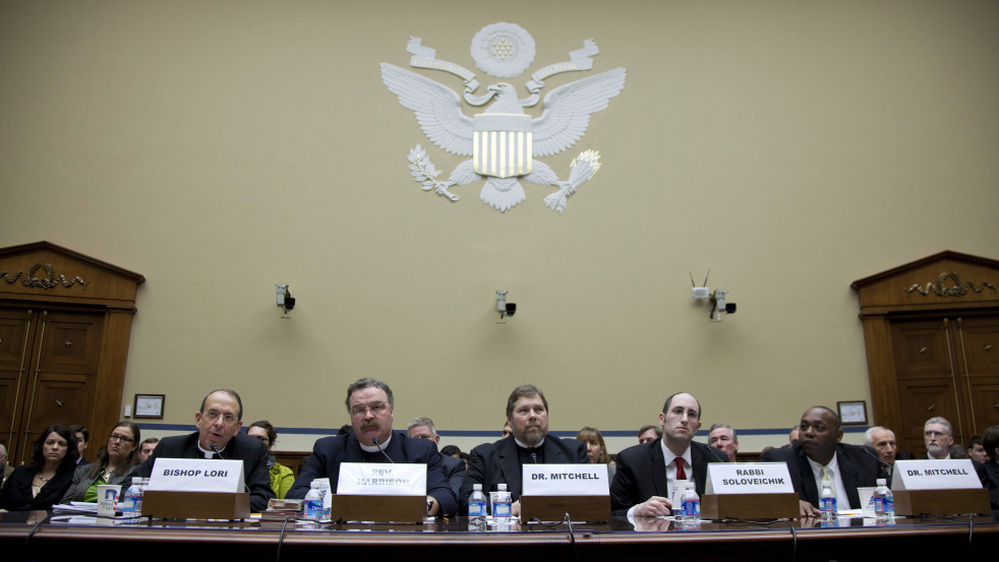
Jasanoff’s words resonate with a current issue: the debate over insurance coverage of contraceptives. Many of my Facebook friends have posted responses to this photo, citing the injustice that not a single woman was able to testify to Congressional committee on this issue of contraceptive coverage and religion. The online commentary is very much along the lines of “what is this, 1950?” At a time where women do have expertise in areas such as law, science, and religion, they are still not allowed in front of the curtain.

Works referenced:
Stephen Hilgartner, Scienceon Stage: Expert Advice as Public Drama (Stanford, 2000).

Kathy Wilson Peacock, GlobalIssues in Biotechnology and Genetic Engineering. (New York: Infobase Publishing, 2010).

January 12, 2012

Science in the 20th Century: An abbreviated tour


This week for a class we read several chapters from the book, Science in the Twentieth Century, edited by John Krige and Dominique Pestre. The 20th Century is, of course, my favorite century because of the developments in technology and agriculture. World War I and II are significant milestones for innovation in the 20th Century, as many of the authors noted. And much of the science policy that we operate by today is driven by our conceptions of innovation from the post-war era, and the famous science policy manifesto, Science, the Endless Frontier by Vannevar Bush.

Chapter 6 by Theordore Porter, “The Management of Society by Numbers,” dealt with the emergence of accounting and managerial science. Porter asserts that concepts such as statistics and cost-benefit analysis didn’t just emerge as a tool of capitalism, but rather the tools themselves co-evolved with ways to shape political order. Writing about nation-based economic planning, accounting, and growth, Porter writes, “Clearly such statistics have to do with regulating social and economic life, not merely with describing it” (p. 101). Turning often-nebulous concepts such as “cause of death,” race, and cost-benefit analyses into concrete numbers and statistics is a classic project of the Enlightenment, but Ported shows how exactly these tools had an impact on society. The extreme case of imposing technological order on society is demonstrated by eugenics, which Daniel Kevles explores in Chapter 16. Eugenics was the promotion of “good breeding” and sometimes coerced sterilization, but was eventually shunned after its central role in Nazi science. But IQ tests, initially developed to test soldiers in WWI for their leadership capacity, clearly played and continue to play a role in how we categorize and govern out citizens, and especially how we educate them.

What I found most profound about Porter’s chapter was how the rationalization of government projects and citizens is at once technocratic, but also transparent. Anyone with a bit of training can challenge scientific or economic results, imposing their own values on the intepretation. Porter writes, “such tools are not unambiguously friendly to elite experts. Expertise means not simply the ability to apply difficult technical methods, but also, or mainly, the capacity to exercise judgment with wisdom and discrimination” (106). To me, this is where the system breaks down. There is an expectation that scientists should be politically uninvolved and devoid of values. From the scientists’ perspective this is the “loading dock” model: you do your research, then drop it off at the dock and just hope someone picks it up and uses it. The problem, as we see with climate change, is that anyone can contest the results. We shouldn’t ask scientists to be advocates, but there should be more “Honest Brokering” of science and how we can use it as a tool for democracy, rather than stalemating policy.

I also enjoyed Chapter 12 by W. Bernard Calson, titled “Innovation and the Modern Corporation.” Carlson traces some of the major inventors and innovators back into the 1800s, showing the differences between the lone-inventor of Thomas Edison to today’s research laboratory style of corporate innovation. The most interesting thing was the co-evolution of technologies and organizational structure in major firms like GE and Bell Laboratories. There is a delicate balance between letting inventors and scientists have enough creative mobility, but also channeling their work into a commercial product. This is one of the key tensions of science policy, and the supposed divide between “basic” and “applied” research. In Deborah Fitzgerald’s chapter on the history of agricultural science, she reveals similar themes. During the 20th Century, agricultural science went from not being a science at all (farmers didn’t use scientific management or breeding), to an informal network of public and private scientists in the 1920s, to now the highly technological system of agriculture and the dominance of private corporations. The organizational structure of agricultural science, as in most technological industries, is both dependent on and determining of the type of technologies that emerge from these enterprises.

December 29, 2011

Environmental science and politics: Book reviews


Having a bit of time off this week, I've read two books that both take a political ecology approach to environmental problems. Political ecology emerged from a certain tradition of social scientists, and really seeks to intertwine the social and natural aspects of the environment. Since both books are relevant to the themes of this blog and my own research, I thought I would do a quick review!

The first book was Critical Political Ecology by Tim Forsyth. I had the pleasure of meeting Dr. Forsyth over the summer, so I was really excited to read this book. Forsyth combines critical social theory with STS, philosophy of science, and his on-the-ground experience in international development work in South and Southeast Asia. The central theme of his book is that environmental science has been used to reinforce "environmental orthodoxies," which are similar to myths or narratives. Some of these key environmental orthodoxies are that population growth causes soil erosion, and deforestation causes loss of biodiversity. Forsyth shows that these arguments are used for specific political/normative agendas, but that alternative scientific approaches have actually revealed contrary data in some contexts. Each chapter reviews different case studies that touch on themes of democratic science, science-policy boundaries, global risk and uncertainty, and scientific expertise vs. indigenous knowledge. Overall, his book shows the tension between top-down environmental orthodoxies and local adaptations to the environment, and the limits of using scientific facts to make policy decisions.

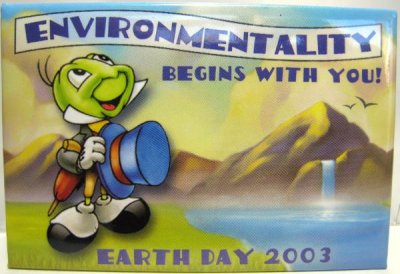
The second book I read was Arun Agrawal's Environmentality (no connection to the photo above, but still funny). "Environmentality" is a form of Foucault's "governmentality," which roughly means rendering subjects governable. So environmentality is the making of environmental "subjects" through technologies of governance. The primary technology that Agrawal examines is the use of statistics in Indian forestry, starting in the mid-eighteenth century under British colonial rule. Agrawal takes both a historical and anthropological approach to the region of Kumaon, in northern India (looks like a horrible place for fieldwork). He uses historical sources as well as surveys and interviews to show how Kumaon villagers have a dialectical relationship with state-driven forest policy, which protects forests but limits local access. The villagers use some of the environmental rhetoric of protecting forests, while simultaneously using it to their advantage and resisting state control. This is a great analysis, because it confronts the shortcomings of a one-sided approach to development politics (i.e. either ignoring or too relient on indigenous knowledge and local adaptations).

The themes of local adaptations vs. global development/top-down power/technological interventions is seen throughout Forsyth and Agrawal's recent work, especially with regards to climate change, and is something I hope to explore in my own research on agriculture in India (once I figure out what I'm doing...).

Finally, I also recently enjoyed Paolo Bacigalupi's The Wind Up Girl, which is a science fiction novel about a dystopian, post-sea-level-rise, post-fossil-fuel world. Bacigalupi's dislike of agri-chemical companies is obvious, as they are the main antagonists in the hunt for the last remaining seed bank in Bangkok, Thailand. Intriguingly, the government in Thailand is dominated by the Environment Ministry, which usurped power because of the impacts of climate change and global pandemics. Perhaps my favorite aspect of the book is that in the absence of fossil fuels, energy is measured in calories since the only remaining energy sources are biological. This relates back to Agrawal's Environmentality-- making things into government subjects by classifying them-- whether it's carbon emissions or calorie intake.

[UPDATE] I also wanted to say THANK YOU to everyone who's reading and commenting! According to Blogger stats, I've had over 4000 pageviews this year. Not sure how accurate that is, but thanks even if you're not getting counted through GoogReadz or something. Happy New Year!

August 22, 2011

"How science works": A jaded pursuit of knowledge?


As I get back into the swing of graduate school classes, I'll likely be blogging less frequently. But if you all keep sending me interesting articles, the more fodder I have for new posts!

A staple of STS theory, and other post-modern theories, is that "science" (defined roughly as an organized pursuit of/production of knowledge) is less objective than we'd hope. After all, scientists are human, and all human artefacts are shaped by our own experiences, biases, and institutional environments. So although not all STS scholars adhere to the full-blown post-modern relativism that there is no objective truth, I see the STS perspective as simply more critical of taken-for-granted assumptions about science.

There are plenty of examples from the History of Science about how science, at the time, was taken as the paragon of truth, only to later be totally de-bunked. The regime change from one scientific theory to another is what's known as  "paradigm shift." But perhaps science isn't just about finding out what's right and wrong in the universe. What matters is even what we decide to study. For example, STS scholar Scott Frickel writes about science and activism. In his 2004 book, Chemical Consequences: Environmental Mutagens, Scientist Activism, and the Rise of Genetic Toxicology, he describes how a group of scientists, influenced by the 1970s environmental movement, started a new, interdisciplinary field of "genetic toxicology." While building the scientific legitimacy of their field (which Frickel points out, is an act of advocacy itself), the scientists also strategically distanced themselves from the more "activist" arm of their academic society. I have a more detailed analysis on science and activism linked at the end of this previous post.

The recent controversy of science and activism centers around, of course, climate change scientists. The question is whether scientists can be pro-climate policy activists while still maintaining scientific integrity? However, the scientists themselves don't see themselves as activists. Here's a recent excerpt from an NPR article:
Science advances through a self-correcting system in which research results are shared and critically evaluated by peers and experiments are repeated when necessary. Disagreements about the interpretation of data, the methodology, and findings are part of daily scientific discourse. Scientists should not be subjected to fraud investigations or harassment simply for providing scientific results that are controversial. Most scientific disagreements are unrelated to any kind of fraud and are considered a legitimate and normal part of the scientific process.... (AAAS, 2011
Climate research works precisely in the same way. To politicize it, to persecute and scrutinize individual scientists as if they were corrupt politicians, is not only misguided but useless. Not all scientists are virtuous (and not all doctors, lawyers, bankers, or teachers either), but the whole point of the scientific process is to free itself from such personal flaws: sooner or later, fraudulent or wrong data is uncovered and the path toward certitude is restored. Errors may persist for a while, but not for a very long while.
The author is speaking of traditional paradigm shifts, and the self-correcting view of science described by Michael Polanyi. The problem is that this view of science ignores what we know about scientists: they too, are human. A "free market" pursuit of science is not necessarily best for society as a whole. This might be partly because scientists have long been a homogenous social group, although this is changing.

A round-up of recent news articles adds some interesting perspectives to the mix:

"Biased by Brilliant" (bonus points for referencing philosopher of science Heather Douglas)
Doesn’t the ideal of scientific reasoning call for pure, dispassionate curiosity? Doesn’t it positively shun the ego-driven desire to prevail over our critics and the prejudicial urge to support our social values (like opposition to the death penalty)?

Perhaps not. Some academics have recently suggested that a scientist’s pigheadedness and social prejudices can peacefully coexist with — and may even facilitate — the pursuit of scientific knowledge.
"It’s Science, but Not Necessarily Right"
Scientists can certainly point with pride to many self-corrections, but science is not like an iPhone; it does not instantly auto-correct. As a series of controversies over the past few months have demonstrated, science fixes its mistakes more slowly, more fitfully and with more difficulty than Sagan’s words would suggest. Science runs forward better than it does backward.
"The objectivity thing (or, why science is a team sport)."
In both the ideal of reproducibility and the practice of peer review, we can see that the scientist’s commitment to producing knowledge that is as objective as possible is closely tied to an awareness that we can be wrong and a desire not to be deceived — even by ourselves.

Science is a team sport because we need other people in order to build something approaching objective knowledge.
However, teamwork is hard.
"Toni Scarpa: Reviewing peer review"
The goal was to ask people to focus more on impact and significance. Peer review is simple — I think it should ask only two questions. First: Is it worth doing? That is impact and significance. If the answer is yes, then you ask the second question: Can they do it? In the past we were asking those questions in reverse.
So I'm not sure if I'm ready to come to any conclusions about what this means for climate science, but it certainly highlights science as a human pursuit, subject to the same biases and ethical dilemmas as any other.

July 8, 2011

Experts, Expertise, and Impure Science


Yesterday we finished our discussion of The Honest Broker by asking ourselves some very provocative questions about the future of science policy advice. We asked questions like, "why is science privileged as a tool in decision-making, and scientists privileged as experts on matters that are often about values?" Involving scientists in policy-making about issues as diverse as breast cancer research to environmental controversies often results in one outcome: "we need more science!" Yet I made the point that we are often operating outside the bounds of "normal science"- this is something that STS scholars have called "post-normal science." The late Stephen Schneider has an excellent explanation of post-normal science with regards to climate policy. Post-normal science is the antithesis of "normal," but it is also the opposite of the ideal of "pure science." And pure science, of course, is often even regarded by scientists to be unachievable in practice. Pure science plays straight into the linear model of science.

So is "impure science" the same as "post-normal science"? We're about to find out. If I had one book to recommend from all of the reading I did last year, it would be Steve Epstein's Impure Science (Amazon, Google books). Epstein’s book is all about how the boundaries between expert and activist become blurred as each shape the other. It's about how a group of AIDS activists worked to challenge the biomedical model of drug testing that required slow, precise double-blind experiments, in order to more rapidly treat AIDS patients with experimental drugs under the "community-based" research model.

The chapters I've read gave brief history of AIDS clinical trials and the associated ethical issues; the emergence of community-based research and the breakdown of expertise and power in medicine; and the landscape of AIDS activism and how activists framed AIDS and their own expertise of the science of AIDS drugs (see also this related article by Epstein). Epstein’s argument is that AIDS activism both produced legitimate results (from community-based research) as well as challenged the structure of FDA regulation, and thus challenged the norms of “pure science.” This, I think, is the perfect example of post-normal science, and what STS scholars call "extended peer communities"- opening the research and decision-making process to non-scientists, including activists, patients, and community health practitioners. The figure above is supposed to show how in cases of post-normal science, the group of experts must be expanded beyond just scientists. I believe that this model could be applied to other issues of health and environmental issues that have high uncertainty and values that need to be reconciled.

If you'd like to read more about experts and activism in environmental controversies, I wrote a paper about it last semester. It's more or less a literature review of STS things, but hopefully you can find some nuggets of sapience.

June 13, 2011

Science policy communication failure costs lives


A recent issue of Science magazine features a news article about seven scientists in Italy who are facing manslaughter charges for not predicting the danger of an earthquake that killed 308 people. The scientists were part of a risk committee of earth scientists who testified that incipient tremors were not evidence of an oncoming earthquake in 2009. According to Science, “They agreed that no one can currently predict precisely when, where, and with what strength an earthquake will strike” (3 June 2011, p. 1135). These are all accurate statements, from a scientific point of view. But the problem lies in translating these statements for decision-makers and stakeholders, which includes people in the town of L’Aquila, Italy.

The lead scientist “maintained that he and his scientific colleagues had a responsibility to provide the ‘best scientific findings’ and that it is ‘up to politicians’ to translate the scientific findings into decisions” (Science, 3 June 2011, p. 1136). This is the linear model of science policy at its worst, literally costing lives because of the mismatch of science and policy risk management paradigms, or as Cash et al. (2006) describe, the “loading dock” model of simply delivering scientific results and hoping that the public sphere will pick them up and use them. To the scientists, risk and uncertainty are quantifiable metrics that are difficult to translate into social action. To decision-makers and the public, risk is a socially mediated, multidimensional value that depends on more than just probabilities. Uncertainty has been a traditional sticking point in earth science and policy topics such as climate change. However, Cash et al. (2006) demonstrate how bringing together scientists and decision-makers from the beginning helped improve the utility of climate models for end-users. They write, “Scientists began to understand that managers were comfortable making decisions under uncertainty, and managers began to understand the concerns scientists had about making scientific claims in the face of uncertainty” (Cash et al., 2006, p. 482). This was clearly not the case with the Italian scientists and decision-makers.

At first glance, this case provokes outcry from scientists afraid of losing the public’s trust and being put on trial, literally. While it may be presumptuous to actually put scientists on trial for a failure to dialogue with decision-makers, this puts into question the implicit “social contract of science” that has justified basic scientific research since the end of WWII. Sheila Jasanoff told a group of ASU graduate students last spring that, “Scientists have become arrogant, and have not explained to the people why they deserve support... The Enlightenment was not a historical event. It is a process, a mission, a continuous duty to explain yourself” (personal communication, 11 February 2011; not an exact quote, but very close). Jasanoff lays out an alternative claim to the linear model of science policy that she calls “technologies of humility” (2003). In contrast to calls for “more science” to reduce uncertainty, Jasanoff writes that, “what is lacking is not just knowledge to fill the gaps, but also processes and methods to elicit what the public wants, and to use what is already known” (2006, p. 240). The abstract of her paper states, “governments should reconsider existing relations among decision-makers, experts, and citizens in the management of technology. Policy-makers need a set of ‘technologies of humility’ for systematically assessing the unknown and the uncertain” (Jasanoff, 2003, p. 223). Jasanoff and other Science and Society scholars have been writing about the failures of the linear science policy model in predicting risk since the 1980s, when the risk-management paradigm began to crumble in the wake of seemingly “unpredictable” human-technology-based disasters like Chernobyl. Today we face critical policy issues from climate change to toxic chemicals that fundamentally depend upon and understanding of environmental science, but just understanding the science is not enough. We need a new model of science policy that incorporates the needs of decision-makers and stakeholders from the start, not after it’s too late.
Sources:
Cartlidge, E. (3 June 2011). “Quake Experts to Be Tried For Manslaughter.” Science, 332, p. 1135-1136.
Cash, D.W., Borck, J.C., & Patt, A.G. (2006). “Countering the Loading-Dock Approach to Linking Science and Decision Making.” Science, Technology, & Human Values, 31, p. 465-494.http://sciencepolicy.colorado.edu/students/envs_5100/Cashetal2006.pdf
Jasanoff, Sheila (2003). “Technologies of Humility: Citizen Participation in Governing Science.” Minerva, 41. 223-244.http://sciencepolicy.colorado.edu/students/envs_5100/jasanoff2003.pdf
Further reading:
Sarewitz, D., Pielke, Jr., R.A., & Byerly, R. (editors) (2000). Prediction: Science, Decision Making and the Future of Nature. Washington, DC: Island Press. Available at: Google books, Amazon.com