Showing posts with label ecology. Show all posts

April 24, 2013

Is environmentalism women's work?


Ellen Swallow Richards

In an Earth Day-themed op-ed, historian Nancy Unger writes for CNN a piece titled "When helping Earth was women's work." As a topic of interest for both academic interest, I had high expectations for an insightful piece connecting environmental history with contemporary debates. But after a first and subsequent reads, her point is lost and surprised at the lack of clarity in an article aimed at the public. I'd like to propose an alternative narrative about women's involvement in Progressive Era environmental and conservation movements and what it means for today's environmental science and politics.

Although today's most prominent climate change advocates are politically liberal men, women played an important role in the development modern environmental protection in America. At a time when the conservation and preservation of America's parks and wilderness was deemed a man's job due to the "frailty" of women, women became active in urban sanitation and environmental health projects. We now call this period the Progressive Era, the 1880s to 1920s, when a new set of social and scientific practices drastically changed America's urban landscapes for the improvement of human health.

Because I study the history of science, an important Progressive Era scientist was Ellen Swallow Richards (1842­­—1911), the first woman to attend MIT in 1871. Richards was a pragmatic-minded scientist, using science to improve public health issues from sanitation, nutrition, and the home and urban environment. This is a very different kind of "environmentalism" than we might ascribe to Teddy Roosevelt and Henry David Thoreau. Richards sharply focused on improving household efficiency and environmental sanitation, or in her words, “the larger household, the city” (Stage, 1997:30). Richards, however, is best known for founding the field of Home Economics.

Richards was also possibly the first scientist to introduce the word "ecology" into the American scientific discourse. She defined "Oekology" as “the science of teaching people how to live” safely in their environment, and specifically the built environment (Clarke, 1973:117). For most of her life she used science to advocate new ways of examine the environment and society, and to empower women as guardians of home health and practitioners of efficiency. Richards saw home efficiency as a way of bringing women out of their supposed frail health, as well as preventing the transmission of newly-discovered bacterial diseases. Among Richards' great scientific legacy include her training of Boston's first team of sanitary engineers and laying the groundwork for public health reform, as well as leading Boston's Pure Food Movement, nation's first laws in this area.

Her contemporary urban reformers of Richards included Jane Addams and Alice Hamilton, part of the Settlement House Movement for urban sanitation and workers’ rights. The echoes of Ellen Swallow Richards’ work can be seen in modern environmental leaders, such as Rachel Carson, Lois Gibbs, Majora Carter, Peggy Shephard, and Grace Lee Boggs. But despite Richards’ challenges as a woman scientist in a very male-dominate academy, she was no feminist, and would hardly describe protecting the environment as "women's work." Rather than falling back on stereotypes of Mother Earth, we should learn from Richards' pragmatic view of human and environmental health. While Richards was a Progressive Era reformer, she wasn’t a radical and was determined to improve human and environmental conditions through very practical means. Today's environmental leaders could learn from Richards' dedication to working within the system of existing societal values of efficiency, self-reliance, and protection of the home and urban environments.

Unfortunately, Unger's point about transcending partisan politics for environmental protection is lost in what many might view as a feminist view that essentially positions women as environmental protectors. I'm not sure if this was her point, but my argument here is that women do have a great legacy of environmental protection, and in particular we should consider the contributions of women like Ellen Swallow Richards to improving the public health of a great city like Boston. Richards wasn't a conservative and wasn't a radical, but she channeled her ideals into the pragmatic fields of sanitation science, nutrition, and home economics. Perhaps instead of arguing over climate models today, we could find a similar way of addressing our country's energy future and creating a new vision of sustainability.

Works cited:

Clarke, Robert, 1973. Ellen Swallow: The Woman Who Founded Ecology. Chicago: Follett Publishing Company.

Stage, Sarah, 1997. Ellen Richards and the Social Significance of the Home Economics Movement. In Rethinking Home Economics: Women and the History of a Profession. Sarah Stage and Virginia Vincenti, eds. Pp. 17-33. Ithaca: Cornell University Press.

Further reading:

Cravens, Hamilton, 1990. Establishing the Science of Nutrition at the USDA: Ellen Swallow Richards and Her Allies. Agricultural History 64(2):122-133.

Hunt, Caroline, 1918 [reprint]. The Life of Ellen H. Richards. Boston: Whitcomb & Barrows.
Hynes, H. Patricia, 1985. Ellen Swallow, Lois Gibbs, and Rachel Carson: Catalysts of the American Environmental Movement. Women’s Studies Int. Forum 8(4):291-298.

Melosi, Martin, 2008. The Sanitary City: Environmental Sciences in Urban America from Colonial Times to Present: Abridged Edition. Pittsburgh: University of Pittsburgh Press.

Mitman, Gregg, 2005. In Search of Health: Landscape and Disease in American Environmental History. Environmental History 10(2):184-210.

Rossiter, Margaret, 1982. Women Scientists in America: Struggles and Strategies to 1940. Baltimore: Johns Hopkins.

Taylor, Dorceta, 2002. Race, Class, Gender, and American Environmentalism. United States Department of Agriculture.

December 29, 2011

Environmental science and politics: Book reviews


Having a bit of time off this week, I've read two books that both take a political ecology approach to environmental problems. Political ecology emerged from a certain tradition of social scientists, and really seeks to intertwine the social and natural aspects of the environment. Since both books are relevant to the themes of this blog and my own research, I thought I would do a quick review!

The first book was Critical Political Ecology by Tim Forsyth. I had the pleasure of meeting Dr. Forsyth over the summer, so I was really excited to read this book. Forsyth combines critical social theory with STS, philosophy of science, and his on-the-ground experience in international development work in South and Southeast Asia. The central theme of his book is that environmental science has been used to reinforce "environmental orthodoxies," which are similar to myths or narratives. Some of these key environmental orthodoxies are that population growth causes soil erosion, and deforestation causes loss of biodiversity. Forsyth shows that these arguments are used for specific political/normative agendas, but that alternative scientific approaches have actually revealed contrary data in some contexts. Each chapter reviews different case studies that touch on themes of democratic science, science-policy boundaries, global risk and uncertainty, and scientific expertise vs. indigenous knowledge. Overall, his book shows the tension between top-down environmental orthodoxies and local adaptations to the environment, and the limits of using scientific facts to make policy decisions.

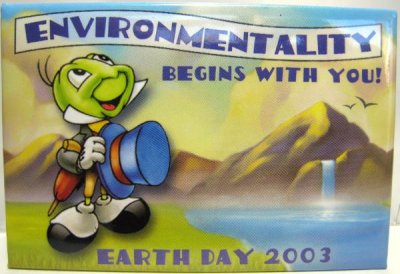
The second book I read was Arun Agrawal's Environmentality (no connection to the photo above, but still funny). "Environmentality" is a form of Foucault's "governmentality," which roughly means rendering subjects governable. So environmentality is the making of environmental "subjects" through technologies of governance. The primary technology that Agrawal examines is the use of statistics in Indian forestry, starting in the mid-eighteenth century under British colonial rule. Agrawal takes both a historical and anthropological approach to the region of Kumaon, in northern India (looks like a horrible place for fieldwork). He uses historical sources as well as surveys and interviews to show how Kumaon villagers have a dialectical relationship with state-driven forest policy, which protects forests but limits local access. The villagers use some of the environmental rhetoric of protecting forests, while simultaneously using it to their advantage and resisting state control. This is a great analysis, because it confronts the shortcomings of a one-sided approach to development politics (i.e. either ignoring or too relient on indigenous knowledge and local adaptations).

The themes of local adaptations vs. global development/top-down power/technological interventions is seen throughout Forsyth and Agrawal's recent work, especially with regards to climate change, and is something I hope to explore in my own research on agriculture in India (once I figure out what I'm doing...).

Finally, I also recently enjoyed Paolo Bacigalupi's The Wind Up Girl, which is a science fiction novel about a dystopian, post-sea-level-rise, post-fossil-fuel world. Bacigalupi's dislike of agri-chemical companies is obvious, as they are the main antagonists in the hunt for the last remaining seed bank in Bangkok, Thailand. Intriguingly, the government in Thailand is dominated by the Environment Ministry, which usurped power because of the impacts of climate change and global pandemics. Perhaps my favorite aspect of the book is that in the absence of fossil fuels, energy is measured in calories since the only remaining energy sources are biological. This relates back to Agrawal's Environmentality-- making things into government subjects by classifying them-- whether it's carbon emissions or calorie intake.

[UPDATE] I also wanted to say THANK YOU to everyone who's reading and commenting! According to Blogger stats, I've had over 4000 pageviews this year. Not sure how accurate that is, but thanks even if you're not getting counted through GoogReadz or something. Happy New Year!

September 9, 2011

Pika politics and climate change


Look at the cute little pika! So cute! So... controversial??? One of my professors at Arizona State University studies pikas, little critters that are found in both North America and Central Asia, and is entrenched in an unusual debate between environmentalists and the government. I'm going to paraphrase a bit from a presentation he gave to our lab group and then discuss the science policy behind it.

North American pikas are a focal point of the climate change agenda among conservationists in the American west. This is because pikas live in the mountains, and with rising temperatures due to climate change, it is feared that they will soon run out of habitat at high enough altitudes to stay cool. Seems pretty straightforward, right? Not so, according to my professor. While the conservationists are lobbying for pikas to be listed as endangered, he believes they are using shaky science.
In the advocates' claim for [endangered species] listing, Andrew Smith of Arizona State University sees a case of going overboard, and extending implications from limited studies. 
In his own work in Bodie, Calif., begun in 1969, Smith said he found pika capable of adapting to temperature swings by haying at night, instead of during the day, if it is too warm. He also has found the animals at low elevations, where they were not documented previously, complicating the theory that pikas are being chased relentlessly upslope. 
"We really think pikas are at risk, and we should learn more about them, and be monitoring them at lower elevations," Smith said. "They should tell us an incredible amount about climate change. But they are not endangered." (Seattle Times, 2009)
He thinks that environmental groups have picked the pika as a poster child for climate change based on values (such as conservation ethics) over scientific fact, and that they repeatedly cherry-pick data that supports their cause rather than the broader scientific consensus. While the lobby groups claim that pikas are disappearing before our eyes, others note that the western mountains are literally crawling with pikas. Scientists are working to take censuses of pika populations, but this is arduous and can reflect changes other than climate. So the question is, what will happen if the pikas don't disappear? Will we give up on climate change mitigation policy? Will science lose credibility? These are familiar questions to anyone who studies scientific controversies.


Environmentalists have long held a tenuous relationship with science- they both distrust it, and use it to their advantage in legal battles. Science has the power of legitimacy, and making visible the invisible. The case of agricultural biotechnology (GMOs), and how environmental advocates use science, is strikingly similar to the pika controversy. Small degrees of scientific uncertainty become major points of contention, and unfortunately the environmentalists and scientists seem to be speaking directly past each other. I will refer you to my past post to highlight this point. Roger Pielke Jr. would call this a politicized scientific debate. As he argues in The Honest Broker, we should use science to highlight a range of possible policy options, rather than a narrowly defined, predetermined political position. Implicit in the entire pika debate, as with the polar bears, is that in order to save the pikas, we must limit our carbon emissions.

Should scientists speak up and advocate against the environmental lobbyists? Or aim to provide a more robust understanding of the science and policy implications of climate change on animal populations? Can conservationists promote their own agenda without using dubious science?

Until next time, check out this new blog by some of my former MSU professors.

September 7, 2011

Women scientists and Home economics

This article, coincidentally by a professor of history at Michigan State University, calls for a revival of Home Economics as a response to widespread obesity. The first half of the article is about the foundations of Home Economics, which was a legitimate science, albiet one run almost entirely by women. The unequivocal founder of Home Economics was Ellen Swallow Richards (1842-1911), who began her graduate career as a chemist, coined the english version of "ecology" (based on Haekel's Oekologie), studied and taught at MIT, and was critical to the formation of no less than half a dozen applied science fields, such as sanitary science, nutrition science, domestic science, and human ecology.

Not coincidentally, I wrote a paper on Ellen Swallow Richards last fall and, dear reader, I'm happy to provide it to you. I was really interested in Richards' theories human-environmental interactions, so I mostly focused on that. But some of my main points will interest environmental, women's studies, and history of science scholars:
  • Ernst Haeckel introduces Oekologie (ecology) in 1866, defining it as:
“knowledge concerning the economy of nature—the investigation of the total relations of the animal both to its inorganic and its organic environment… the study of all those complex interrelations referred to by Darwin as the conditions of the struggle for existence.” (Foster, 2000:195)
  • Richards envisions ecology as the science of the total environment (human and non-human, including the built environment), introducing it to America in 1892.
  • As the "organismal" (and non-human) definition of ecology prevailed in the male-dominated sciences, Richards’ tries to re-brand her vision of ecology as domestic science, home economics, human ecology, and "euthenics"- as opposed to eugenics- as "the science of the controllable environment."
  • Richards situates women as guardians of the home environment, emphasizing safety, efficiency, education and relief from drudgery. Rather than seeking to impose more housework on women, Richards saw scientific home economics as empowering.
Some scholars recognize Ellen Swallow Richards as a proto-feminist, or even ecofeminist. Philosopher of science Sandra Harding writes, "Might our understanding of nature and social life be different if the people who discovered the laws of nature were the same ones who cleaned up after them?” (Harding, 2001:27) Unfortunately, I believe that many of Richards' theories on the environment disappeared after her death. Although she was a prominent chemist at the time, even appearing in books such as American Men of Science, she was marginalized because of her gender and her progressive views on human-environment interactions. Her version of Home Economics was watered-down significantly over the next century. Nonetheless, I cautiously applaud the call for a reinvigoration of Home Economics- perhaps one that recognizes the role of men and women in the household.

This blog is cross-posted at my other, less updated blog, Her Story of Science. References available in my paper, linked above.