Showing posts with label ethics. Show all posts

February 18, 2012

Science on stage: experts and diversity (or lack thereof)


The National Academy of Sciences (NAS) is considered one of the most (if not the) prestigious groups of scientists in the US. The National Research Council, their research arm, produces reports that are ostensibly the pinnacle of objectivity and scientific rigor. But Steve Hilgartner, in his book Science on Stage, aims to show that even the pinnacle of scientific objectivity is still dependent on social processes. While the NAS are considered knowledge experts, you don’t see behind the curtain. Hilgartner uses the metaphor of stage management, where the NAS staff, scientists, and report contributors carefully manage the end products. Deciding something like what nutritional standards to recommend is obviously not only value-laden, but is also under pressure from politically motivated food lobby groups, as Marion Nestle shows in her book, Food Politics.

The NAS doesn’t use overt political rhetoric. Like most scientists, they strive to be as objective as possible. But Hilgartner shows that making knowledge claims is political. The NAS uses certain rhetoric to reify their role as sanctioned experts, and to eliminate sources of controversy. In an anthropology class I once took, we referred to this as impression management. Like Hilgartner’s “stage management,” we often consciously and unconsciously say and do things to create a certain impression of ourselves in different situations. Scientists engage in the same social process.

So is the NAS’s stage management technique problematic? Among STS scholars, the answer is “yes.” In fact, James Wilsdon and Rebecca Willis produced a booklet called “See-Through Science,” which calls of “upstream engagement” in science policy. As we discussed in class, this call for more transparent scientific processes and more space for public deliberation. Two topics we’ve discussed in class: community-based participatory research and Hispanic girls’ engagement in science and engineering, both seek to make science more open and transparent to diverse populations. And already, it’s obvious that the academy is slowly reacting to pressures to become more open.

In the recent past, most decisions about science policy have been made by a small group of people: mostly white, mostly male scientists. In 1975 at the recommendation of the NAS, eminent biochemist Paul Berg organized the well-known Asilomar conference to discuss the ethical implications of biotechnology. The conference was attended by almost entirely white male scientists. Wilsdon and Willis quote Sheila Jasanoff, writing, “Thirty years and several social upheavals later, the Berg committeeΚΌs composition looks astonishingly narrow: eleven male scientists of stellar credentials, all already active in rDNA experimentation” (p. 10). In other words, today we expect decisions about science policy to be made by not only experts, but also issue stakeholders of diverse interests and backgrounds.

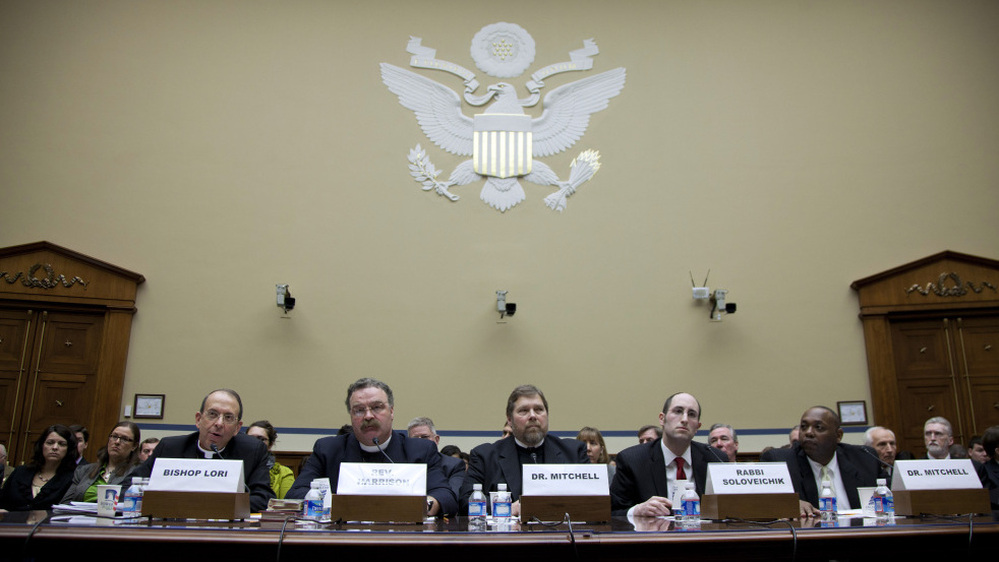
Jasanoff’s words resonate with a current issue: the debate over insurance coverage of contraceptives. Many of my Facebook friends have posted responses to this photo, citing the injustice that not a single woman was able to testify to Congressional committee on this issue of contraceptive coverage and religion. The online commentary is very much along the lines of “what is this, 1950?” At a time where women do have expertise in areas such as law, science, and religion, they are still not allowed in front of the curtain.

Works referenced:
Stephen Hilgartner, Scienceon Stage: Expert Advice as Public Drama (Stanford, 2000).

Kathy Wilson Peacock, GlobalIssues in Biotechnology and Genetic Engineering. (New York: Infobase Publishing, 2010).

February 9, 2012

Climate change and national security, once again

Part of my research hypothesis is that actors use climate change to promote their own interests. I'm particularly interested in how agricultural research organizations, in addressing the real threat of climate change, also use it to further their own research agendas. For example, private companies like Monsanto are clearly interested in using biotechnology to address climate changes, because this gives them propriety over new crops (evidenced by the proliferation of patents on climate-related plant genes). As I described last week, based on Sally Brooks' study of the CGIAR network and iron-fortified rice, the CGIAR in many ways used iron-fortified rice as a tool to centralize their own power. My own research will take place at the national level—in India—but both of these other actors (private companies and international research organizations) will intersect with my project in hopefully interesting ways.

So it is no surprise to me that other actors, such as the military, also use climate change as a rhetorical device. In class a few weeks ago we discussed how it's peculiar that high-level military and defense communities almost universally accept climate change as a threat to national security (despite the political ambivalence that climate change even exists). But people believe things that are consistent with their own worldview, and in this case, that worldview is to promote national security through hegemony. Using climate change as justification for military or foreign policy actions can thus exaggerate the connection between climate change and national security. This recent article in the Journal of Peace Research explains that "framing the climate issue as a security problem could possibly influence the perceptions of the actors and contribute to a self-fulfilling prophecy." A hat-tip to Dr. Clifford Bob, writing at the "Duck of Minerva," for sharing the article and his analysis. He writes,  
But I do worry about the threat inflation being used to justify actions against climate change – and about the strategic alliances, tacit or otherwise, environmentalists strike to achieve their goals. The Pentagon is no friend of the environment, as anyone who’s watched the grindingly slow clean-ups of numerous, highly-polluted military bases well knows. Lending activist legitimation to the defense establishment is likely to be a net-negative for environmental quality...

So we have environmentalists bedding down with the big boys with their big guns over global warming. And now we have human rights activists lusting after the big boys with their little drones, notwithstanding the weapons’ mounting toll in lives and liberties at home and abroad. The Pentagon, always eager for new conquests, similarly keeps its insatiable eye out for anyone hustling the cutting edge of terror, literally and figuratively.

November 21, 2011

Ethics and Science: Climate Adaptation, Bird Flu, and Vaccines


Next week I'm giving my first lecture to undergraduates on "Sustainable Development: Climate Change and the Ethics of Adaptation." I'm trying to narrow down the three main themes I want to get across, while teaching the students something about the nuances of adaptation, resilience, and vulnerability. I'm going to focus on Bangladesh, gender, and agriculture, since I have a background in these things and they make a great case studies. While I'm working on that, take a look at these three science policy blog posts that I really enjoyed this week:

Adaptation or Development? (via the CGIAR's CCAFS blog). This post surprised me at first, because typically this blog promotes straight-up climate-proofing development and technological fixes. It looks like the guest author is a policy researcher. This reminds me of some of the work of Jessica Ayers, a young scholar who I've been reading a lot of lately.
When we think of climate change adaptation in agriculture the first thing that comes to mind is improved crop varieties. Water harvesting and irrigation schemes may also be high on our list. Perhaps too is crop diversification. But on a recent trip to western Kenya, one agricultural community reminded us that sometimes the interventions that can most improve the adaptive capacities of small-scale farmers may not occur on or even near the farm.
Publish or Perish (by my friend Jessie, a Lyman Briggs graduate and medical researcher). Jessie writes about the ethical conundrum in publishing a scientific report about a more virulent strain of bird flu, and the implications for scientific governance.
One result of a global biomedical research field is that there exists no single regulatory body to dictate publication ethics in cases like these. Instead, there is an amalgam of various institutional, professional, local, state, national and international governmental and regulatory bodies which come together to dictate first ethical laboratory practices, allocation of research monies, and finally what happens with research-driven revelations.
The Vaccine Controversy (by Michael, an ASU colleague/my favorite person). This week we brought my former professor, Mark Largent, to ASU's campus where he met with the graduate students and gave a talk on the vaccine debate. Michael's write up hits the key points of his talk, which is about how the vaccine controversy is a case of scientized politics: a very Pielke/Sarewitz-esque argument.
But parents, looking for absolute safety and certainty for their children, aren’t convinced by scientific studies, simply because it is effectively impossible to prove a negative to their standards. A variety of pro-vaccine advocates, Seth Mnookin and Paul Offit among them, have cast this narrative as the standard science denialism story, with deluded and dangerous parents threatening to return us to the bad old days of polio. This “all-or-nothing” demonization is unhelpful, and serves merely to alienate the parents doctors are trying to reach.
Enjoy and have a Happy Thanksgiving!

August 22, 2011

"How science works": A jaded pursuit of knowledge?


As I get back into the swing of graduate school classes, I'll likely be blogging less frequently. But if you all keep sending me interesting articles, the more fodder I have for new posts!

A staple of STS theory, and other post-modern theories, is that "science" (defined roughly as an organized pursuit of/production of knowledge) is less objective than we'd hope. After all, scientists are human, and all human artefacts are shaped by our own experiences, biases, and institutional environments. So although not all STS scholars adhere to the full-blown post-modern relativism that there is no objective truth, I see the STS perspective as simply more critical of taken-for-granted assumptions about science.

There are plenty of examples from the History of Science about how science, at the time, was taken as the paragon of truth, only to later be totally de-bunked. The regime change from one scientific theory to another is what's known as  "paradigm shift." But perhaps science isn't just about finding out what's right and wrong in the universe. What matters is even what we decide to study. For example, STS scholar Scott Frickel writes about science and activism. In his 2004 book, Chemical Consequences: Environmental Mutagens, Scientist Activism, and the Rise of Genetic Toxicology, he describes how a group of scientists, influenced by the 1970s environmental movement, started a new, interdisciplinary field of "genetic toxicology." While building the scientific legitimacy of their field (which Frickel points out, is an act of advocacy itself), the scientists also strategically distanced themselves from the more "activist" arm of their academic society. I have a more detailed analysis on science and activism linked at the end of this previous post.

The recent controversy of science and activism centers around, of course, climate change scientists. The question is whether scientists can be pro-climate policy activists while still maintaining scientific integrity? However, the scientists themselves don't see themselves as activists. Here's a recent excerpt from an NPR article:
Science advances through a self-correcting system in which research results are shared and critically evaluated by peers and experiments are repeated when necessary. Disagreements about the interpretation of data, the methodology, and findings are part of daily scientific discourse. Scientists should not be subjected to fraud investigations or harassment simply for providing scientific results that are controversial. Most scientific disagreements are unrelated to any kind of fraud and are considered a legitimate and normal part of the scientific process.... (AAAS, 2011) 
Climate research works precisely in the same way. To politicize it, to persecute and scrutinize individual scientists as if they were corrupt politicians, is not only misguided but useless. Not all scientists are virtuous (and not all doctors, lawyers, bankers, or teachers either), but the whole point of the scientific process is to free itself from such personal flaws: sooner or later, fraudulent or wrong data is uncovered and the path toward certitude is restored. Errors may persist for a while, but not for a very long while.
The author is speaking of traditional paradigm shifts, and the self-correcting view of science described by Michael Polanyi. The problem is that this view of science ignores what we know about scientists: they too, are human. A "free market" pursuit of science is not necessarily best for society as a whole. This might be partly because scientists have long been a homogenous social group, although this is changing.

A round-up of recent news articles adds some interesting perspectives to the mix:

"Biased by Brilliant" (bonus points for referencing philosopher of science Heather Douglas)
Doesn’t the ideal of scientific reasoning call for pure, dispassionate curiosity? Doesn’t it positively shun the ego-driven desire to prevail over our critics and the prejudicial urge to support our social values (like opposition to the death penalty)?

Perhaps not. Some academics have recently suggested that a scientist’s pigheadedness and social prejudices can peacefully coexist with — and may even facilitate — the pursuit of scientific knowledge.
"It’s Science, but Not Necessarily Right"
Scientists can certainly point with pride to many self-corrections, but science is not like an iPhone; it does not instantly auto-correct. As a series of controversies over the past few months have demonstrated, science fixes its mistakes more slowly, more fitfully and with more difficulty than Sagan’s words would suggest. Science runs forward better than it does backward.
"The objectivity thing (or, why science is a team sport)."
In both the ideal of reproducibility and the practice of peer review, we can see that the scientist’s commitment to producing knowledge that is as objective as possible is closely tied to an awareness that we can be wrong and a desire not to be deceived — even by ourselves.

Science is a team sport because we need other people in order to build something approaching objective knowledge.
However, teamwork is hard.
"Toni Scarpa: Reviewing peer review"
The goal was to ask people to focus more on impact and significance. Peer review is simple — I think it should ask only two questions. First: Is it worth doing? That is impact and significance. If the answer is yes, then you ask the second question: Can they do it? In the past we were asking those questions in reverse.
So I'm not sure if I'm ready to come to any conclusions about what this means for climate science, but it certainly highlights science as a human pursuit, subject to the same biases and ethical dilemmas as any other.

August 15, 2011

Climate change and food security vs. famine

Image courtesy of Adrianne Daggett.

I'm back to blogging after a week-long road trip to move from Michigan to Arizona for my second year of graduate school. While I'm catching up on my news  and getting my brain back into academic gear. One thing I can tell you is that I'm really excited to write my research proposal. A recent conversation with a professor and a series of other academic readings on agriculture and climate change have prompted me to frame my research around "food security." What does food security mean to different people (scientists, farmers, policy-makers), and how to we envision a "food secure" future in a changing climate? This also allows me to explore some foreign policy themes that I hope to trace back to the Green Revolution era.

But for now, I will leave you with some articles/blogs that better articulate what I'm trying to say! First is a blog by Ed Carr, which I'm mentioned before, called "Open the Echo Chamber." Here are some excepts from two recent posts.
From "Stories, Development, and Adaptation":
My entire research agenda is one of unearthing a greater understanding of why people do what they do to make a living, how they decide what to do when their circumstances change, and what the outcomes of those decisions are for their long-term well being. Like Hulme, I am persistently surprised at the relative dearth of work on this subject – especially because the longer I work on issues of adaptation and livelihoods, the more impressed I am with the capacity of communities to adjust to new circumstances, and the less impressed I am with anyone’s ability to predictably (and productively) intervene in these adjustments.
From "Early Warning for Climate Tipping Points":
...people seem to forget that agricultural systems are ecosystems; radically simplified ecosystems, to be sure, but still ecosystems. They are actually terribly unstable ecosystems because they are so simple (they have little resilience to change, as there are so few components that shifting any one of them can introduce huge changes to the whole system), and so the sort of nonlinear changes I am describing have particular salience for our food supply. I am not a doomsday scenario kind of guy – I like to think of myself as a hopelessly realistic optimist – but I admit that this sort of thing worries me a lot.
Finally, the famine situation in Somalia is heart-wrenching, but what can social science tell us about policy responses? Here's an article that helped me better understand the context. You'll hopefully be hearing a lot more riffs on these themes over the next few weeks and months.

UPDATE: I just found a few more interesting articles that relate to this post. One is an interview with some agricultural/environment/development experts and public figures on NPR about climate change. Then I found this brief article interesting: "Singapore to address global food security through R&D."

While these articles hit on all of the main themes that have come up in the agriculture/climate change discourse, I find their definition of "food security" quite limited. Food security invokes a range of factors in people's livelihoods, the market, and the environment. Food security is not just higher-yielding rice. It's amazing to me how the narratives of the Green Revolution ("miracle rice," technological fixes, the scientists swooping in to save the day) are perpetuated in climate change adaptation efforts.

It's a lot easier to break problems into small bits- I know this as someone who studied biochemistry for five years! But problems like the impacts of climate change on agriculture are, like I mentioned last week, "wicked problems." They won't be "solved" anytime soon. On the other hand, technological innovation is a major factor in agriculture and our global economy. The problems we face today will be categorically different in 50 years because of changes in technology and society. So I somewhat easily dismiss Lester Brown's warnings that the "agricultural system that we have today has evolved over an 11,000-year period of rather remarkable climate stability.... But now that climate is changing, with each passing year, the agricultural system is more and more out of synch with the climate system, and that's presenting a challenge." I did background research this summer on regional climate change, such as the American dust bowl, or how farmers in Nepal adapt to varying levels of rainfall and soil quality. It's true that overall, we have lived in a "climate stationary" period for the past thousands of years. However, when you increase the resolution of the picture, you see that farmers are incredibly innovative in adapting to changes in technological, economic, and environmental conditions.

July 18, 2011

On innovation and saving the world: What does Google have to do with the Green Revolution?


Do you think Google will save the world? A recent article in The New Republic by Evengy Morozov posits that Google thinks that it can. But will Google be brought down by the structures of corporate greed and profit-mongering? The author sets up a dualism between the forces of good and evil in Google's quest for cyber-domination. While the author tends to paint Google in pejorative terms, and undervalues the positive benefits of technological innovation, he touches on themes that resonate with my own research.

According to the author, Google sees itself as a neo-Enlightenment institution to organize and diffuse knowledge. Readers of my blog will recognize that this Enlightenment-based, linear model of science and society interactions is mostly false. Certainly, we can use information as a tool in decision-making, but it's also now easier to pick and choose the information you want to believe using Google. And as Morozov points out, Google's "algorithmic neutrality" is embedded with assumptions that turn out to be fundamentally value-based. This is a theme I see over and over again in Science and Technology Studies.

Altogether, the author quite adeptly navigates the ethical quandaries of a huge corporation like Google. His core argument is that Google can hide from it's value-based agenda using technocratic ideals. The article's main flaw, however, is ignoring the co-production of science and society that is going on here. Google doesn't have monolithic control over the internet, and is constantly shaped by feedback from its users and how they choose to adapt Google to their own needs. 

This whole article reminded me of something I read in The Economist earlier this summer, about whether the technological advances of IBM or the philanthropy of the Carnegie Foundation have made a larger impact on our society:
At the same time, there was growing excitement about the capacity of expert knowledge to transform not just business but society, too. Carnegie and Rockefeller reflected this in calling their thoughtful, long-term approach to giving “scientific philanthropy” (today’s donors call it “strategic philanthropy”), which they contrasted with the short-term wastefulness of much of the charity of the time.
In a way, therefore, IBM and the Carnegie Corporation had similar missions. The Carnegie Corporation’s explicit goal was to “promote the advancement and diffusion of knowledge and understanding”. Thomas Watson senior, who ran IBM for over 40 years, made “Think” its motto and built the business around “the idea that information was going to be the big thing in the 20th century”, according to Richard Tedlow, author of “The Watson Dynasty”. He established a research arm in 1917, which went on to generate world-class, blue-sky research as well as more patents than any other corporate laboratory. (The Economist, 2011)
 And of course, this brings us to a discussion of mid-century agricultural development efforts that are collectively referred to as the Green Revolution. Morozov also makes this connection, writing,
[Google's] efforts at spreading connectivity, building Internet infrastructure, and promoting geek culture in the developing world are a logical extension of the American-led modernization project—aimed at bringing underdeveloped societies to Western standards of living, often by touting fancy technological fixes such as contraceptives (to stabilize population growth) and high-yield crops (to solve the undernourishment problem)—that began in the 1960s... Google’s caveat to the classical modernization theory—stemming from Walt Rostow’s belief in take-off points, whereby countries, once they reach certain levels in their economic development, tend to move in the same direction—is intriguing. (Morozov, 2011).
I wrote a paper last semester about how the imagination of the food crisis and population bomb, from about the 1940s to 1970s, drove the U.S.'s international aid agendas from food aid to agricultural development (self-sufficiency of developing countries). This also reflects the influence of philanthropy of private foundations, although the U.S. Department of State got involved starting in the 1960s. While the Green Revolution ultimately resulted in higher yielding crops, this was by no means a politically-neutral path of technological development. Inherent values about the connections between higher yields as a technological fix to both hunger and population pressure shaped the research institutions that developed during this time. This impacts have also been unequally distributed, as technological innovations tend to spread first to more affluent "early adopters." One of the main things I learned from my historical research on the Green Revolution is that good intentions most often lead to complex and unintended outcomes, given the nature of technology and its interactions with society.

Google, however, is different than the Green Revolution. The capital required to purchase a simple smart phone and access Google's features is almost minuscule. end users, especially in developing countries, are terrifically proficient at adapting phones, and even entire telecommunication networks, to local needs and conditions.


Fortunately, international development agencies increasingly recognize the importance of technological innovation, in sectors as diverse as food security to maternal health. I sometimes wonder, if I could sit down with the founders of Google, or the administrator of USAID, what would I tell them about technological innovtion? Based on the story of Google, IBM, and philanthropists, what would you say?

June 28, 2011

Risk, uncertainty, and value judgements in science policy

Yesterday my colleagues and I at Michigan State University and Kellogg Biological Station had a reading group to discuss Pielke's The Honest Broker. We read chapters 4-6 for today, which are titled, "4) Values; 5) Uncertainty; and 6) How science policy shapes science in policy and politics."


We talked about whether science is a good tool in making decisions. Certainly it can be good for informing decisions, such as if there's a tornado coming and you need to know whether you should evacuate. Unfortunately, as we saw in one of my previous posts, sometimes scientific assessments of risk and uncertainty do NOT translate well into action. Pielke agrees with this perspective. He thinks that science just adds smoke and mirrors to debates that are really about core values. So unless the situation under debate is one with low uncertainty and highly shared values (a tornado is coming, we should evacuate), we need more recognition of the underlying values of a debate (see: the climate change debate).

Pielke repeatedly refers to two works by Dan Sarewitz, who is one of my professors at Arizona State and regarded by many as a science policy guru. The first article is "How science makes environmental controversies worse" (2004). The second is "Science and Environmental Policy: An Excess of Objectivity" (2000). Both are worth a thorough reading: one thing I've discovered in grad school is that I sometimes read the same article months, or a year, apart, and find revelatory new nuggets of knowledge each time I read it.
The "Excess of Objectivity" book chapter is an insightful commentary on how science can actually impede the political process, by focusing on always disputable and uncertain facts while ignoring underlying value conflicts in highly politicized environmental issues. The “excess of objectivity” refers to the incompatibility of multiple fields of science, and how while each field claims objectivity, they drive controversy and muddy the political waters.

"How science makes environmental controversies worse" makes the same core argument, using a set of different examples from the 2000 election results, to climate change, to genetically modified food (another good case study is the debate over nuclear waste: see this editorial). This discussion reminded me of an article I read during my first weeks of grad school, "Value Judgments and Risk Comparisons. The Case of Genetically Engineered Crops" (2003) by Paul Thompson, who is an environmental and agricultural philosopher at MSU.


I wrote up an analysis of it that I think highlights the issues of value, risk, and uncertainty in environmental controversies pretty well: Thompson focuses on the inherent value judgments that scientists make about genetically engineered (GE) crops and environmental risk. He aims to identify the values behind the GE debate, rather than taking a philosophical or scientific position in the debate. He focuses on a relatively small aspect of this debate, which are claims for and against a comparative evaluation of the environmental risk of GE vs. traditional (non-GE) crops. This is the standard metric used by scientists and federal agencies to assess the risk of GE crops. Thompson’s argument is that risk assessments are inherently based on value-based judgments; the science itself cannot settle a claim about environmental risks.

He shows that the current regulatory system ironically puts the burden of proof on anti-GE activists, who are “in the position of needing to justify special treatment for this class of plants” (emphasize added, Thompson, 2003, p. 11). This gap charges the largely non-scientific public with demonstrating the scientific credibility of their value system, against the grain of the values held by the scientific community, which of course causes further problems on multiple levels. Thompson identifies several other challenges in the regulation of GE crops based on the current framework.

Risk assessments, especially environmental risk assessments, depend on value-based judgments of how much and what types of risk are “acceptable,” despite attempts to scientifically quantify this risk. The definitions of risk by the scientists and activists are essentially incompatible for comparing the risks of GM vs. non-GM crops, or even defining the concept of environmental risk. This highlights very clearly that science, rather than aiding the decision-making process, can complicate and add uncertainty to political debates.

On a related note, I'm headed to Boston today to attend the Science and Democracy Network conference! I'm really excited to talk to like-minded scholars about our work, and make some great connections.

June 24, 2011

4) Science and Public Value


A friend of mine asked about my last post on the "co-production" of knowledge, "who then 'owns' the research or is it always a public resource after co-production?”

Great question, and one that scholars have been struggling with especially in light of patents on genes and other biotechnology, such as genetically modified foods. This is generally referred to as "intellectual property" or "intellectual property rights" (IPR). Patents are supposed to protect the inventor and fuel innovation, but the case lately has been an increasingly convoluted fight over patent law, with "patent sharks" prowling for unclaimed discoveries that they can later sue companies for using. The figure below demonstrates some of the craziness in just smart phones:

But what happens when a drug company asks an indigenous tribe about their medicinal plants, and then goes on to patent and produce the medicinal compound? Or when patients donate their DNA to a study, only to be charged later for a test or treatment because a biotech company has patented the blueprint of the gene that causes cancer? Who should "own" that knowledge?

These are questions that modern governments are dealing with for the first time due to technological advances. Public research organizations are dealing with them as well: for example, the public agricultural research system that is largely responsible for last century's "Green Revolution" now must be more cautious about what agricultural technologies they can use, because of all the patents. Richard Jefferson is someone who understands this problem and is creating innovative solutions that benefit poor countries. He started a company that promotes "open source biology" by patenting discoveries in agricultural science, but then making those discoveries public. Some excerpts from this paper:
Most critically, we must democratize these abilities, both to measure and to respond, in order to diversify agro-ecosystems and environments and decentralize the problem-solving capability. We will achieve this by fostering scientific method and harnessing local knowledge and commitment in communities that have previously been ignored or treated as passive recipients of help. (p. 38)

At the start of the twenty-first century, science is at a critical juncture. Four centuries of inquiry, discovery, and invention have created a base of knowledge that has the potential to provide people everywhere, in all circumstances, with nourishment, improved health, and longer life. But the institutional mechanisms that ostensibly exist to encourage the application of science to practical problems are today hindering that very process. The norms that have evolved around gate-keeping have created new clergy, new impediments and new inefficiencies. Without a systemic change, science’s promise will not be available for those who most need it, and the promise of a truly diverse, robust and fair innovation culture may elude us. (p. 40)

This all boils down to a question of science and the public good. The "social contract of science" is an unspoken agreement that science, in the end, will produce public good. As the environmental movement often points out, science sometimes produces public bads. Or it doesn't produce the hoped-for goods. For example, “there are 6000 patents that invoke ‘plant breeding’ and ‘drought resistance’ yet none of them has yet resulted in an improved commercial variety” (Clark et al., p. 10). Agricultural extension programs do unique boundary work that is affected by both private and public interests. The private sector is crucial to developing new, useful technologies for farmers. Agricultural research institutions must increasingly embrace their role as a mediator between the private realm of gene patents and their goal of developing agricultural technologies for the public good.

More broadly, many of my colleagues at ASU's Consortium for Science, Policy, and Outcomes are working on this issue of science and public value. A recent issue of the journal Minerva featured their work, and a short review is available here. Also, this very-readable report by a British think-tank called Demos takes a Science & Technology Studies perspective on this topic. They tackle head-on provocative questions that I've been exploring throughout this blog:
Science has major social benefits and thus ‘public value’. Yet crucially, as recent controversies have underlined, this value cannot be assumed and taken as automatic, no matter what scientific research is done, or under what conditions. We need therefore to shift from noun to adjective, by asking not only: what is the public value of science? But also, what would public value science look like? (p. 29)

June 13, 2011

Science policy communication failure costs lives


A recent issue of Science magazine features a news article about seven scientists in Italy who are facing manslaughter charges for not predicting the danger of an earthquake that killed 308 people. The scientists were part of a risk committee of earth scientists who testified that incipient tremors were not evidence of an oncoming earthquake in 2009. According to Science, “They agreed that no one can currently predict precisely when, where, and with what strength an earthquake will strike” (3 June 2011, p. 1135). These are all accurate statements, from a scientific point of view. But the problem lies in translating these statements for decision-makers and stakeholders, which includes people in the town of L’Aquila, Italy.

The lead scientist “maintained that he and his scientific colleagues had a responsibility to provide the ‘best scientific findings’ and that it is ‘up to politicians’ to translate the scientific findings into decisions” (Science, 3 June 2011, p. 1136). This is the linear model of science policy at its worst, literally costing lives because of the mismatch of science and policy risk management paradigms, or as Cash et al. (2006) describe, the “loading dock” model of simply delivering scientific results and hoping that the public sphere will pick them up and use them. To the scientists, risk and uncertainty are quantifiable metrics that are difficult to translate into social action. To decision-makers and the public, risk is a socially mediated, multidimensional value that depends on more than just probabilities. Uncertainty has been a traditional sticking point in earth science and policy topics such as climate change. However, Cash et al. (2006) demonstrate how bringing together scientists and decision-makers from the beginning helped improve the utility of climate models for end-users. They write, “Scientists began to understand that managers were comfortable making decisions under uncertainty, and managers began to understand the concerns scientists had about making scientific claims in the face of uncertainty” (Cash et al., 2006, p. 482). This was clearly not the case with the Italian scientists and decision-makers.

At first glance, this case provokes outcry from scientists afraid of losing the public’s trust and being put on trial, literally. While it may be presumptuous to actually put scientists on trial for a failure to dialogue with decision-makers, this puts into question the implicit “social contract of science” that has justified basic scientific research since the end of WWII. Sheila Jasanoff told a group of ASU graduate students last spring that, “Scientists have become arrogant, and have not explained to the people why they deserve support... The Enlightenment was not a historical event. It is a process, a mission, a continuous duty to explain yourself” (personal communication, 11 February 2011; not an exact quote, but very close). Jasanoff lays out an alternative claim to the linear model of science policy that she calls “technologies of humility” (2003). In contrast to calls for “more science” to reduce uncertainty, Jasanoff writes that, “what is lacking is not just knowledge to fill the gaps, but also processes and methods to elicit what the public wants, and to use what is already known” (2006, p. 240). The abstract of her paper states, “governments should reconsider existing relations among decision-makers, experts, and citizens in the management of technology. Policy-makers need a set of ‘technologies of humility’ for systematically assessing the unknown and the uncertain” (Jasanoff, 2003, p. 223). Jasanoff and other Science and Society scholars have been writing about the failures of the linear science policy model in predicting risk since the 1980s, when the risk-management paradigm began to crumble in the wake of seemingly “unpredictable” human-technology-based disasters like Chernobyl. Today we face critical policy issues from climate change to toxic chemicals that fundamentally depend upon and understanding of environmental science, but just understanding the science is not enough. We need a new model of science policy that incorporates the needs of decision-makers and stakeholders from the start, not after it’s too late.
Sources:
Cartlidge, E. (3 June 2011). “Quake Experts to Be Tried For Manslaughter.” Science, 332, p. 1135-1136.
Cash, D.W., Borck, J.C., & Patt, A.G. (2006). “Countering the Loading-Dock Approach to Linking Science and Decision Making.” Science, Technology, & Human Values, 31, p. 465-494.http://sciencepolicy.colorado.edu/students/envs_5100/Cashetal2006.pdf
Jasanoff, Sheila (2003). “Technologies of Humility: Citizen Participation in Governing Science.” Minerva, 41. 223-244.http://sciencepolicy.colorado.edu/students/envs_5100/jasanoff2003.pdf
Further reading:
Sarewitz, D., Pielke, Jr., R.A., & Byerly, R. (editors) (2000). Prediction: Science, Decision Making and the Future of Nature. Washington, DC: Island Press. Available at: Google books, Amazon.com