Showing posts with label democracy. Show all posts

January 12, 2012

Science in the 20th Century: An abbreviated tour


This week for a class we read several chapters from the book, Science in the Twentieth Century, edited by John Krige and Dominique Pestre. The 20th Century is, of course, my favorite century because of the developments in technology and agriculture. World War I and II are significant milestones for innovation in the 20th Century, as many of the authors noted. And much of the science policy that we operate by today is driven by our conceptions of innovation from the post-war era, and the famous science policy manifesto, Science, the Endless Frontier by Vannevar Bush.

Chapter 6 by Theordore Porter, “The Management of Society by Numbers,” dealt with the emergence of accounting and managerial science. Porter asserts that concepts such as statistics and cost-benefit analysis didn’t just emerge as a tool of capitalism, but rather the tools themselves co-evolved with ways to shape political order. Writing about nation-based economic planning, accounting, and growth, Porter writes, “Clearly such statistics have to do with regulating social and economic life, not merely with describing it” (p. 101). Turning often-nebulous concepts such as “cause of death,” race, and cost-benefit analyses into concrete numbers and statistics is a classic project of the Enlightenment, but Ported shows how exactly these tools had an impact on society. The extreme case of imposing technological order on society is demonstrated by eugenics, which Daniel Kevles explores in Chapter 16. Eugenics was the promotion of “good breeding” and sometimes coerced sterilization, but was eventually shunned after its central role in Nazi science. But IQ tests, initially developed to test soldiers in WWI for their leadership capacity, clearly played and continue to play a role in how we categorize and govern out citizens, and especially how we educate them.

What I found most profound about Porter’s chapter was how the rationalization of government projects and citizens is at once technocratic, but also transparent. Anyone with a bit of training can challenge scientific or economic results, imposing their own values on the intepretation. Porter writes, “such tools are not unambiguously friendly to elite experts. Expertise means not simply the ability to apply difficult technical methods, but also, or mainly, the capacity to exercise judgment with wisdom and discrimination” (106). To me, this is where the system breaks down. There is an expectation that scientists should be politically uninvolved and devoid of values. From the scientists’ perspective this is the “loading dock” model: you do your research, then drop it off at the dock and just hope someone picks it up and uses it. The problem, as we see with climate change, is that anyone can contest the results. We shouldn’t ask scientists to be advocates, but there should be more “Honest Brokering” of science and how we can use it as a tool for democracy, rather than stalemating policy.

I also enjoyed Chapter 12 by W. Bernard Calson, titled “Innovation and the Modern Corporation.” Carlson traces some of the major inventors and innovators back into the 1800s, showing the differences between the lone-inventor of Thomas Edison to today’s research laboratory style of corporate innovation. The most interesting thing was the co-evolution of technologies and organizational structure in major firms like GE and Bell Laboratories. There is a delicate balance between letting inventors and scientists have enough creative mobility, but also channeling their work into a commercial product. This is one of the key tensions of science policy, and the supposed divide between “basic” and “applied” research. In Deborah Fitzgerald’s chapter on the history of agricultural science, she reveals similar themes. During the 20th Century, agricultural science went from not being a science at all (farmers didn’t use scientific management or breeding), to an informal network of public and private scientists in the 1920s, to now the highly technological system of agriculture and the dominance of private corporations. The organizational structure of agricultural science, as in most technological industries, is both dependent on and determining of the type of technologies that emerge from these enterprises.

December 29, 2011

Environmental science and politics: Book reviews


Having a bit of time off this week, I've read two books that both take a political ecology approach to environmental problems. Political ecology emerged from a certain tradition of social scientists, and really seeks to intertwine the social and natural aspects of the environment. Since both books are relevant to the themes of this blog and my own research, I thought I would do a quick review!

The first book was Critical Political Ecology by Tim Forsyth. I had the pleasure of meeting Dr. Forsyth over the summer, so I was really excited to read this book. Forsyth combines critical social theory with STS, philosophy of science, and his on-the-ground experience in international development work in South and Southeast Asia. The central theme of his book is that environmental science has been used to reinforce "environmental orthodoxies," which are similar to myths or narratives. Some of these key environmental orthodoxies are that population growth causes soil erosion, and deforestation causes loss of biodiversity. Forsyth shows that these arguments are used for specific political/normative agendas, but that alternative scientific approaches have actually revealed contrary data in some contexts. Each chapter reviews different case studies that touch on themes of democratic science, science-policy boundaries, global risk and uncertainty, and scientific expertise vs. indigenous knowledge. Overall, his book shows the tension between top-down environmental orthodoxies and local adaptations to the environment, and the limits of using scientific facts to make policy decisions.

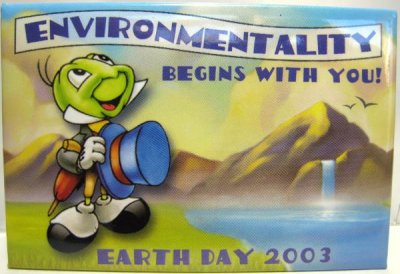
The second book I read was Arun Agrawal's Environmentality (no connection to the photo above, but still funny). "Environmentality" is a form of Foucault's "governmentality," which roughly means rendering subjects governable. So environmentality is the making of environmental "subjects" through technologies of governance. The primary technology that Agrawal examines is the use of statistics in Indian forestry, starting in the mid-eighteenth century under British colonial rule. Agrawal takes both a historical and anthropological approach to the region of Kumaon, in northern India (looks like a horrible place for fieldwork). He uses historical sources as well as surveys and interviews to show how Kumaon villagers have a dialectical relationship with state-driven forest policy, which protects forests but limits local access. The villagers use some of the environmental rhetoric of protecting forests, while simultaneously using it to their advantage and resisting state control. This is a great analysis, because it confronts the shortcomings of a one-sided approach to development politics (i.e. either ignoring or too relient on indigenous knowledge and local adaptations).

The themes of local adaptations vs. global development/top-down power/technological interventions is seen throughout Forsyth and Agrawal's recent work, especially with regards to climate change, and is something I hope to explore in my own research on agriculture in India (once I figure out what I'm doing...).

Finally, I also recently enjoyed Paolo Bacigalupi's The Wind Up Girl, which is a science fiction novel about a dystopian, post-sea-level-rise, post-fossil-fuel world. Bacigalupi's dislike of agri-chemical companies is obvious, as they are the main antagonists in the hunt for the last remaining seed bank in Bangkok, Thailand. Intriguingly, the government in Thailand is dominated by the Environment Ministry, which usurped power because of the impacts of climate change and global pandemics. Perhaps my favorite aspect of the book is that in the absence of fossil fuels, energy is measured in calories since the only remaining energy sources are biological. This relates back to Agrawal's Environmentality-- making things into government subjects by classifying them-- whether it's carbon emissions or calorie intake.

[UPDATE] I also wanted to say THANK YOU to everyone who's reading and commenting! According to Blogger stats, I've had over 4000 pageviews this year. Not sure how accurate that is, but thanks even if you're not getting counted through GoogReadz or something. Happy New Year!

November 17, 2011

Climate change adaptation: local to global


Some of you may have already read this- I posted it on my facebook last spring. In a few weeks I'm giving a lecture to the environmental ethics class I TA based on this topic, so I thought I would reshare it!

Climate change adaptation is a current impetus for decisions that will result in profound changes in both agricultural landscapes and social systems, although as Stephen Lansing argues, “Agriculture, in short, is a social as well as a technical process” (Lansing, 1991, p. 6). Sustainability, which we have identified as having social, economic, political, and environmental elements, is deeply connected to climate change adaptation. What I will explore today is the nested system of decisions related to climate change adaptation. Who makes decisions at each level of adaptation, and what might the consequences be?

One of the challenges of addressing climate change impacts is of scale. Climate change is viewed as a global issue with local impacts. Pielke Sr. et al. write that, “The IPCC and U.S. National Assessment reports start from a large global perspective and work to downscale to regional and local impacts” (2007, p. 235). For example, countries like Bangladesh are predicted to be hit hard by climate change, due to both physical (low-lying coastal country) and social (highly dependent on agriculture, pervasive poverty) vulnerabilities. Some of these vulnerable countries are the least able to prepare for climate change impacts. Thus, we tend to imagine climate change adaptation in hierarchical terms.

At a global level, decisions had until recently revolved around climate change mitigation (lessening greenhouse gas emissions), but a new paradigm of climate adaptation as a moral obligation of international development is forming. Developed countries can contribute money and expertise to developing countries that are vulnerable to climate impacts. Countries and regions will have to decide what sort of local policies might be enacted to deal with climate impacts: perhaps strengthening adaptive capacity through economic empowerment of people in poverty, or preparing for the social and political ramifications of “climate change migration” and “environmental refugees.” On a local level, however, farmers might face more immediate questions like: what environmental changes will I see this year? What crops should I plant? The top down notion of adaptation sees solutions like modeling regional impacts of climate change and developing “climate-ready” crops as desirable.

We tend to think of farmers as rejecting change-- for example, we perpetuate the ideal of the American heritage family farm. However, agriculture has radically changed over the past century in both developed and developing countries. During the Green Revolution, farmers rapidly adopted new agricultural technologies and land management practices, despite the negative social and environmental outcomes sometimes associated with these. Perhaps in less-developed countries like Bangladesh, rather than prescribing a future based on assessments of current technologies, local knowledge could be incorporated into higher level decision-making.

Works cited:

Intergovernmental Panel on Climate Change (IPCC), 2001. Third Assessment Report Glossary. P. 365.

Lansing, Stephen, 1991. Priests and Programmers: Technologies of Power in the Engineered Landscape of Bali. Princeton: Princeton University Press.

Pielke, Roger A., Sr., 2007. A new paradigm for assessing the role of agriculture in the climate system and in climate change. Agricultural and Forest Meteorology 142, 234–254.

August 2, 2011

Science and public policy: The Social Animal


This summer my colleagues at Michigan State University recommended that I read David Brooks' The Social Animal. Brooks' book merges a narrative of love, life, and career with research about what drives us as humans (the social animals, of course). This relates to our work with climate change, because much of Brooks' research is about how we form values and make decisions. Unlike the economics model of rational behavior, Brooks argues that humans are much more complex and driven by unconscious motivations (not necessarily "animalistic" motives, but rather neurological pathways that have been shaped by both evolution and social/environmental factors). So while public policy tends to rely on economic models of rationality, instead we should look at how people actually work to improve public good. This sort of social science-based analysis is useful for anything from political to public health campaigns. For example, something I've been hearing lately (including in this book) is that to be a good parent, you don't have to be perfect. Social scientists have shown that being "good enough" is really "good enough" to raise a child. So instead of a hypothetical public safety campaign to track your child's every movement with a GPS tracker, a Brooks style campaign might be something like "You can't teach them everything: equip your child with the tools to decide for themselves" (uh-oh, have I been watching too much Mad Men?).

There are downsides to Brooks' approach. One, as pointed out by biologist H. Allen Orr, is that Brooks actually relies too much on over-simplified scientific explanations. Boil it down even further, and it sounds like Brooks might be advocating for policy based on science (in this case, social science), which we know is problematic! Orr writes,
There can, of course, be no doubt that a decent grasp of human nature is a prerequisite for decent public policy. (A policy that assumes, for example, that people mostly want to give away their possessions would not be the most promising.) And there can also be no doubt that a decent grasp of science can help us figure out a thing or two about human nature. (So that’s how people trade goods in a behavioral economic experiment.) But there’s a serious question of whether a scientific understanding of human nature is the main thing that matters. It seems peculiar to believe that a more sophisticated understanding of, say, the genetics or biochemistry or evolutionary basis of human nature will provide special insight into the human condition and thereby allow us to—finally—shape successful public policy. Why, to put it differently, is it so easy to imagine a society that knows very little if anything of the new sciences of humanity but that is exceedingly happy and another that knows all about these sciences but that is thoroughly miserable?
It is exceedingly difficult to broadly characterize populations of people, even with top-notch social science research. A blog post that sums this up well questions whether people (using the example of climate change deniers and scientists) are even inhabiting the same social reality anymore:
What many techno-scientists fail to understand - and thus find most frustrating - about dealing with climate change deniers is that the denier has no real interest in engaging at the scientist’s level of reality.
Others offer solutions to complex problems through deliberative decision-making, which we are finding very useful at MSU Extension. Consider this description of so-called "wicked problems" like climate change, and how to approach them:
Luckily, social scientists have been studying this sort of mess since, well, since 1970. Techniques exist that will allow moderately-sized groups with widely divergent agendas and points of view to work together to solve highly complex problems. (The U.S. Congress apparently doesn't use them.) Structured Dialogic Design is one such methodology. Scaling SDD sessions to groups larger than 50 to 70 people at a time has proven difficult--but the fact that it and similar methods exist at all should give us hope. 
Here's my take on things: our biggest challenges are no longer technological. They are issues of communication, coordination, and cooperation. These are, for the most part, well-studied problems that are not wicked. The methodologies that solve them need to be scaled up from the small-group settings where they currently work well, and injected into the DNA of our society--or, at least, built into our default modes of using the internet. They then can be used to tackle the wicked problems.
As I've touched on before, what all of these "new models" of science and society show is that the Enlightenment vision of rationality is no longer applicable to today's public policy problems. So maybe Brooks has it wrong that "more science" can solve our problems, but I believe he's onto something, which is that we need more than economics, cost-benefit analyses, and risk assessments to create policy.

July 6, 2011

5) Science communication and climate change


A topic that frequently comes up between me and my colleagues at Michigan State University this summer is of science communication. At the Science and Democracy Network meeting that I attended last week, one of the most contentious topics was over climate change science and communication, and what is our role as scholars to clarify (or "complexify," as is usually the case) the discourse.

So I thought I'd put together a resource list of blogs and papers on the subject of science communication, from an STS perspective (and particularly about climate change). First, Alice Rose Bell has a great blog on science communication, and even already has a helpful resource list! My other favorite climate change communication blogs are Dot Earth by Andy Revkin, Age of Engagement by Matthew Nisbet, Open the Echo Chamber by Edward Carr, and The Intersection by Chris Mooney. While I don't always agree with the partisan positions of many of these bloggers, I find myself enraptured by their interesting reflections on the latest research and controversies in climate change science and communication.

One of the contributions of STS research to science communication studies is of reshaping the "deficit model" of science communication into more nuanced views of public understanding of and participation in science. The deficit model is similar to both the "loading dock" and "linear model" of science and policy, in that it upholds scientists as disconnected experts, and that the public is an "empty vessel" to fill with objective knowledge. Some great papers on new models of science communication are "Do Scientists Understand the Public?" by Mooney (2010) and "What's next for science communication?" by Nisbet and Scheufele (2010).

So why did I open this post with a political picture? Because there is solid evidence that despite levels of scientific knowledge, political affiliation is the biggest determinant of whether U.S. citizens believe in climate change (summary here, full article by McCright and Dunlap (2011) here). I was lucky to take a class with Aaron McCright during my undergrad at MSU, and this really sparked my interest in the science politics of climate change. Since I took that class two years ago, I've been following the climate change communication literature. To start off, a classic article you need to read is "Making climate hot" by Susanne Moser and Lisa Dilling (2004). Communicating climate change is inherently difficult because of the high-level science as well as framing of risks and uncertainties, but Pidgeon and Fischhoff (2011) have some advice on framing climate uncertainty here.

And if you're interested in the whole "climate skeptics" debate, you need to read Naomi Oreskes and Eric Conway's book, Merchants of Doubt. Also, my new favorite blog resource is "Skeptical Science," which does a really good job at clearly communicating the science behind climate change, and addressing skeptical claims. Finally, Chris Mooney once again comes through with some commentary and a list of resources. Interestingly, even in the case of climate skeptics, the deficit model proves false. More scientific knowledge does not automatically make people "believe" in climate change. People's political orientations have a strong impact on what information we will use to support our own values. And overwhelmingly, even in the face of "Climategate" and uncertainty, the majority of Americans trust scientists and believe in climate change and support energy policy.

I want to conclude by saying that none of this is simple. Sometimes when I'm telling people about my research, I avoid the topic of climate change because I don't want to get into a debate. But while working at MSU this summer and last, we've noticed that when you sit with people face to face, and don't impose your own views but rather ask about their own thoughts and experiences, it leads to a more productive conversation. And having worked in a lab during my undergrad, I know how hard it is to "get out there" and communicate science- but there are a few easy ways, from working with student groups of all ages, to writing an effective op-ed, to learning how to present your research in a way that's accessible to non-scientists. An insightful comment on Alice Rose Bell's blog states, "if you want to reach young audiences, stop thinking of them as audiences and don’t merely involve them: work out what’s central about your project and invite them to do that."

May 26, 2011

1) A new science for decision-making

"Science" means many different things to many people. Science is an action, a set of methods for hypothesis testing; science is a result, a way of illuminating the world around us. By "science," I mean the combination of the practice and use of organized, institutional science. We typically think of science as something that happens in the laboratory. Maybe a spark of discovery leads to a new cancer-fighting drug. But we now know that science happens all around us. Citizens can collect air samples from their neighborhood and test the level of toxins. "Basic" research discoveries don't always lead to cures for devastating diseases. That's why I'm calling this post "A new science for decision-making."

This summer I'm working with Michigan State University Extension on a project about climate change and agriculture. Our guiding idea is of communicating climate change science and policy as not just a top-down, one-way street, but as a participatory process for scientists, policymakers, and stakeholders (farmers and anyone involved and affected by climate change). During my first year of graduate school at Arizona State University, I discovered that other people actually write about this! Thus, I am collecting resources that I hope you will find interesting and helpful. I have started from the perspective of Science and Technology Studies (STS, also related to the broader “social studies of science”). STS tends to take a critical look at the scientific processes of research and development and science and technology policy. The intended audience of my resource is interdisciplinary academics and science policy practitioners who are interested in the broader theoretical and practical relevance of their work. Special note: the articles are not in order of author, but rather the order in which I think they should be read for each set. Also, I've included a glossary of words that are critical concepts but may be unfamiliar to most people. Work in progress, May 2011. Comments appreciated!

Pielke, Roger, Jr. (2007). The Honest Broker: Making Sense of Science in Policy and Politics. Cambridge: Cambridge University Press. Available at Amazon.com

  • This short book is an excellent guide to some of the principles of science policy, and particularly the role of scientists in political debates. If you’re looking to get started in learning about science policy and why things like the climate change debate have gotten so complex and confusing, this is the place to start. Also check out Roger's blog!

Kunseler, Eva (2007). “Towards a new paradigm of science in scientific policy advising.” http://www.nusap.net/downloads/KunselerEssay2007.pdf

  • This short essay gives a good overview of the distinction between “normal” and “post-normal” science. Kunseler uses the framework of a “paradigm shift” which is the change from one set of widely accepted views about science to another. As referenced, Funtowicz and Ravetz (1993) are best known for introducing “post-normal” science, where they provide a framework for a new type of science needed for today’s uncertain and complex environmental problems. Like Jasanoff (next article), they call for more dialogue with non-scientific stakeholder communities.

Jasanoff, Sheila (2003). “Technologies of Humility: Citizen Participation in Governing Science.” Miverva 41. http://sciencepolicy.colorado.edu/students/envs_5100/jasanoff2003.pdf

  • This article is a great starting point for some of the main issues that confront contemporary science policy and public participation in these political decisions. Jasanoff is a leading STS scholar and often focuses how science is used in federal regulatory decisions. Her proposed “technologies of humility” turn traditional scientific norms on their head.

Sarewitz, Daniel (2000). “Science and Environmental Policy: An Excess of Objectivity.” http://www.cspo.org/products/articles/excess.objectivity.html

  • Sarewitz is another well-known science policy scholar. This book chapter is an insightful commentary on how science can actually impede the political process. Political debates focus on disputable and uncertain facts while ignoring underlying value conflicts in highly politicized environmental issues. The “excess of objectivity” refers to the incompatibility of multiple fields of science, and how while each field claims objectivity, they drive controversy and muddy the political waters.
  • See also “How science makes environmental controversies worse.” By Daniel Sarewitz, 2004. http://www.cspo.org/_old_ourlibrary/documents/environ_controv.pdf

McNie, Elizabeth. (2007). “Reconciling the supply of scientific information with user demands: An analysis of the problem and review of the literature.” Environmental Science & Policy 10. http://sciencepolicy.colorado.edu/admin/publication_files/resource-2486-2007.03.pdf

  • This final paper is a great tie-in between this section and the next (coming soon!). McNie takes a case-based, fairly non-theoretical approach to the “problem of linking science to decision-making” (p. 18). She outlines models of public participation in shaping science for decision-making.
Vocab:

Extended peer community/review: the proposal that scientific practice should be reviewed by not just scientists, but stakeholders. For example, breast cancer patients and activists would be involved in selecting what research projects to fund.

Linear model: the idea that “basic research” leads to fundamental breakthroughs that can be applied for economic growth. Basic research=lab/bench research, supposedly removed from society. Applied research=scientific discoveries applied to societal problems or for technology. Many science policy scholars now question this model, since many “discoveries” come from non-science, and science and technology are involved in a complex and iterative relationship. See Donald Stokes' Pastuer's Quadrant.

Mertonian ideal: science characterized by “universalism, communism, disinterestedness, and organized skepticism (Merton, 1973)” (McNie, 2007, p. 23)

Post-normal/"Mode 2" science: the evolution of scientific practice (or knowledge production) in a world of highly complex, uncertain, and interdisciplinary problems.

Social contract of science: the implicit agreement between scientists and the government/public that science should be funded based on peer review/merit, and without intervention. Based upon the “linear model” promoted by Vannevar Bush.

Well-ordered science: a proposal for aligning scientific research goals with societal goals. Based on Philip Kitcher’s argument in Science, Truth, and Democracy.