Showing posts with label climate change. Show all posts

April 24, 2013

Is environmentalism women's work?


Ellen Swallow Richards

In an Earth Day-themed op-ed, historian Nancy Unger writes for CNN a piece titled "When helping Earth was women's work." As a topic of interest for both academic interest, I had high expectations for an insightful piece connecting environmental history with contemporary debates. But after a first and subsequent reads, her point is lost and surprised at the lack of clarity in an article aimed at the public. I'd like to propose an alternative narrative about women's involvement in Progressive Era environmental and conservation movements and what it means for today's environmental science and politics.

Although today's most prominent climate change advocates are politically liberal men, women played an important role in the development modern environmental protection in America. At a time when the conservation and preservation of America's parks and wilderness was deemed a man's job due to the "frailty" of women, women became active in urban sanitation and environmental health projects. We now call this period the Progressive Era, the 1880s to 1920s, when a new set of social and scientific practices drastically changed America's urban landscapes for the improvement of human health.

Because I study the history of science, an important Progressive Era scientist was Ellen Swallow Richards (1842­­—1911), the first woman to attend MIT in 1871. Richards was a pragmatic-minded scientist, using science to improve public health issues from sanitation, nutrition, and the home and urban environment. This is a very different kind of "environmentalism" than we might ascribe to Teddy Roosevelt and Henry David Thoreau. Richards sharply focused on improving household efficiency and environmental sanitation, or in her words, “the larger household, the city” (Stage, 1997:30). Richards, however, is best known for founding the field of Home Economics.

Richards was also possibly the first scientist to introduce the word "ecology" into the American scientific discourse. She defined "Oekology" as “the science of teaching people how to live” safely in their environment, and specifically the built environment (Clarke, 1973:117). For most of her life she used science to advocate new ways of examine the environment and society, and to empower women as guardians of home health and practitioners of efficiency. Richards saw home efficiency as a way of bringing women out of their supposed frail health, as well as preventing the transmission of newly-discovered bacterial diseases. Among Richards' great scientific legacy include her training of Boston's first team of sanitary engineers and laying the groundwork for public health reform, as well as leading Boston's Pure Food Movement, nation's first laws in this area.

Her contemporary urban reformers of Richards included Jane Addams and Alice Hamilton, part of the Settlement House Movement for urban sanitation and workers’ rights. The echoes of Ellen Swallow Richards’ work can be seen in modern environmental leaders, such as Rachel Carson, Lois Gibbs, Majora Carter, Peggy Shephard, and Grace Lee Boggs. But despite Richards’ challenges as a woman scientist in a very male-dominate academy, she was no feminist, and would hardly describe protecting the environment as "women's work." Rather than falling back on stereotypes of Mother Earth, we should learn from Richards' pragmatic view of human and environmental health. While Richards was a Progressive Era reformer, she wasn’t a radical and was determined to improve human and environmental conditions through very practical means. Today's environmental leaders could learn from Richards' dedication to working within the system of existing societal values of efficiency, self-reliance, and protection of the home and urban environments.

Unfortunately, Unger's point about transcending partisan politics for environmental protection is lost in what many might view as a feminist view that essentially positions women as environmental protectors. I'm not sure if this was her point, but my argument here is that women do have a great legacy of environmental protection, and in particular we should consider the contributions of women like Ellen Swallow Richards to improving the public health of a great city like Boston. Richards wasn't a conservative and wasn't a radical, but she channeled her ideals into the pragmatic fields of sanitation science, nutrition, and home economics. Perhaps instead of arguing over climate models today, we could find a similar way of addressing our country's energy future and creating a new vision of sustainability.

Works cited:

Clarke, Robert, 1973. Ellen Swallow: The Woman Who Founded Ecology. Chicago: Follett Publishing Company.

Stage, Sarah, 1997. Ellen Richards and the Social Significance of the Home Economics Movement. In Rethinking Home Economics: Women and the History of a Profession. Sarah Stage and Virginia Vincenti, eds. Pp. 17-33. Ithaca: Cornell University Press.

Further reading:

Cravens, Hamilton, 1990. Establishing the Science of Nutrition at the USDA: Ellen Swallow Richards and Her Allies. Agricultural History 64(2):122-133.

Hunt, Caroline, 1918 [reprint]. The Life of Ellen H. Richards. Boston: Whitcomb & Barrows.
Hynes, H. Patricia, 1985. Ellen Swallow, Lois Gibbs, and Rachel Carson: Catalysts of the American Environmental Movement. Women’s Studies Int. Forum 8(4):291-298.

Melosi, Martin, 2008. The Sanitary City: Environmental Sciences in Urban America from Colonial Times to Present: Abridged Edition. Pittsburgh: University of Pittsburgh Press.

Mitman, Gregg, 2005. In Search of Health: Landscape and Disease in American Environmental History. Environmental History 10(2):184-210.

Rossiter, Margaret, 1982. Women Scientists in America: Struggles and Strategies to 1940. Baltimore: Johns Hopkins.

Taylor, Dorceta, 2002. Race, Class, Gender, and American Environmentalism. United States Department of Agriculture.

September 16, 2012

India! Fieldwork in Bihar.

Here I am on a 2-week exploratory research trip in India! I have begun collaborating with Bioversity International who will graciously host me at their office in New Delhi, and I spent the past week travelling with some of their researchers and staff. Bioversity is currently working with CCAFS and other groups to investigate how farmers in the Indo-Gangetic Plains of India are adapting to climate change. Here's an interesting article on CCAFS's work in Africa, which of course interests me due to the talk of farmer innovation, and also of using flood/drought/etc. tolerant crop varieties as an adaptation (two things my research will address). The particular interest of Bioversity is the conservation of plant genetic material, and how that might be an adaptation strategy for farmers. It's an interesting project, to be sure! But my own research will focus more on the science policy of agriculture in northwest India.

The past week has been a whirlwind of adventure across India. Just one day after I arrived in Delhi, we boarded a plane to Bihar, a poor, crowded state in northeastern India. We went there because Bioversity/CCAFS has a field site there, where farmers were given a selection of wheat and rice seeds to grow and compare. The idea is that farmers could more effectively manage climate change and risk if they have more options of plant varieties. The farmers that we talked to were all landholders, which is likely a bias of working through our local contacts. They told us that this year was an especially bad drought. Thus it will be difficult for them to judge the different varieties of rice being grown right now.


The photo above shows one of the field sites we visited, where the local research staff from Pusa works closely with farmers to monitor the progress of the crops (rice, in this season). We stayed at the Pusa agricultural research campus, which was actually the first agricultural research station in India, started over 100 years ago! For this reason, the agricultural center in New Delhi, where I'll be working, is named the "Pusa Institute."

Bihar itself was similar to what I experienced in Bangladesh. Very rural, and as Ed Carr would put it, on "globalization's shoreline." There were few cars on the road but plenty of people, motorcycles, and goats. It was quite difficult to find places to eat or stay during the day (and I miraculously managed to avoid using the latrine all day...), the power at our guest house went out regularly (and was likely lacking in most villages), and even in the intense heat, there is of course no A/C but plenty of insects. The roads seemed better than in Bangladesh, but the traffic comparable (and the general madness of it, though like I said less cars or buses in Bihar). There is a recent NYTimes piece about Bihar, and how it suffers from structural poverty.

Overall, I'm glad I had the experience of visiting Bihar, but I have realized that I'm really not cut out for this sort of intense field work. I'm much, much happier back in Delhi, where I can be more independent and have small luxuries such as coffee and a clean room.

September 4, 2012

Local food systems and greenhouse gases

I deeply apologize for the lack of updates on this blog, but you will (hopefully!) be pleased to know that I am now a PhD Candidate in Biology and Society and I am soon headed to India for some preliminary research!

In the meantime, I recently had a publication through Michigan State University Extension on local food systems and greenhouse gas emissions. Here's the link to the pdf. What's the connection, you ask? Well, read it to find out! It's aimed at consumers, so it will explain some of the basics behind each concept, and what are some of the main contributions of food and agriculture to greenhouse gas emissions. While some of the specifics are aimed at Michigan consumers, I hope that it applies to a broad audience to help understand the connections between food and the environment.


May 28, 2012

Agroecological zones and climate

Much of my research on climate change and agriculture over the past year has focused on how innovation-- mostly biological, such as plant breeding, but also technological, such as irrigation-- has expanded the range of certain crops, such as wheat and soybeans in North America. Looking at these historical cases, we might be able to learn something about adaptation of crops to new climate zones due to climate change.


The Consultative Group for International Agriculture (CGIAR) has also picked up on this idea of climate adaptation through crop innovation. This makes perfect sense, given their historical roots in plant breeding, and their access to large repositories of plant genetic material around the world. They have lately focused on bridging gaps between climate modeling, plant breeding, and climate-tolerant crops. For example, if we can predict that the climate in Nepal is going to be similar to Bangladesh in 20 years, then Nepali farmers and plant breeders should be not only learning from their Bangladeshi counterparts, but also starting to grow Bangladeshi varieties of rice.

But Bangladesh alone has about 30 agroecological zones (see figure above). Agroecological zones are based on regional soil types and climate zones. This means that farmers in each zone are likely to differ, even if by just a little, in the type of irrigation they use, variety of crops they grow, and when they plant and harvest those crops. Agroecological zones are also useful in categorizing the maximum yield productivity of a region-- for example, rice just might grow better in certain zones.

Today many crops have mixed genetic heritages that span not just countries but continents, and we can even grow traditional Japanese rice in Australia. If we look back to the Green Revolution, Norman Borlaug introduced a variety of wheat to India that was originally bred in Mexico. Borlaug also innovated a plant breeding technique called "shuttle breeding," which is where you test a new crop in two different climate locations. This would make the plant "hardier" and able to survive in a larger climate zone.

The problem lies in reducing agriculture to a simple equation of climate and genetics. The CGIAR is falling a bit too closely into a "Seeing Like a State" mentality. The drive to simplify and cross-apply broad agricultural knowledge across regions ignores many local factors, both biophysical (types of local insects, soil salinity, climate variability) and social (gender roles in farming, innovativeness, access to resources).

I've written about these generalizations of climate vulnerability before, and how such generalized information is likely limited in its use. Climate change is not the only challenge to farmers: in fact, short term climate variability may be more important. Miguel Altieri and other agroecologists argue that local networks of agrobiodiversity and seed sharing are more important than international efforts to improve yields through modernization of agriculture. On the Agricultural Biodiversity Weblog, an author writes about the problems with using recent online climate-zone tools produced by the CGIAR and FAO.

So despite my skepticism about the usefulness of climate models and technological fixes, I'm extremely excited to work on this issue more in the upcoming year, and especially looking at farmer participation and innovation for climate adaptation in India.

April 18, 2012

Food politics: Marion Nestle's "Why Calories Count"


I haven't actually read Marion Nestle's Why Calories Count yet, but I am getting the gist of it through her great blog, Food Politics. Now I'm sure you already know about my fascination with the history of calories and food politics, as I previously wrote about. So I can't wait to get her book!

In a recent post, Nestle writes,
If you want to understand calories, you need to know the difference between calories measured and estimated. Most studies of diet, health, and calorie balance depend on self reports of dietary intake and physical activity or educated guesses about the number of calories involved. Most diet studies rely on estimates. When it comes to anything about calories in food or in the body, you have to get used to working with imprecise numbers. That is why it works better to eat smaller portions than to try to count calories in food. Even small differences in the weight of food will throw calorie estimations off. [emphasis added]
This struck a chord with a recent class discussion. We were discussing democratizing science, and our instructor referenced a concept developed by Donald Mackenzie in his book, Inventing Accuracy, which is the "certainty trough." People extremely close to an issue, likely scientists, perceive the exact uncertainties of the issue. A great analog here is climate scientists, who are very careful to not underestimate the uncertainty associated with climate change. But others involved in the climate regime, such as practitioners and activists, perceive a lower uncertainty- they are in the "certainty trough." To outsiders, uncertainty is perceived as even higher- for example, climate might be seen as an "act of God" or a random event like weather. Also, there are actors manufacturing and exploiting uncertainty, as Naomi Oreskes and Erik Conway show in their book, Merchants of Doubt.


So as Nestle says, for food practitioners, i.e. anyone who eats, "you have to get used to working with imprecise numbers." No matter how much nutritional scientists narrow down the science of metabolism, it is still highly dependent on biological factors unique to our own bodies. Food and diet are a series of constant experiments where we must embrace uncertainty.

This concept of embracing uncertainty applies to more than just food consumption, but also to other parts of the food system. I've been working on publishing a factsheet on greenhouse gas emissions from food systems, and the truth is, there is a high degree of uncertainty within the system, making it very difficult to get an exact measurement of the "food miles" or "carbon footprint" of any one food. But this shouldn't paralyze us from making common sense changes, be it in our diet (eat less meat, buy less packaged/processed food, buy only what you will eat) or in our agricultural and commercial processes. As Nestle suggests, "get organized; get motivated... eat less, move more, eat better and get political."

February 9, 2012

Climate change and national security, once again

Part of my research hypothesis is that actors use climate change to promote their own interests. I'm particularly interested in how agricultural research organizations, in addressing the real threat of climate change, also use it to further their own research agendas. For example, private companies like Monsanto are clearly interested in using biotechnology to address climate changes, because this gives them propriety over new crops (evidenced by the proliferation of patents on climate-related plant genes). As I described last week, based on Sally Brooks' study of the CGIAR network and iron-fortified rice, the CGIAR in many ways used iron-fortified rice as a tool to centralize their own power. My own research will take place at the national level—in India—but both of these other actors (private companies and international research organizations) will intersect with my project in hopefully interesting ways.

So it is no surprise to me that other actors, such as the military, also use climate change as a rhetorical device. In class a few weeks ago we discussed how it's peculiar that high-level military and defense communities almost universally accept climate change as a threat to national security (despite the political ambivalence that climate change even exists). But people believe things that are consistent with their own worldview, and in this case, that worldview is to promote national security through hegemony. Using climate change as justification for military or foreign policy actions can thus exaggerate the connection between climate change and national security. This recent article in the Journal of Peace Research explains that "framing the climate issue as a security problem could possibly influence the perceptions of the actors and contribute to a self-fulfilling prophecy." A hat-tip to Dr. Clifford Bob, writing at the "Duck of Minerva," for sharing the article and his analysis. He writes,  
But I do worry about the threat inflation being used to justify actions against climate change – and about the strategic alliances, tacit or otherwise, environmentalists strike to achieve their goals. The Pentagon is no friend of the environment, as anyone who’s watched the grindingly slow clean-ups of numerous, highly-polluted military bases well knows. Lending activist legitimation to the defense establishment is likely to be a net-negative for environmental quality...

So we have environmentalists bedding down with the big boys with their big guns over global warming. And now we have human rights activists lusting after the big boys with their little drones, notwithstanding the weapons’ mounting toll in lives and liberties at home and abroad. The Pentagon, always eager for new conquests, similarly keeps its insatiable eye out for anyone hustling the cutting edge of terror, literally and figuratively.

February 6, 2012

Science and state power


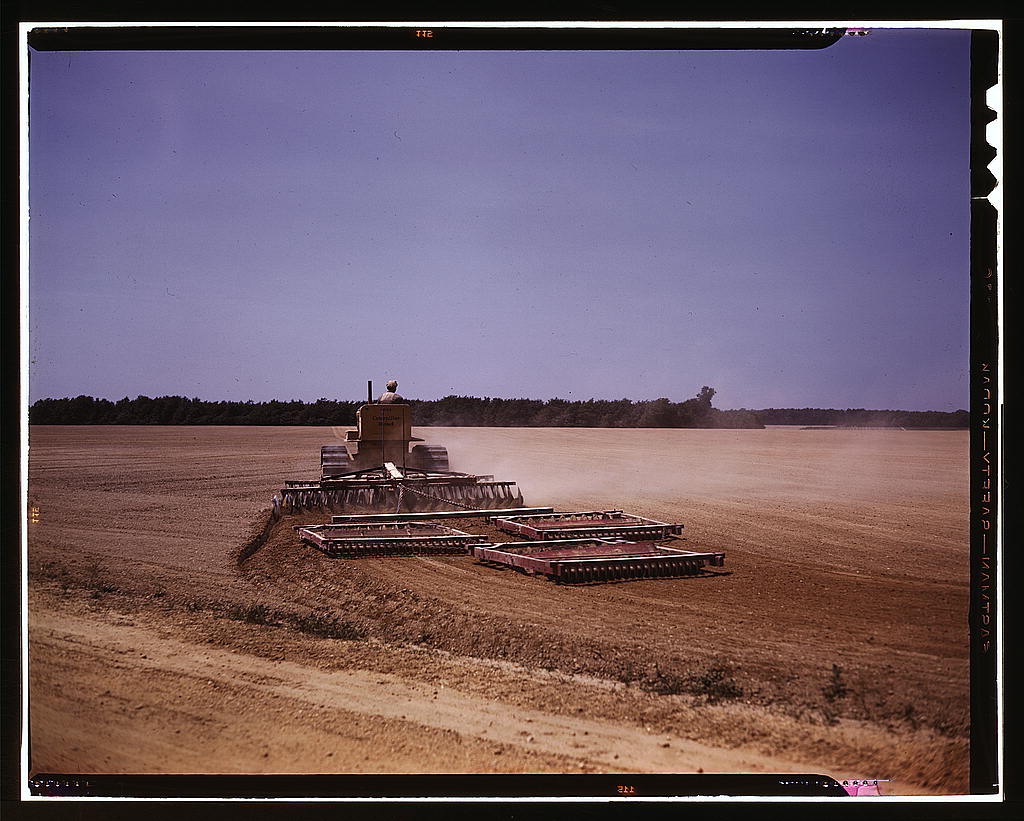
"Harrowing a field with a diesel tractor, Seabrook Farm, Bridgeton, N.J." c. 1942, Library of Congress.


The connection between science and state power might seem tenuous to those who have not yet drank the Kool Aid. We know that science is used in political debates as the ultimate fact-checker. Is this new drug safe? Let’s do a risk assessment. What’s the trade-off of building this new dam? Let’s have an environmental impact assessment. But to anyone who’s studied the politics of environmental controversies, these scientific measures are hotly contested and imbued with political values.

James C. Scott’s fantastic book, Seeing Like a State, outlines how states have used scientific measurements and standardization to render social life and the environment visible, and thus, controllable. A city map can reflect necessary information like the location of businesses, and the layout of roads.  People are not trackable and taxable unless they have standardized and stable names, land tenure, locations, and ethnicities. But while these simplifications of social life are a necessary abstraction, they miss the nuances of societies, can have systematic flaws, and do not represent local resistance to top-down order (for example. Maps, censuses, and other technologies we use to make complex systems legible also shape how state power interacts with local autonomy. When wheat becomes a commodity to be measured, weighed, shipped, and sold, suddenly “agriculture” is not so much a social process as a means to an end. The mechanization of agriculture seen in the 20th century reflects the expansion of commodity chains due to railroads and steampower in the 19th century. See this post for an example of Scott's "high modernism" theory in China.

In Samer Alatout’s study of water politics in midcentury Israel, he shows how the social construction of water scarcity coincided with expansion of state power and centralization of water technologies. Instead of viewing science and politics as separate spheres, Alatout shows how “water scarcity and the strong centralized state were produced in the same technopolitical process" (p. 962). Focusing on estimates of water supplies in Israel, he writes that for the chief water engineer at the time, Aaron Wiener, “estimate reduction was a step in the right direction, towards a practical, empirical notion of the ‘scientification’ of water policymaking. He commented often on the fact that water policymaking during Blass's reign was anything but scientific” (p. 970).

Water estimates and their role in Israeli foreign policy are a good example of a “boundary object” that is used to negotiate between social and scientific spheres (although as I indicated earlier, the “boundary” itself is not so clear). And interestingly, people who seem the most capable of recognizing these boundary objects are STS scholars and conservatives. Throughout the article, I was thinking about a recent book I read, Merchants of Doubt by Naomi Oreskes and Erik Conway. In this book, the authors show how from the end of WWII and up to today, a group of scientists have used their influence to cast uncertainty on health and environmental reform. These doubt-mongering scientists, some of them hawkish Cold War heroes, believe that liberal environmental politics reek a bit too much of Communism. Smoking bans, acid rain regulations, and climate taxes all represent an expansion of state power over industry, and thus must be attacked in the only legitimate way: through science. They exploit the uncertainty of boundary objects like climate models.

Although Oreskes and Conway’s book is a rich piece of the history of science in politics, there is some unpacking left to do about the role of science and the state. Reading Scott and Alatout, there might be good reason for conservatives to worry about environmental politics being used as a tool to expand state power. Or in the case of climate change, non-state power as well (think “disaster capitalism”).

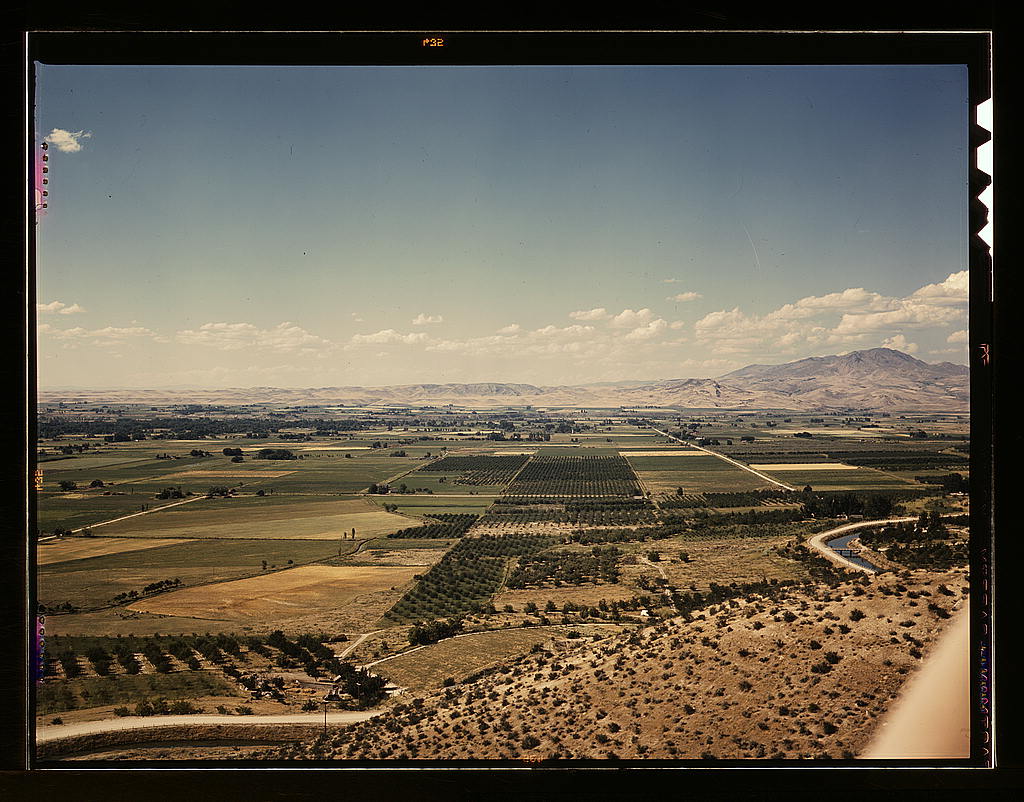
"Cherry orchards, farm lands and irrigation ditch at Emmett, Idaho," 1941, Library of Congress

Guess what, this is my 50th blog post! Many, many thanks to those of you who read, follow, and share my blog. According to Blogger, I've had over 5000 pageviews.

Works cited:

Samer Alatout, “'States of Scarcity': Water, Space, and Identity Politics in Israel, 1948-1959,” Environment and Planning D: Society and Space 26:959-982. 2008.

January 12, 2012

Science in the 20th Century: An abbreviated tour


This week for a class we read several chapters from the book, Science in the Twentieth Century, edited by John Krige and Dominique Pestre. The 20th Century is, of course, my favorite century because of the developments in technology and agriculture. World War I and II are significant milestones for innovation in the 20th Century, as many of the authors noted. And much of the science policy that we operate by today is driven by our conceptions of innovation from the post-war era, and the famous science policy manifesto, Science, the Endless Frontier by Vannevar Bush.

Chapter 6 by Theordore Porter, “The Management of Society by Numbers,” dealt with the emergence of accounting and managerial science. Porter asserts that concepts such as statistics and cost-benefit analysis didn’t just emerge as a tool of capitalism, but rather the tools themselves co-evolved with ways to shape political order. Writing about nation-based economic planning, accounting, and growth, Porter writes, “Clearly such statistics have to do with regulating social and economic life, not merely with describing it” (p. 101). Turning often-nebulous concepts such as “cause of death,” race, and cost-benefit analyses into concrete numbers and statistics is a classic project of the Enlightenment, but Ported shows how exactly these tools had an impact on society. The extreme case of imposing technological order on society is demonstrated by eugenics, which Daniel Kevles explores in Chapter 16. Eugenics was the promotion of “good breeding” and sometimes coerced sterilization, but was eventually shunned after its central role in Nazi science. But IQ tests, initially developed to test soldiers in WWI for their leadership capacity, clearly played and continue to play a role in how we categorize and govern out citizens, and especially how we educate them.

What I found most profound about Porter’s chapter was how the rationalization of government projects and citizens is at once technocratic, but also transparent. Anyone with a bit of training can challenge scientific or economic results, imposing their own values on the intepretation. Porter writes, “such tools are not unambiguously friendly to elite experts. Expertise means not simply the ability to apply difficult technical methods, but also, or mainly, the capacity to exercise judgment with wisdom and discrimination” (106). To me, this is where the system breaks down. There is an expectation that scientists should be politically uninvolved and devoid of values. From the scientists’ perspective this is the “loading dock” model: you do your research, then drop it off at the dock and just hope someone picks it up and uses it. The problem, as we see with climate change, is that anyone can contest the results. We shouldn’t ask scientists to be advocates, but there should be more “Honest Brokering” of science and how we can use it as a tool for democracy, rather than stalemating policy.

I also enjoyed Chapter 12 by W. Bernard Calson, titled “Innovation and the Modern Corporation.” Carlson traces some of the major inventors and innovators back into the 1800s, showing the differences between the lone-inventor of Thomas Edison to today’s research laboratory style of corporate innovation. The most interesting thing was the co-evolution of technologies and organizational structure in major firms like GE and Bell Laboratories. There is a delicate balance between letting inventors and scientists have enough creative mobility, but also channeling their work into a commercial product. This is one of the key tensions of science policy, and the supposed divide between “basic” and “applied” research. In Deborah Fitzgerald’s chapter on the history of agricultural science, she reveals similar themes. During the 20th Century, agricultural science went from not being a science at all (farmers didn’t use scientific management or breeding), to an informal network of public and private scientists in the 1920s, to now the highly technological system of agriculture and the dominance of private corporations. The organizational structure of agricultural science, as in most technological industries, is both dependent on and determining of the type of technologies that emerge from these enterprises.

January 7, 2012

Energy Innovation and the Department of Defense


Last spring I spent a lot of time learning about military history. Not really by choice, but rather in an effort to better understand technological innovation. In my classes with Dan Sarewitz and ASU's president Michael Crow, we constantly discussed how many of the core innovations of the 20th century had military origins. In other words, "Steve Jobs didn't just invent the computer in his garage" (paraphrasing my professors). Both computers and the internet have a distinct military heritage. 

The military often plays a role in technological innovation because most technologies need an "incubation" stage before they are commercialized. Since private firms are sometimes unwilling to take on this risk, the federal government often plays a role in incubating technologies (many of which will turn out to be failures) through research and development contracts (called procurement). Because of this connection between military spending and technological innovation, Sarewitz describes the possible backlash if defense budgets get cut in a NYT article yesterday. The article states, 
As the Pentagon confronts the prospect of cutting its budget by about 10 percent over the next decade, even some people who do not count themselves among its traditional allies warn that the potential impact on scientific innovation is being overlooked. Spending less on military research, they say, could reduce the economy’s long-term growth.
This is not good news, but Sarewitz and others are not calling for more weaponry, but rather more public-good oriented investments, such as in renewable energy. Because the military is a key user of technology, it has a stake in developing commercial technologies from airplanes to computers to renewable energy, which we reap the benefits of. And this shows the difference between the military’s capacity to promote technological innovation and, say, the Department of Energy’s (DoE). The DoE is ultimately not the end user, and is driven by different scientific and public policy motivations. This, plus relatively declining investments in renewable energy through the DoE, result in a stagnant pool of innovation. Yet soldiers’ lives depend on fuel efficiency, sources, and transportation for military aircraft and vehicles, prompting the Department of Defense to pay very close attention to energy issues and even climate change. 

There is an ongoing question throughout the history of science policy on the relationships between the military, industry, and universities. Eisenhower famously warned about the “military-industrial complex” in 1961. Yet regardless of the military applications of alternative energy technologies, this presents an interesting strategy for commercializing technologies on a national, if not global, scale. Many environmental advocates envision the government supporting an Apollo of Manhattan Project for clean energy. The Department of Defense can take on projects with a high risk of failure that other agencies and companies can't, because of their access to research and development funding.

We can relate energy systems back to Freeman and Louca’s work on Kondratian waves and core inputs in our sociotechnical system. They discuss how coal and iron became integral to England’s national industrial infrastructure only after railways brought down prices. Even so, there was political and cultural resistance to steam engines in some places (just like now, there's resistance to windmills, and other NIMBY issues with alternative energy). Energy is one of the most essential core inputs, and a change in this could fundamentally alter our society in ways that we cannot imagine (like how two-hundred years ago, it would seem preposterous that we could get fertilizer from the air). The military could play a role in incubating new alternative energy technologies that are not yet technologically possible or commercially viable. I agree with Sarewitz that I don't necessarily want to see more guns, but I also don't want to see energy security fall by the wayside.

Further reading: 

Chris Freeman and Francisco Louca,
As Time Goes By: From the Industrial Revolutions to the Information Revolution.

David Mowrey, Paths of Innovation: Technological Change in 20th-Century America.

Vernon Ruttan,
Is War Necessary for Economic Growth?: Military Procurement and Technology Development.

December 4, 2011

Climate change vulnerability: diverging definitions

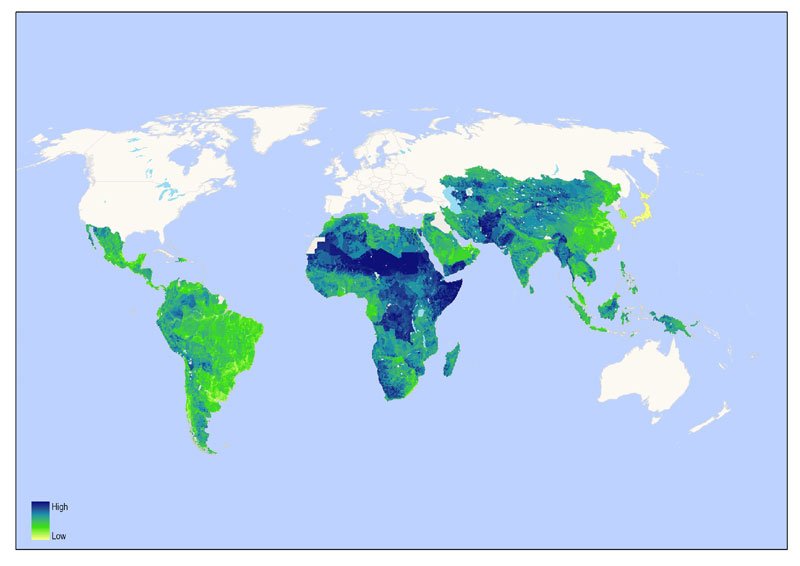
I'm writing a paper right on climate change, food security, and vulnerability for one of my classes. Vulnerability is a tough concept to define, but it's often used to assess the potential risks of climate change impacts. We can examine the consequences of these diverging measures of vulnerability by looking at visual representations of vulnerability assessments. The following figures are all global maps of vulnerability from different researchers and organizations. 


Figure 1 is the result of a 2011 academic research paper by Samson et al. The map represents their calculation of a global climate–demography vulnerability index based on climate models projections for 2050 (Samson et al., 2011). They combine climate models with bioeconomic models of population density, thus making a value-based claim that regions are more vulnerable when they exceed their “climate-consistent population growth” (Samson et al., 2011, p. 538). Image source. 


Figure 2 is from a private advisory firm called Maplecroft, and represents the results of their 2011 Climate Change Vulnerability Index (Maplecroft, 2010). Their methodology was unavailable, but they rank Bangladesh as the most vulnerable to climate change impacts in 2011. According to their website, this is “due to extreme levels of poverty and a high dependency on agriculture, whilst its government has the lowest capacity of all countries to adapt to predicted changes in the climate. In addition, Bangladesh has a high risk of drought and the highest risk of flooding” (Maplecroft, 2010). Their timeframe is based on current vulnerability as well as future adaptive capacity. Image source.


Figure 3 is based on results from a report prepared for the United Nations Office for Coordination of Humanitarian Affairs in collaboration with Maplecroft and CARE International (UNOCHA, 2008). While the entire report has multiple maps of different human and environmental indicators, this particular map is of the “overall human vulnerability index” with regards to climate risks in the next 20-30 years. This combined their assessment of natural vulnerability, human vulnerability, social vulnerability, financial vulnerability, and physical vulnerability. Interestingly, while the other maps in this report include developed countries, the maps related to vulnerability only include the Global South. Image source.

The diversity of results in these three maps represents the variability of climate change vulnerability, some of the value-laden assumptions about climate vulnerability and choice of timescale, and the overall difficulties in defining and assessing vulnerability.

Sources
Samson, J., Berteaux, D., McGill, B.J., & Humphries, M.M. (2011). Geographic disparities and moral hazards in the predicted impacts of climate change on human populations. Global Ecology and Biogeography, 20, 532–544.

United Nations Office for Coordination of Humanitarian Affairs (2008). Climate change and human vulnerability: Mapping emerging trends and risk hotspots for humanitarian actors. Discussion Paper. Geneva: Cooperative for Assistance and Relief Everywhere, Inc. (CARE).


September 26, 2011

How the calorie shapes food politics, past and present

Despite feeling like I'm sinking into a puddle of quicksand as my work piles up this semester, there is one thing that always keeps me going: the excitement of reading about food and agricultural studies. I know this makes me the biggest nerd ever, but my dream job is for someone to pay me to write about whatever I want related to food and the environment. I might not be the next Michael Pollan, but I have a lot of academics and authors that I really look up to because of their work in this field.

One of my favorite authors that I discovered last year is Nick Cullather, a diplomatic historian. His most recent book, The Hungry World: America's Cold War Battle against Poverty in Asia, is a great read for anyone interested in foreign affairs, food politics, and the Cold War. The first chapter of this book is based on his previously published article, The Foreign Policy of the Calorie. It begins in the 1890s, in the beginning of the Progressive Era, with Wilbur O. Atwater and his invention of the calorimeter.

Cullather describes how the neutral technology of the calorimeter becomes a tool of foreign policy making, writing that, "With a numerical gauge, Americans could begin to imagine the influence to be gained by manipulating the diets of distant peoples. The calorie, Atwater declared, would determine the 'food supply of the future'" (Cullather, 2007, p. 341). Interestingly, Atwater worked for a time with Ellen Swallow Richards, who I wrote about earlier (much of her later life's work was in nutritional science).

The calorie became what we might call a "boundary object"- something at the interface of science and policy. It is used to co-produce both scientific knowledge and social order. Cullather shows how although the calorie is an extremely reductionist measure of health, it was used to define the post-world war foreign policy agendas. He writes: 
Beginning with India’s 1946 crisis, “famine” came to be understood as a national caloric deficit rather than the strictly localized emergency defined by imperial famine codes.... Caloric accounting reversed the flow of information about famine; international authorities decreed emergencies, while officials in stricken areas complied with mandated remedies. (Cullather, 2007, p. 362-363)
The invention of the calorie established a metric for modernization. Cullather shows "the capacity of science to renew positivism by inventing new metrics and new ways of deploying them. Quantitative reasoning was not a singular approach that could be disproved, but a succession of rhetorics tied to particular ways of counting. The inception of new numbering schemes revived a mandate for international social engineering" (2007, p. 364).

This obviously has a lot of links to later international development, including the Green Revolution and the population bomb. The complex ideas of food security and family networks were reduced to the simple metrics of calories, land area, and population size, and used to justify large-scale modernization interventions in developing countries. Today, I often think about how we have perhaps replaced the rhetoric around calories with the rhetoric of carbon. Instead of calorimeters we have climate models. Instead of a mismatch of calorie production and consumption, we have a mismatch of carbon emissions and climate impacts. What sort of inventions are we justifying through the normative lens of science and technology?

References:

Cravens, Hamilton, 1990. Establishing the Science of Nutrition at the USDA: Ellen Swallow Richards and Her Allies. Agricultural History 64(2):122-133.

Cullather, Nick, 2007. The Foreign Policy of the Calorie. The American Historical Review 112(2): 337-364.

September 9, 2011

Pika politics and climate change


Look at the cute little pika! So cute! So... controversial??? One of my professors at Arizona State University studies pikas, little critters that are found in both North America and Central Asia, and is entrenched in an unusual debate between environmentalists and the government. I'm going to paraphrase a bit from a presentation he gave to our lab group and then discuss the science policy behind it.

North American pikas are a focal point of the climate change agenda among conservationists in the American west. This is because pikas live in the mountains, and with rising temperatures due to climate change, it is feared that they will soon run out of habitat at high enough altitudes to stay cool. Seems pretty straightforward, right? Not so, according to my professor. While the conservationists are lobbying for pikas to be listed as endangered, he believes they are using shaky science.
In the advocates' claim for [endangered species] listing, Andrew Smith of Arizona State University sees a case of going overboard, and extending implications from limited studies. 
In his own work in Bodie, Calif., begun in 1969, Smith said he found pika capable of adapting to temperature swings by haying at night, instead of during the day, if it is too warm. He also has found the animals at low elevations, where they were not documented previously, complicating the theory that pikas are being chased relentlessly upslope. 
"We really think pikas are at risk, and we should learn more about them, and be monitoring them at lower elevations," Smith said. "They should tell us an incredible amount about climate change. But they are not endangered." (Seattle Times, 2009)
He thinks that environmental groups have picked the pika as a poster child for climate change based on values (such as conservation ethics) over scientific fact, and that they repeatedly cherry-pick data that supports their cause rather than the broader scientific consensus. While the lobby groups claim that pikas are disappearing before our eyes, others note that the western mountains are literally crawling with pikas. Scientists are working to take censuses of pika populations, but this is arduous and can reflect changes other than climate. So the question is, what will happen if the pikas don't disappear? Will we give up on climate change mitigation policy? Will science lose credibility? These are familiar questions to anyone who studies scientific controversies.


Environmentalists have long held a tenuous relationship with science- they both distrust it, and use it to their advantage in legal battles. Science has the power of legitimacy, and making visible the invisible. The case of agricultural biotechnology (GMOs), and how environmental advocates use science, is strikingly similar to the pika controversy. Small degrees of scientific uncertainty become major points of contention, and unfortunately the environmentalists and scientists seem to be speaking directly past each other. I will refer you to my past post to highlight this point. Roger Pielke Jr. would call this a politicized scientific debate. As he argues in The Honest Broker, we should use science to highlight a range of possible policy options, rather than a narrowly defined, predetermined political position. Implicit in the entire pika debate, as with the polar bears, is that in order to save the pikas, we must limit our carbon emissions.

Should scientists speak up and advocate against the environmental lobbyists? Or aim to provide a more robust understanding of the science and policy implications of climate change on animal populations? Can conservationists promote their own agenda without using dubious science?

Until next time, check out this new blog by some of my former MSU professors.

August 2, 2011

Science and public policy: The Social Animal


This summer my colleagues at Michigan State University recommended that I read David Brooks' The Social Animal. Brooks' book merges a narrative of love, life, and career with research about what drives us as humans (the social animals, of course). This relates to our work with climate change, because much of Brooks' research is about how we form values and make decisions. Unlike the economics model of rational behavior, Brooks argues that humans are much more complex and driven by unconscious motivations (not necessarily "animalistic" motives, but rather neurological pathways that have been shaped by both evolution and social/environmental factors). So while public policy tends to rely on economic models of rationality, instead we should look at how people actually work to improve public good. This sort of social science-based analysis is useful for anything from political to public health campaigns. For example, something I've been hearing lately (including in this book) is that to be a good parent, you don't have to be perfect. Social scientists have shown that being "good enough" is really "good enough" to raise a child. So instead of a hypothetical public safety campaign to track your child's every movement with a GPS tracker, a Brooks style campaign might be something like "You can't teach them everything: equip your child with the tools to decide for themselves" (uh-oh, have I been watching too much Mad Men?).

There are downsides to Brooks' approach. One, as pointed out by biologist H. Allen Orr, is that Brooks actually relies too much on over-simplified scientific explanations. Boil it down even further, and it sounds like Brooks might be advocating for policy based on science (in this case, social science), which we know is problematic! Orr writes,
There can, of course, be no doubt that a decent grasp of human nature is a prerequisite for decent public policy. (A policy that assumes, for example, that people mostly want to give away their possessions would not be the most promising.) And there can also be no doubt that a decent grasp of science can help us figure out a thing or two about human nature. (So that’s how people trade goods in a behavioral economic experiment.) But there’s a serious question of whether a scientific understanding of human nature is the main thing that matters. It seems peculiar to believe that a more sophisticated understanding of, say, the genetics or biochemistry or evolutionary basis of human nature will provide special insight into the human condition and thereby allow us to—finally—shape successful public policy. Why, to put it differently, is it so easy to imagine a society that knows very little if anything of the new sciences of humanity but that is exceedingly happy and another that knows all about these sciences but that is thoroughly miserable?
It is exceedingly difficult to broadly characterize populations of people, even with top-notch social science research. A blog post that sums this up well questions whether people (using the example of climate change deniers and scientists) are even inhabiting the same social reality anymore:
What many techno-scientists fail to understand - and thus find most frustrating - about dealing with climate change deniers is that the denier has no real interest in engaging at the scientist’s level of reality.
Others offer solutions to complex problems through deliberative decision-making, which we are finding very useful at MSU Extension. Consider this description of so-called "wicked problems" like climate change, and how to approach them:
Luckily, social scientists have been studying this sort of mess since, well, since 1970. Techniques exist that will allow moderately-sized groups with widely divergent agendas and points of view to work together to solve highly complex problems. (The U.S. Congress apparently doesn't use them.) Structured Dialogic Design is one such methodology. Scaling SDD sessions to groups larger than 50 to 70 people at a time has proven difficult--but the fact that it and similar methods exist at all should give us hope. 
Here's my take on things: our biggest challenges are no longer technological. They are issues of communication, coordination, and cooperation. These are, for the most part, well-studied problems that are not wicked. The methodologies that solve them need to be scaled up from the small-group settings where they currently work well, and injected into the DNA of our society--or, at least, built into our default modes of using the internet. They then can be used to tackle the wicked problems.
As I've touched on before, what all of these "new models" of science and society show is that the Enlightenment vision of rationality is no longer applicable to today's public policy problems. So maybe Brooks has it wrong that "more science" can solve our problems, but I believe he's onto something, which is that we need more than economics, cost-benefit analyses, and risk assessments to create policy.

July 20, 2011

Global science policy for innovation and adaptation in agriculture


All summer I've been working on a paper, long overdue, for my Innovation Studies class. My main focus is how technological innovation in agriculture promotes or constrains adaptive capacity to climate change. Here is a review and my response to some recent global reports. (If you're wondering why I choose Google's Mendel-themed logo today, scroll to the bottom!)

Due to the importance of agriculture to international development efforts, international consortiums such as the World Bank have examined the prospects for future agricultural research and innovation, increasingly in the context of climate change adaptation. Especially in Africa, agriculture-based technology transfer has been a main focus of organizations like the United Nations Development Programme’s Climate Change Adaptation Team (Tessa & Kurukulasuriya, 2010). The "technology transfer" model has been upheld since the Green Revolution, but agricultural development paradigms are beginning to shift towards an "innovation systems" approach (McIntyre et al., 2009).

The international development literature also examines the synergies between agricultural innovation and adaptive capacity. A World Bank report on agricultural innovation addresses adaptive capacity, though not specifically with regards to climate change, stating that:
Using technical assistance... does not build capacity to innovate unless it is linked to specific efforts to learn from these experiences and develop networks that can both anticipate changes and bring in the expertise to deal with them as needed. In other words, firefighting approaches result in ad hoc responses but not in a sustainable capacity to respond…. Sectors or organizations require an adaptive capacity, whereby they are plugged into sources of information about the changing environment. The other facet of adaptive capacity is that it requires links to the sources of knowledge and expertise needed to tackle a varied and unpredictable set of innovation tasks. (World Bank, 2006, p. 70)
Based on a 2009 World Bank report on the same topic, innovative capacity and adaptive capacity are used somewhat interchangeably (again, not necessarily in the context of climate change, but rather broader economic, social, and environmental change) (Rajalahti, Janssen, & Pehu, 2009). However, as opposed to the emerging innovation systems approach of major development organizations, the International Food Policy Research Institute (IFPRI), part of the Consultative Group on International Agricultural Research (CGIAR) and also under the World Bank umbrella, tends to take a more reductionist approach to science and technology innovation. They often make broad claims such as, “Even without climate change, greater investments in agricultural science and technology are needed to meet the demands of a world population expected to reach 9 billion by 2050… Agricultural science- and technology-based solutions are essential to meet those demands,” based on global models and metrics of yield and calories (Nelson et al., 2010, p. viii).

The CGIAR recently launched a “Climate Change, Agriculture and Food Security” (CCAFS) program area that brings together global experts on climate change and agriculture. The CCFAS, like many mainstream international development agencies, takes a vulnerability approach to climate change and rural livelihoods. Despite some focus on reconciling the supply and demand of science (for example, through boundary work), linear models such as “Feeding climate information into climate-limited livelihood systems holds a great deal of promise” often prevail (CGIAR, 2009, p. 19). In the case of the CGIAR, there are constraints on both the supply and demand side of innovation in international agricultural research systems. The CGIAR has a history of investing in plant genetic research, so there is a bias towards plant breeding and biotechnology that can result in narrow research objectives (Dalrymple, 2006). On the demand side, adoption of technological innovations is constrained by farmers’ perspectives, which are often highly local and limited by time-scale (Dalrymple, 2006). Lybbert and Sumner (2010) explicitly address the opportunities and constraints for technological innovation and adoption of climate-relevant technologies (for both mitigation and adaptation) in developing countries. They point out government interventions that can have a significant impact on technological developments and farmers’ adaptive capacity, such as intellectual property rights and research and development priorities.

A report titled “The top 100 questions of importance to the future of global agriculture” identifies climate change impacts as one of the most pressing concerns of global agriculture (Pretty et al., 2010). The authors frame climate change adaptation in the context of tradeoffs in the ‘food, energy and environment trilemma’ (Tilman et al., 2009), and ask questions such as, “How can the resilience of agricultural systems be improved to both gradual climate change and increased climatic variability and extremes?” (Pretty et al., 2010, p. 225). Questions 59-72 deal explicitly with increasing farmers’ innovativeness and adaptive capacity through models of agricultural extension, participatory research, gender-equity at all levels of research and extension efforts, and improving overall rural livelihoods (Pretty et al., 2010).

The International Assessment of Agricultural Knowledge, Science and Technology for Development Global Report is another recent and comprehensive article on the state of global agriculture and science and technology policy. On the topic of climate change, it states that, “Agricultural households and enterprises need to adapt to climate change but they do not yet have the experience in and knowledge of handling these processes, including increased pressure due to biofuel production” (McIntyre et al., 2009, p. 3). The authors propose to increase the reach of extension education and access to natural and financial capital as ways to promote farmer adoption of technologies, as well as exploiting synergies between knowledge and technological innovation. In terms of climate change adaptation, the authors lay out two pathways: high technology (crop, soil, and climate modeling, plant genetic improvement) and low technology (irrigation, farm management practices). It is worth noting that the high technology approach of biotechnology and climate models are “supply heavy” and rely significantly on future technological breakthroughs, whereas the low technology approaches are “win-win” adaptations for smallholder farmers that both improve yields and increase adaptive capacity. 

However, one of the climate take-home messages of agricultural innovation scholars is that future technological innovation and global market trends are likely to be more important than the negative impacts of climate change. The predicted gradual climatic shifts will allow institutional innovation to occur in agricultural research, especially in light of the United States’ history of making cheap food a priority through market structures (such as subsidies and disaster insurance) and investment in technology. Bill Easterling (1996) predicts that farmers may face some climate related losses, an increase in global demand (thus the need for higher yields or more cropland), and overall increased constraints on farm finances. Technological innovations such as land management techniques, crop genetic diversity, and rapid response to inputs such as energy prices will be more important.

In my paper I examined how different agricultural technologies- from plant breeding and varieties, to irrigation, to climate forecasts- can present opportunities and constraints for adaptation. Something that's been on my mind lately is the utilization of plant genetic resources (hence the Gregor Mendel logo!) for climate adaptation in agriculture. More on that soon!

July 6, 2011

5) Science communication and climate change


A topic that frequently comes up between me and my colleagues at Michigan State University this summer is of science communication. At the Science and Democracy Network meeting that I attended last week, one of the most contentious topics was over climate change science and communication, and what is our role as scholars to clarify (or "complexify," as is usually the case) the discourse.

So I thought I'd put together a resource list of blogs and papers on the subject of science communication, from an STS perspective (and particularly about climate change). First, Alice Rose Bell has a great blog on science communication, and even already has a helpful resource list! My other favorite climate change communication blogs are Dot Earth by Andy Revkin, Age of Engagement by Matthew Nisbet, Open the Echo Chamber by Edward Carr, and The Intersection by Chris Mooney. While I don't always agree with the partisan positions of many of these bloggers, I find myself enraptured by their interesting reflections on the latest research and controversies in climate change science and communication.

One of the contributions of STS research to science communication studies is of reshaping the "deficit model" of science communication into more nuanced views of public understanding of and participation in science. The deficit model is similar to both the "loading dock" and "linear model" of science and policy, in that it upholds scientists as disconnected experts, and that the public is an "empty vessel" to fill with objective knowledge. Some great papers on new models of science communication are "Do Scientists Understand the Public?" by Mooney (2010) and "What's next for science communication?" by Nisbet and Scheufele (2010).

So why did I open this post with a political picture? Because there is solid evidence that despite levels of scientific knowledge, political affiliation is the biggest determinant of whether U.S. citizens believe in climate change (summary here, full article by McCright and Dunlap (2011) here). I was lucky to take a class with Aaron McCright during my undergrad at MSU, and this really sparked my interest in the science politics of climate change. Since I took that class two years ago, I've been following the climate change communication literature. To start off, a classic article you need to read is "Making climate hot" by Susanne Moser and Lisa Dilling (2004). Communicating climate change is inherently difficult because of the high-level science as well as framing of risks and uncertainties, but Pidgeon and Fischhoff (2011) have some advice on framing climate uncertainty here.

And if you're interested in the whole "climate skeptics" debate, you need to read Naomi Oreskes and Eric Conway's book, Merchants of Doubt. Also, my new favorite blog resource is "Skeptical Science," which does a really good job at clearly communicating the science behind climate change, and addressing skeptical claims. Finally, Chris Mooney once again comes through with some commentary and a list of resources. Interestingly, even in the case of climate skeptics, the deficit model proves false. More scientific knowledge does not automatically make people "believe" in climate change. People's political orientations have a strong impact on what information we will use to support our own values. And overwhelmingly, even in the face of "Climategate" and uncertainty, the majority of Americans trust scientists and believe in climate change and support energy policy.

I want to conclude by saying that none of this is simple. Sometimes when I'm telling people about my research, I avoid the topic of climate change because I don't want to get into a debate. But while working at MSU this summer and last, we've noticed that when you sit with people face to face, and don't impose your own views but rather ask about their own thoughts and experiences, it leads to a more productive conversation. And having worked in a lab during my undergrad, I know how hard it is to "get out there" and communicate science- but there are a few easy ways, from working with student groups of all ages, to writing an effective op-ed, to learning how to present your research in a way that's accessible to non-scientists. An insightful comment on Alice Rose Bell's blog states, "if you want to reach young audiences, stop thinking of them as audiences and don’t merely involve them: work out what’s central about your project and invite them to do that."

June 20, 2011

3) Public participation in science: co-production of knowledge


An important theme of Science & Technology Studies is the "co-production of knowledge." When I first started my graduate studies at ASU, this word threw me for a loop because it packs so much meaning into one phrase, but I guess that's the purpose of academic jargon! The co-production of knowledge means, according to Sheila Jasanoff, "the proposition that the ways in which we know and represent the world (both nature and society) are inseparable from the ways we choose to live in it" (Jasanoff, 2004, p. 2).

Jasanoff's definition incorporates how knowledge shapes both science and social order (sometimes simply described as the co-production of science and policy or society). How we represent knowledge-- through charts and graphs, DNA samples, lie detector tests, brain scans, environmental impact assessments, maps, etc.-- has implications for not just science, but society. For example, a map of climate change vulnerability can show the scientific results of a study, but it also holds implicit values and political implications.
The creators of this climate change vulnerability map chose not to include most developed countries in their assessment, which certainly has impacts of how we view climate change. For example, climate change is sometimes viewed as a problem mostly facing developing countries, and this map reinforces this. Co-production of knowledge and social order goes beyond just media representations of science; it is deeply important for our political system, and how we make decisions based on science.

We often think of science as a top-down, self-regulating hierarchy of experts. But when science gets used in decision-making, it must conform to the ideals of democracy. Science cannot dictate policy decisions, but can be a useful political tool. Thus, incorporating the "co-production" perspective of science and society can make the role of science more clear in these situations, rather than the muddled role it currently takes. For example, Roger Pielke Jr. shows how the Intergovernmental Panel on Climate Change (IPCC) ignored the "co-production of knowledge" and instead engaged in what he calls "stealth advocacy" of policy. If the IPCC was more upfront about the political implications of their climate change assessments, they would act as more of an "honest broker" of the co-production of science and policy.

Several scholars have examined climate change knowledge from a co-production perspective. Vogel et al. (2007) examine the connections between co-production and science communication. Commenting on many of the topics previously discussed in this blog, they use the case study of food security and climate vulnerability assessments in southern Africa, and how crossing the science-practice boundary through stakeholder engagement resulted in more useful assessments that could be utilized by local organizations and governments. By recognizing the needs of stakeholders, the knowledge gained from these assessments can be used in more democratic ways.

Lemos and Morehouse (2005) look at the case study of NOAA's regional integrated science assessment (RISA) program (coincidentally, the Great Lakes basin now has a GLISA program). The Southwest RISA used a process of stakeholder dialogues to produce a regional assessment of climate change impacts that was relevant and useful to end users. The authors write,

"Co-production of science and policy in the context of integrated assessment activities requires substantial commitment to the three components we have identified: interdisciplinarity, stakeholder participation, and production of knowledge that is demonstrably usable." (Lemos & Morehouse, 2005, p. 66)
In this case, the RISA aimed to produce scientific knowledge about climate change that would be useful for decision-makers like farmers and policy-makers. Without the stakeholder participation, the researchers would not have known how the information would be applied, and how to shape their research based on this. For a more detailed description of other RISA climate change programs, see this report.

For the climate change and agriculture project I'm working on with Michigan State University Extension and Kellogg Biological Station, we are trying to follow the model of stakeholder participation from the start. This is based partly on the work of our colleagues in the Southeast climate RISA and participatory process used to create their AgroClimate website. There are also great examples of using participatory focus groups and community dialogues in forestry and bioethics. Personally, I can tell you that something I've already learned is how important social science research is to this process. The natural sciences can tell us a lot about our world, but social science helps tell us what decision-makers need for knowledge and support. The results are often surprising and definitely eye-opening for those of use entrenched in academia. And this is why co-production of knowledge is important! Recognizing that the process of knowledge production (aka science) is just as important as the end results, and that how the end results are used is often pervasively social and political, STS can lend us some valuable insights for practical results.